Recent Courses
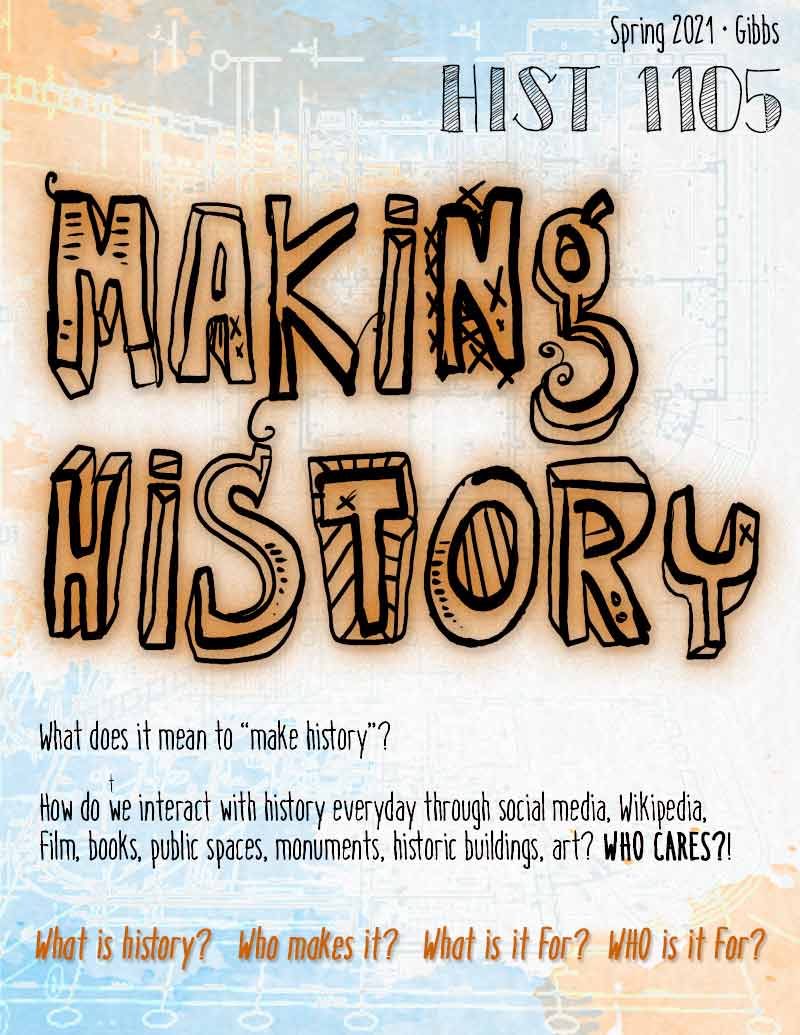
This course explores this history of history. We investigate how different societies across time have explained and interpreted the past, and why those have changed over time. From ancient myths and medieval chronicles to modern archives and AI-generated summaries, we ask how ideas about truth, evidence, and authority shape the stories societies tell about themselves.
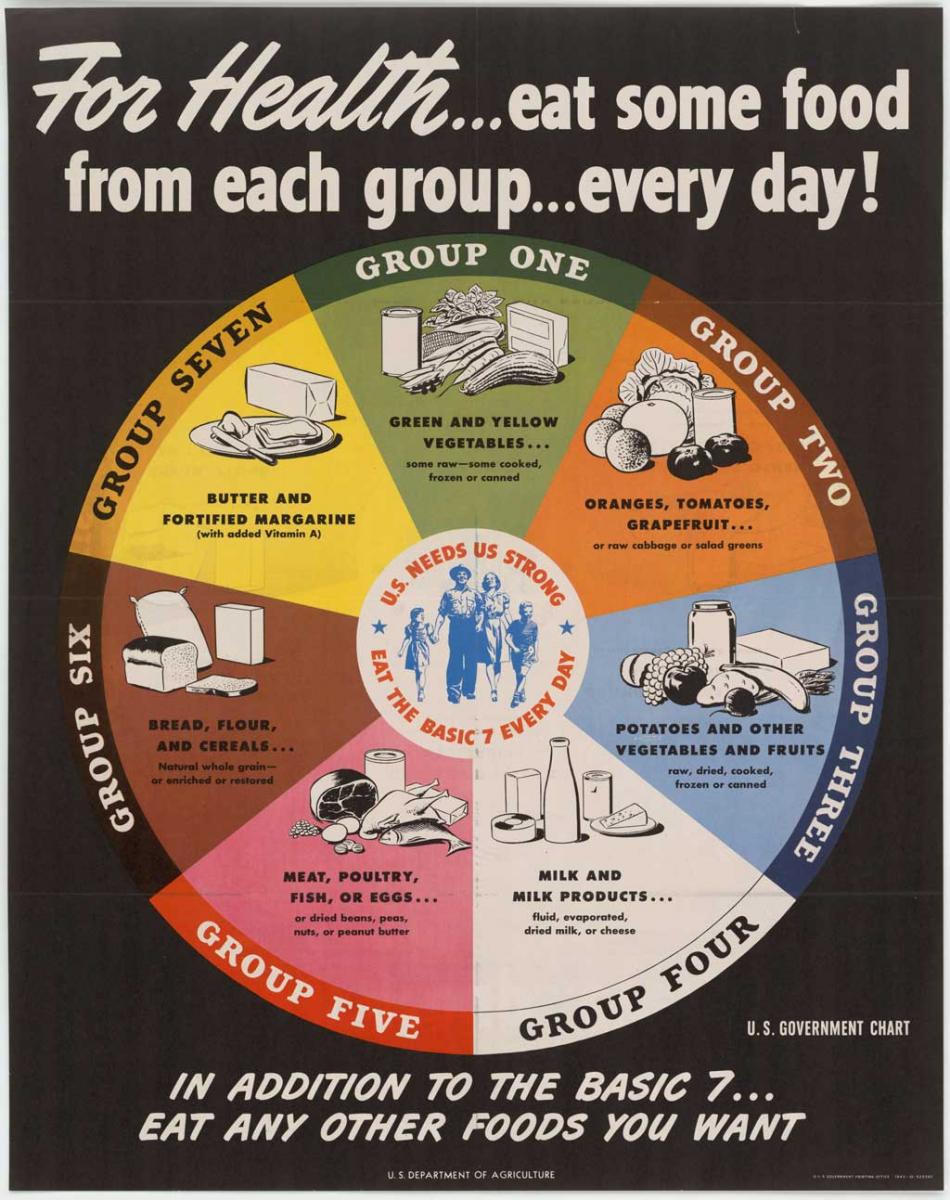
If someone tells you how to eat or what you should or shouldn’t eat, do you believe them? Why or why not? Is dietary advice ever truly believable? This course uses the long history of diet and health to investigate the relationship between medical expertise and popular understandings of health.
Some guiding questions: How do dietary experts establish their expertise? Why have medical authorities continually redefined what it means to be healthy and to eat a healthy diet? Why have so many fad diets come into and gone out of fashion? What can historical perspectives on topics like GMOs, vitamins, and obesity offer contemporary debates on these issues?
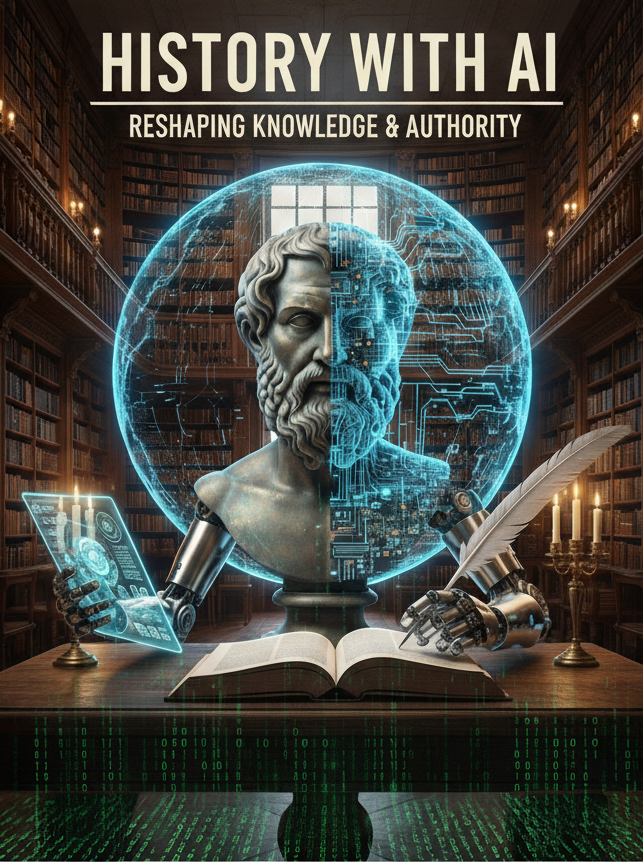
This course explores how technological change—from writing to algorithms—reshapes what counts as knowledge and who is recognized as an authority. Students will critically examine how ideas of “intelligence” have shifted across time, while experimenting with AI tools to practice source analysis, contextualization, and historical interpretation. Emphasis is placed on hands-on learning: testing how AI can assist (and mislead) in research, evaluating its impact on historical authority, and reflecting on the epistemological questions raised by machine-generated knowledge. The course balances critical thinking with experiential inquiry, encouraging students to see both the risks and opportunities of using AI in the production of history.
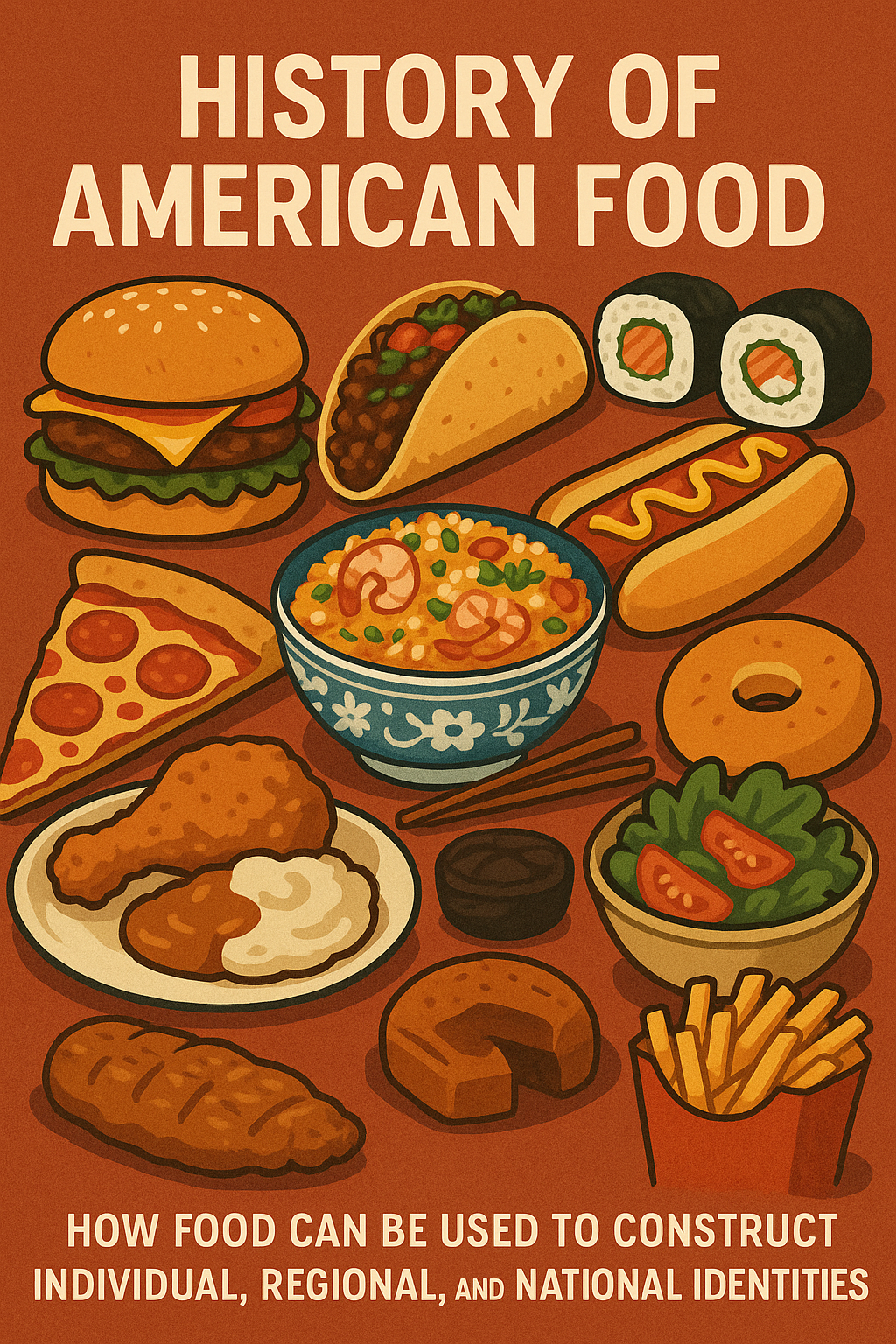
When you think of Mexican food, or Italian, or Chinese, a range of dishes and ingredients immediately spring to mind. But what about American food? Is there such a thing? Does this concept even make sense anymore? How are ideas of nationalism, patriotism, regionalism, and freedom reflected in our foodways?
This course explores both historical and contemporary ways of thinking about ‘American’ food and the relationship between food and identity. We look at the changing meanings of food and foodways throughout US history, particularly how people have attached cultural values to certain foods yet rejected others, and how foodways are so frequently an expression of personal, community, and national values.
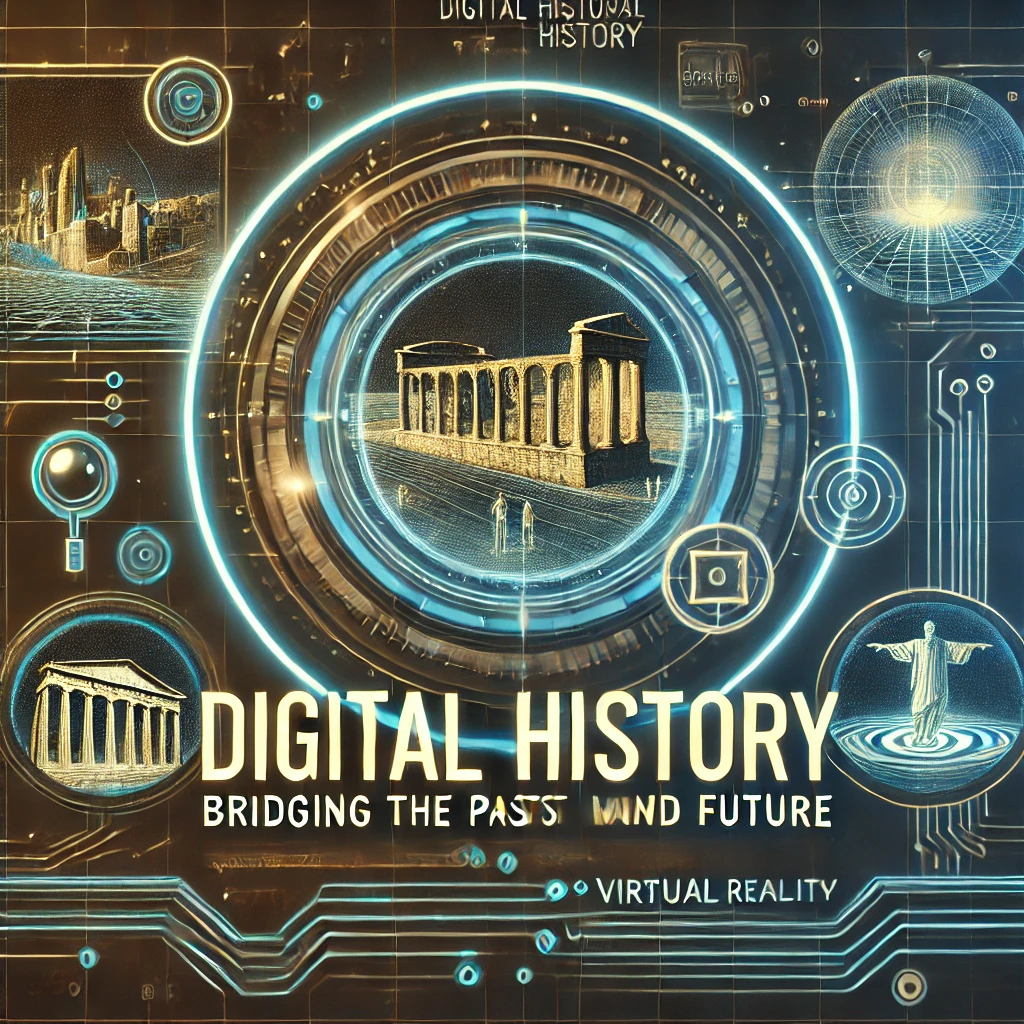
How can digital technology facilitate critical engagement with the humanities and cultural heritage? How are cultural institutions are engaging with technology and what does the future look like? How can the digitization (and virtual modeling) of historical artifacts–from pottery and jewelry to entire historic sites–change the ways we can understand past cultures? How is AI going to shape our access to and stories about the past?
We’ll draw from a wide range of fields including digital public history, historic preservation, museum studies, digital archiving, spatial humanities, and media studies. We’ll collaborate on some posters, maps, 3D prints, digital essays, and a fictional interview with a campus building. No technical skills are expected or needed–just an open mind about exploring the future of history!
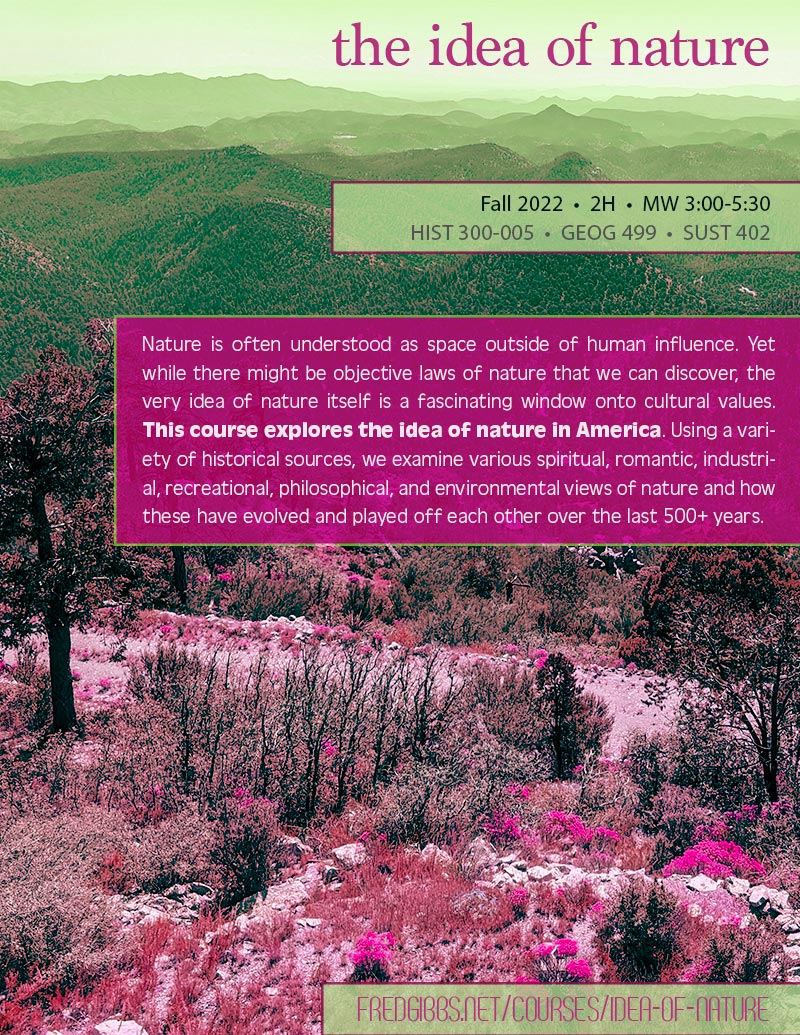
Nature and landscape can seem like mere background our lives, but the spaces around us connect us to our past and chart a course for the future. This course explores the changing cultural constructions of “nature” in American History. We pursue three particular goals: 1) Describe how the attitudes towards nature have shifted over time. 2) Articulate how landscapes of all kinds mediates our relationship to the past, present, and future. 3) Explain how landscape can influence constructions of identities at personal, regional, and national levels.
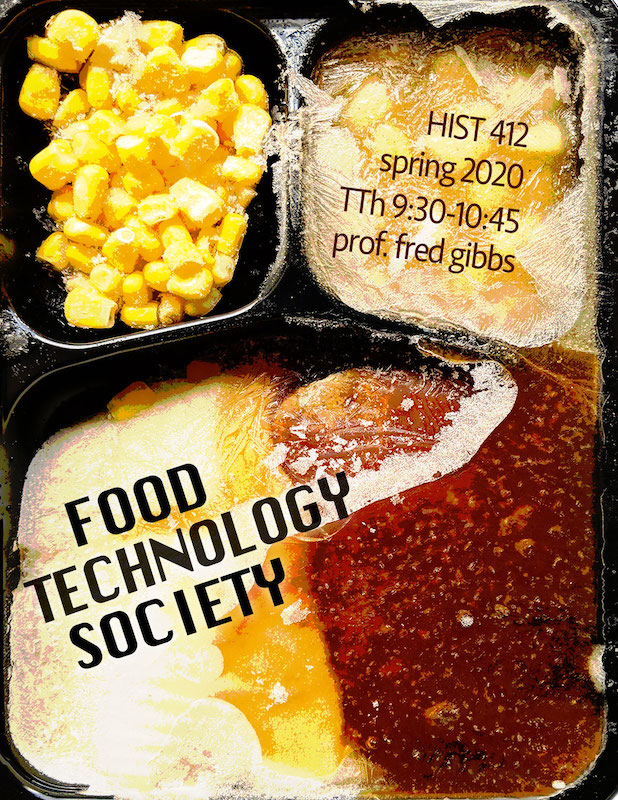
It’s easy to take supermarkets for granted. It almost seems natural that they should abound with vibrant and uniform vegetables, tasty snacks, and highly perishable but perfectly safe meat and dairy products. But the seeming inevitability of our grocery stores obscures the complex and frequently surprising history of the intersection of food and technology. But by carefully considering the tension between our desire for pure, natural food and our desire for cheap, convenient food helps us understand how technology is constantly reframing our relationship to food.
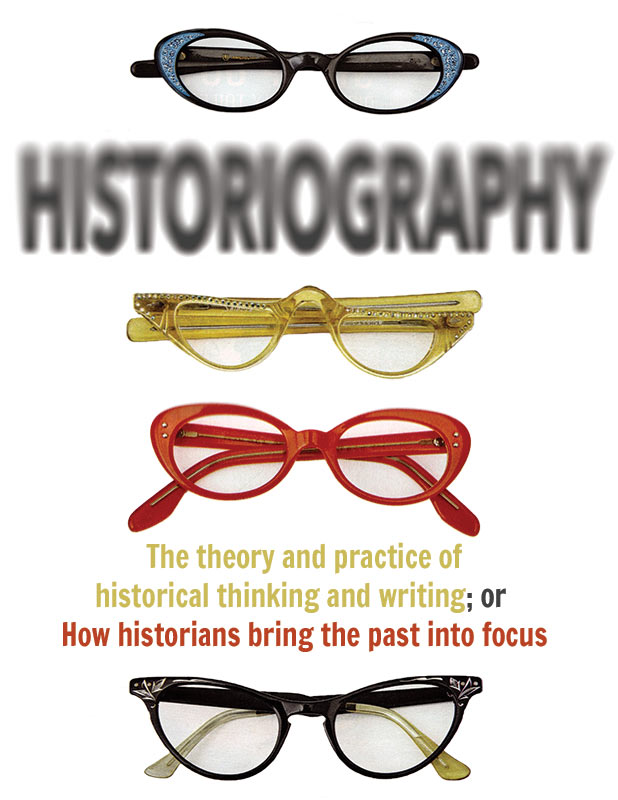
This course introduces some of the most influential approaches that historians (from antiquity through the present) have taken in thinking and writing about the past. It also addresses various meta-questions about history: What is history? What is it for? Who is it for? It addresses various philosophies of history (the underlying assumptions of how we can access and understand the past), as well as various historical interpretive frameworks that have shaped the professional practice of history. Coursework consists of numerous short essays that compare and contrast different processes, modes of thought, and modes of expression from different historical time periods and in different geographic areas.
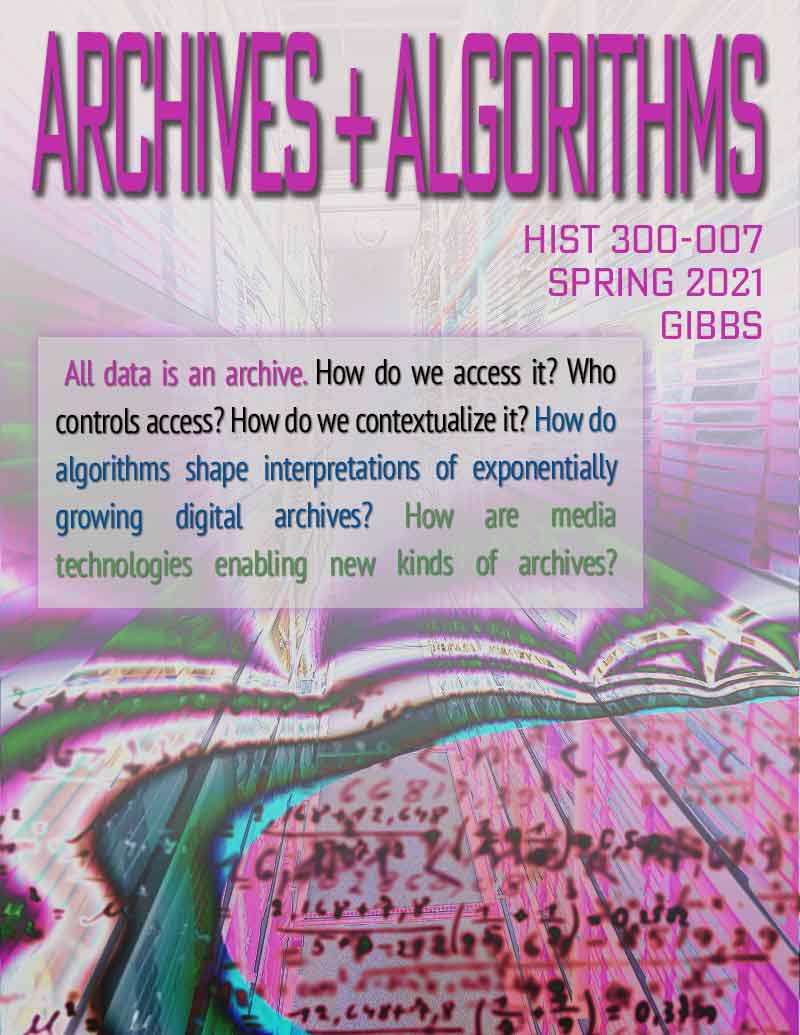
How do archives and algorithms govern our access to the past? How does the digitization of cultural artifacts and social media technologies present opportunities for new kinds of archives? What kinds of new research methods do historians need to analyze and interpret the exponentially growing digital archive? How has digital publishing and platforms like Wikipedia challenged traditional historical expertise and authority? Our collaborative coursework will focus on understanding the challenges inherent in digital archives and access to information.