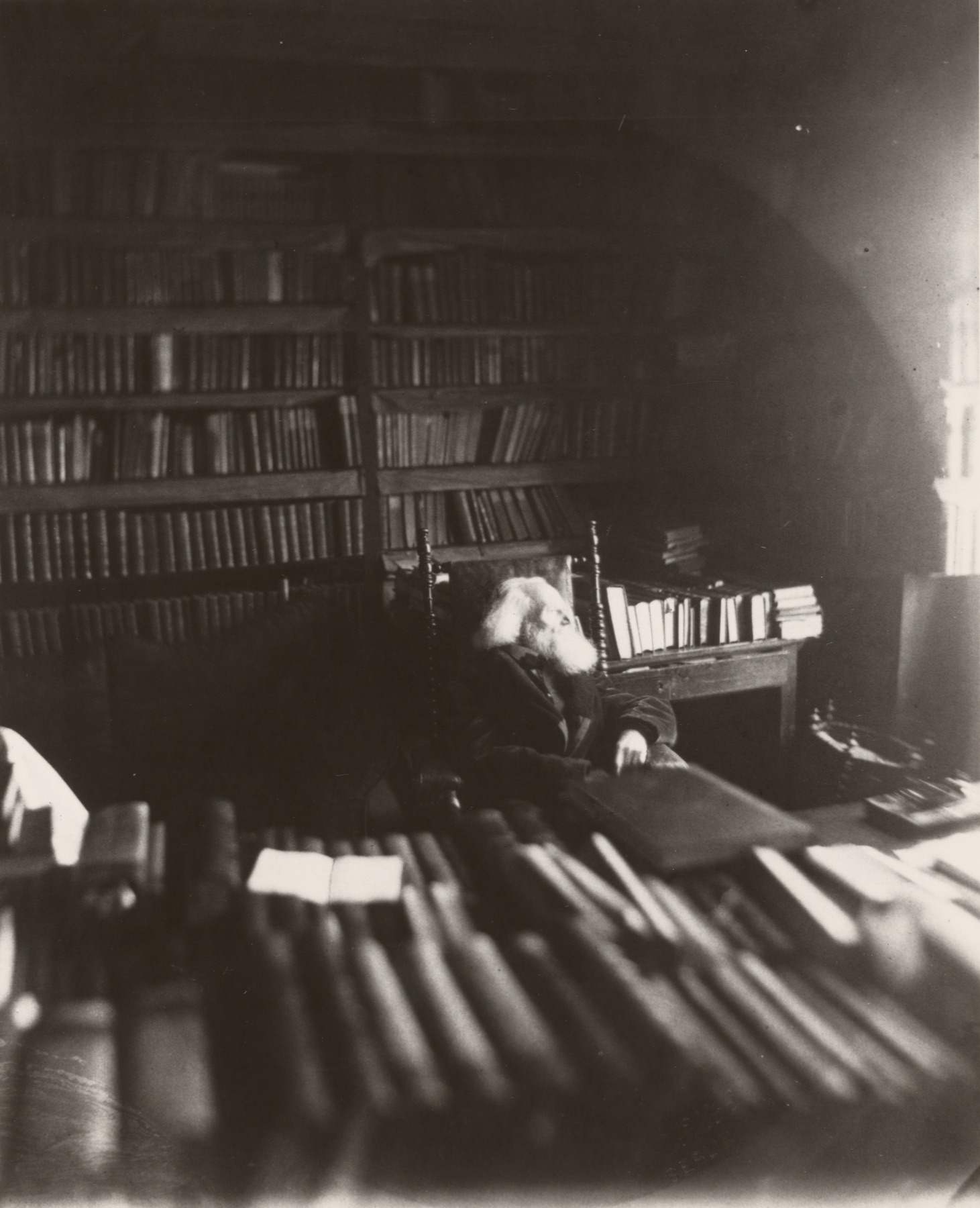
(No photographer recorded. Leopold von Ranke Papers, Syracuse University Special Collections. Public domain.)
- You have to look for the man. The shelves and stacks take the picture; he is a pale smudge at the center — the self-portrait of a historian whose stated job was to disappear behind his sources. If a historian disappears behind the sources, who chose which sources to stand behind?
- This is a working archive, not a study. Documents stored so that one claim can be checked against another. The photograph is itself new evidence technology arriving with the new history: photographs “appeared to preserve images in an objective form,” though Brady’s Civil War pictures “were all taken after the battles they purportedly illustrated” (Popkin, p. 97). What history becomes possible in a room like this — and what becomes impossible?
- Somebody built this room. Prussian ministries opened the archives, a university paid the salary, a publisher printed the footnotes — each for reasons of its own. Does it matter to the truth of a history book who paid for the paper it rests on?
Before we start
Two questions to hold onto
- What would a historian have to do to show “what actually happened”?
- If that is impossible, why has the promise lasted two hundred years?
Making History • HIST 1105 • Week 4
Scientific History
- Humboldt, “On the Historian’s Task” (delivered 1821, published 1822)
- Ranke, introduction to the History of the Latin and Teutonic Nations (1824)
- Background: Popkin, ch. 4, 71–98
Two definitions of the historian’s task, three years apart in Prussia — and the discipline that grew out of one of them. Popkin cited by page, Ranke by which of his three excerpts.
The take home · three things
Two answers to one question. The discipline kept the one that could be taught.
01 · The question they share
Both ask what the historian’s task is, and both answer: to present what actually happened. Neither means simply gathering facts, and both are refusing history written to judge the past or instruct the present.
02 · Two kinds of answer
Humboldt describes what understanding an event requires, and admits the evidence never supplies it. Ranke gives a procedure: named sources, on every page, with the workings published beside them.
03 · Only a procedure travels
A procedure can be taught, examined and failed, so Ranke’s is the one that became a discipline — and it arrived with archives, a seminar, journals and state money. A method can be honest and still only ever get asked about certain things, by certain people.
Where we’re going · three parts
One sentence, the machinery built under it, and what it cost
01 · 1821 and 1824
Two answers to one question
Humboldt on what understanding an event requires; Ranke on what a book must disclose. The same task, defined twice.
02 · 1819–1895
What made it a discipline
The footnote, the seminar, and judgment by trained peers. Objectivity as a workflow you can be trained in and examined on.
03 · 1854–1896
What came with it
A profession funded by states, a seminar that admitted almost nobody, and Ranke’s own refusal of Enlightenment progress.
Bridge from 4.1 · Prussia, 1806–1810
A defeated state builds a university, and history is in it
“The nineteenth century would see history transformed into an academic discipline. At the same time, historical writing would become intimately associated with the development of national identities.” Popkin, From Herodotus to H-Net, p. 71
The situation
Napoleon crushes Prussia in 1806. In 1810 the University of Berlin is founded “as part of a deliberate program to promote German national identity in opposition to the influence of the French” (p. 79). Its plan is drafted by Wilhelm von Humboldt. Ranke will teach there for most of his working life.
Method and funding at once
The two texts you read are not free-floating opinions about method. They are written inside a project to rebuild a defeated state, at an institution created for that purpose. Both facts are true at once: the method is a real advance, and it was funded for a reason.
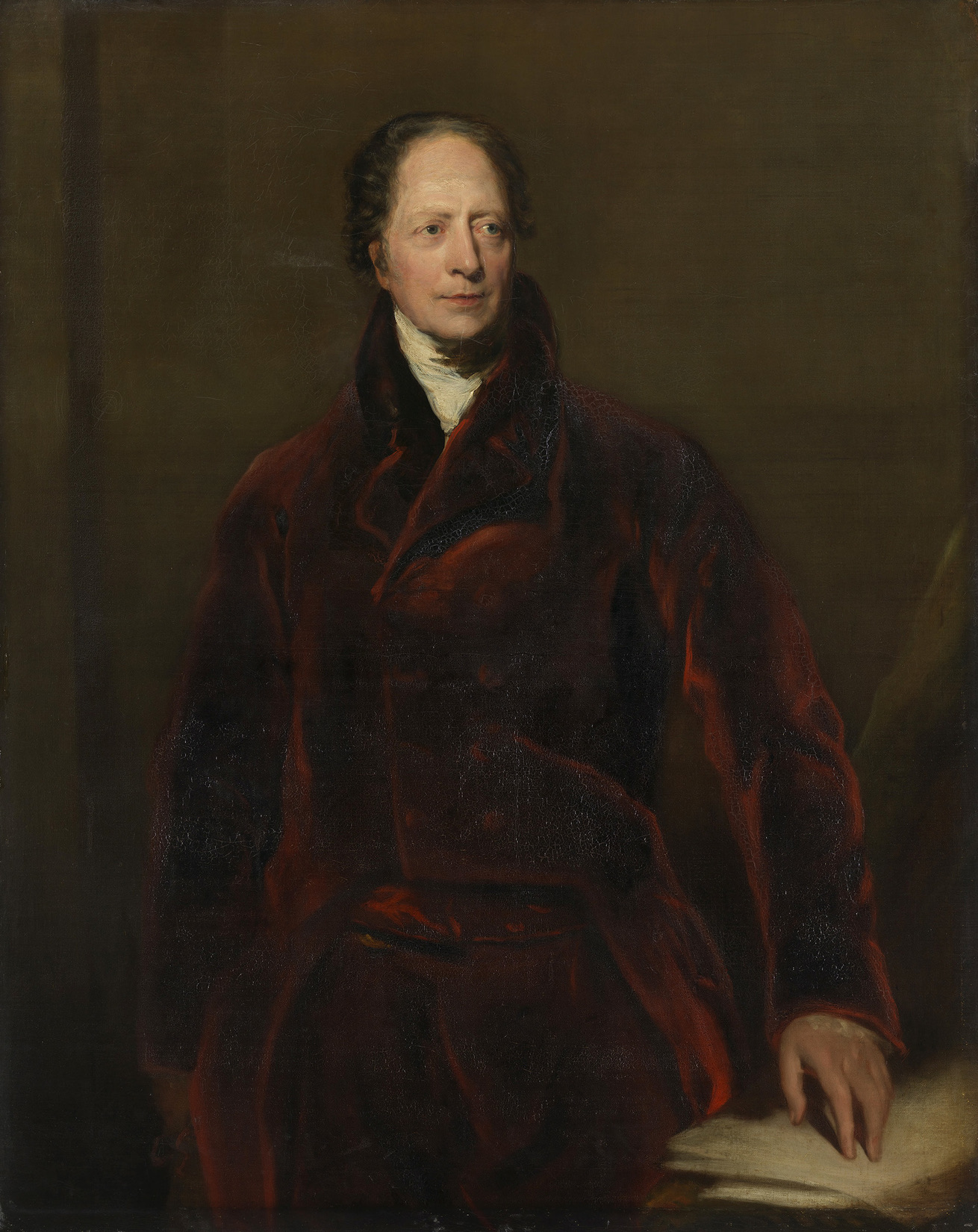
Why he matters: the essay “set out a program that anticipated many of Ranke’s ideas” (Popkin, p. 79) — the institution and the method specified by one person.
(Thomas Lawrence, for the Waterloo Chamber. Royal Collection, RCIN 404936. Public domain.)
The text · read to the Prussian Academy, 1821
The task is stated in a sentence, then complicated for fourteen pages
“The historian’s task is to present what actually happened.” Humboldt, “On the Historian’s Task,” p. 57
What he says next
The essay is not a method but an account of historical understanding. An event, he argues, is only partly available to the senses; the rest must be supplied by the historian through inference and judgment. Sorting facts gets you a skeleton, not an event — the connections between them are added, not found — and the historian’s obligation is to show each event as part of a whole. The faculty this requires he compares to the artist’s.
A standard, not a description
It is a standard, not a description of an easy job. “What actually happened” is what you are aiming at precisely because the evidence never simply hands it to you. Every complaint made against scientific history for the next two centuries is already inside its founding document.
Humboldt and Ranke · 1821 and 1824
The same question, answered in two different registers
Humboldt · 1821
An address to an academy by a philosopher of language. His subject is the gap between the evidence and the event: the senses give fragments, and the historian supplies the connections. An account of what understanding requires — described honestly, and left open.
Ranke · 1824
A preface to a working book of history. The same gap becomes a problem to be managed: a hierarchy of sources, a citation on every page, a companion volume of criticism. Not a solution. A way of making the gap auditable.
Not the same sentence
In English the two promises read almost alike, but that is the work of two different translators, a century apart. Humboldt writes die Darstellung des Geschehenen; Ranke, wie es eigentlich gewesen. Popkin puts the relation carefully: the 1821 essay “set out a program that anticipated many of Ranke’s ideas” (p. 79). An affinity, not an echo.
Why the rest of today is Ranke
Only one of these can be handed to somebody else. A footnote convention and a seminar can be exported to Tokyo, Baltimore and Paris; “supply the connections yourself” cannot be taught, examined, or failed.
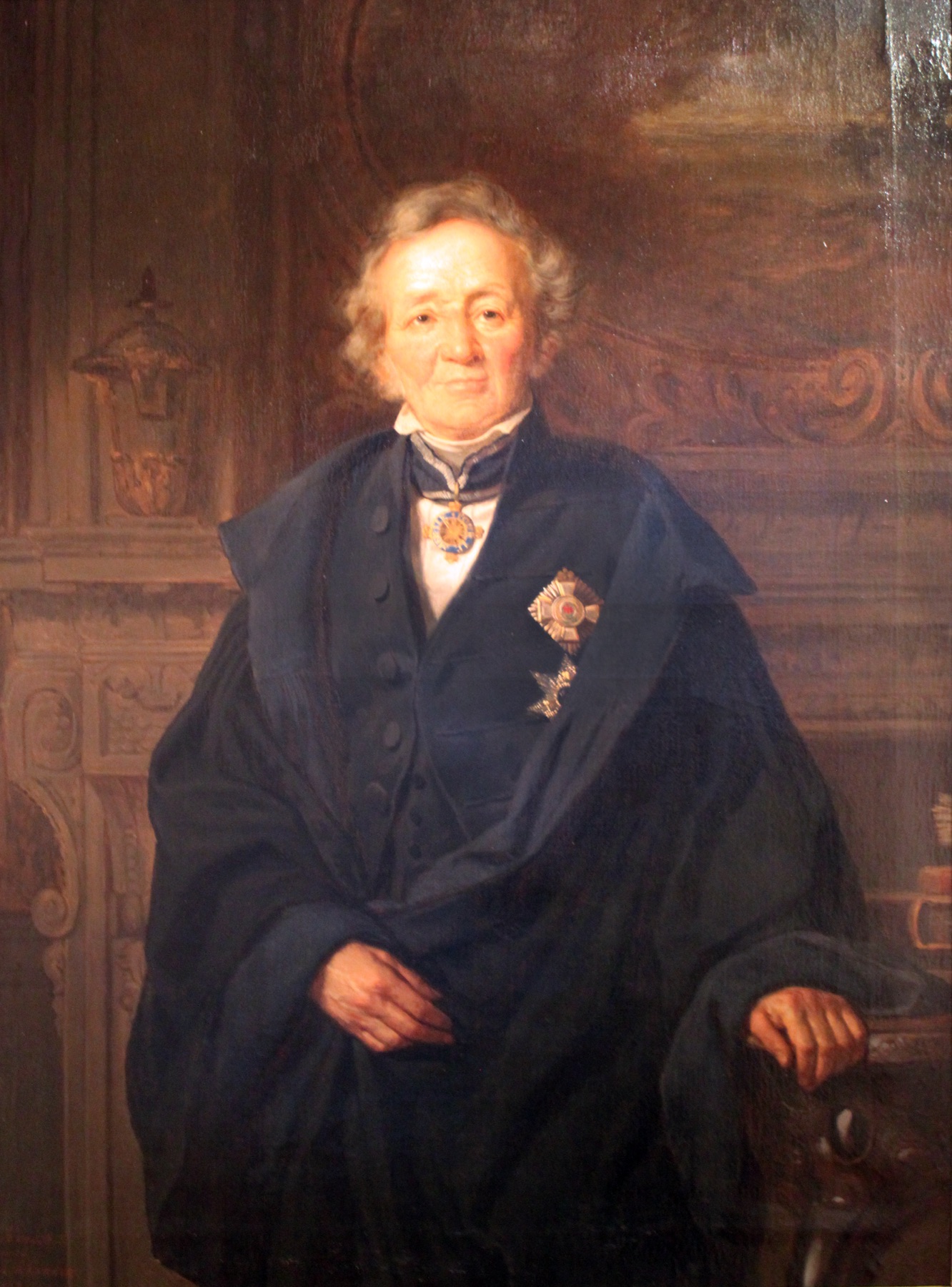
Why he matters: the discipline’s most famous sentence was written by a schoolteacher of twenty-eight, in a preface apologizing for his book. Note the two decorations: he insisted historians be judged by peers, not rulers.
(Adolf Jebens, 1875. Public domain.)
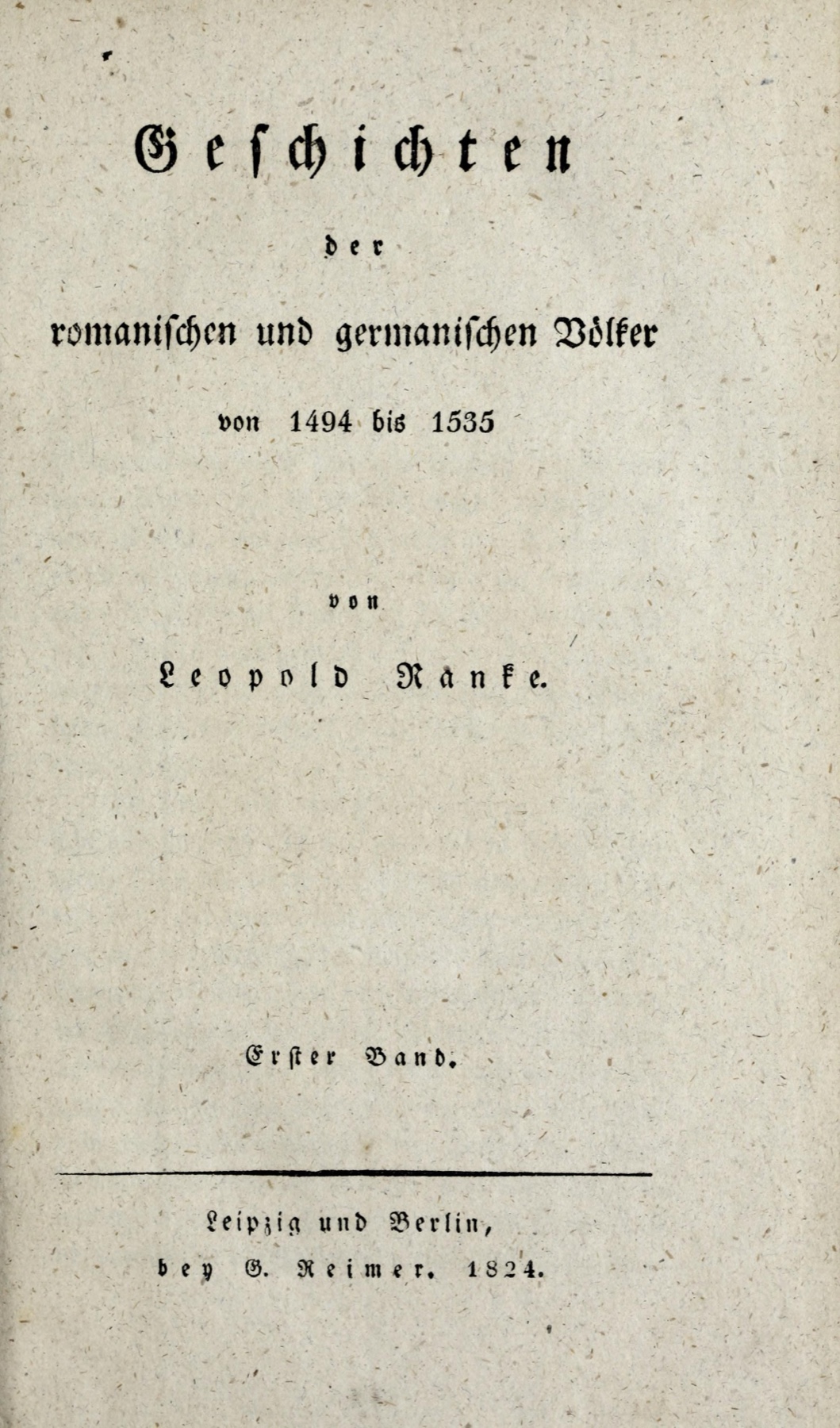
(Internet Archive, geschichtenderro00rank. Public domain.)
The preface · 1824
Two jobs history had always claimed
“History has had assigned to it the office of judging the past and of instructing the present for the benefit of the future ages. To such high offices the present work does not presume: it seeks only to show what actually happened [wie es eigentlich gewesen].” Ranke, 1824 introduction
The word “only”
This is modesty, not ambition. Judging and instructing were what Livy, Bede and Machiavelli did. Compare Voltaire in 4.1. Ranke is declining all of it — and Popkin is explicit that the target is “Enlightenment historians such as Voltaire and Gibbon” (p. 79).
What the smaller job buys
A claim that can be argued with. If a historian is delivering verdicts, you can only agree or disagree with their values. If they are claiming an event went a particular way, you can go and look. The authority moves from the historian’s standing to their sources.
Discussion · part one
Why would a historian give up judging the past in order to describe it?
Ranke hands back both traditional offices of history — judgment and instruction — and keeps only description. Voltaire, seventy years earlier, was doing nothing but ranking.
- What does a historian gain by claiming the smaller job?
- Ranke’s own preface says the history of the “racially kindred” Germanic and Latin nations “forms the heart of all modern history” — “racially kindred” being his English translator’s word for stammverwandt, of kindred stock. Is that a judgment, or a description?
Answer · part one
A claim you can check — and a set of judgments moved out of sight
The gain is real
Verdicts can only be shared or refused; described events can be checked. A claim about what happened is one somebody else can go and test, and that is what lets history accumulate rather than merely accumulate opinions. This is a genuine advance, and it is why the method survived its author.
The cost is where you stop looking
Refusing to judge does not remove the judgments — it moves them upstream, into what counts as a subject at all. Ranke’s decision that the history of Germanic and Latin Europe “forms the heart of all modern history” is made in the preface, before any source is consulted, and Popkin says plainly that it dismisses “non-European civilizations as unimportant” (p. 83). Nothing in the method catches that, because the method starts after the question is chosen.
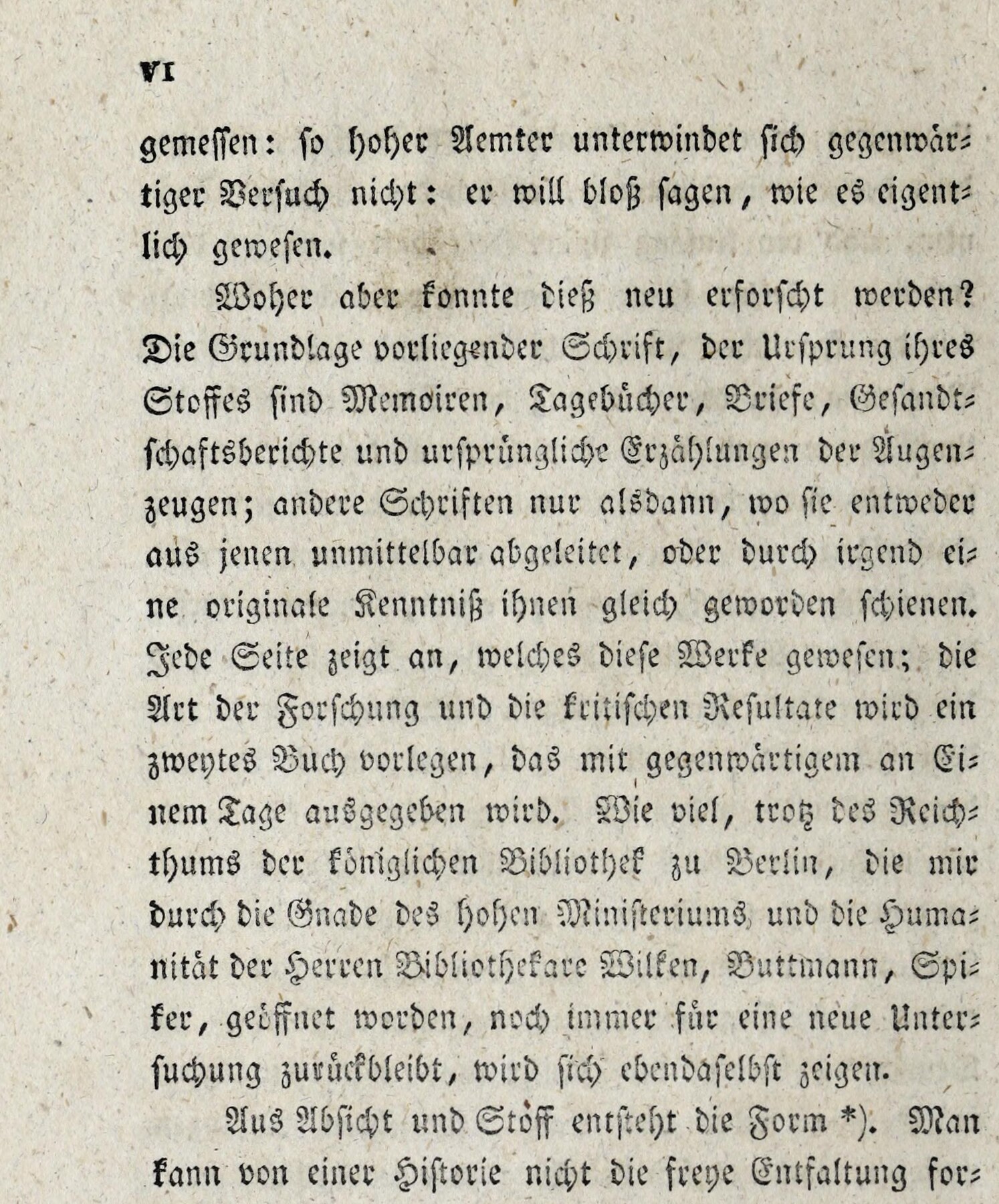
(Cropped from the Internet Archive scan, geschichtenderro00rank. Public domain.)
The preface · sources
The famous line is worthless without the paragraph that follows it
“The basis of the present work, the sources of its material, are memoirs, diaries, letters, ambassadors’ reports, and original accounts of eyewitnesses… These sources will be noted on every page.” Ranke, 1824 introduction
Three commitments in one paragraph
A hierarchy of evidence — eyewitness and administrative papers over later narratives. Full disclosure — the sources named on every page, so a reader can retrace the work. The historian of scholarship Anthony Grafton calls the result “a distinctively modern, double story”: the past, and the historian’s effort to reconstruct it (Popkin, p. 80).
The innovation
Not the phrase — versions of it were common. The footnote is the argument. Ranke publishes his workings, which means he can be caught being wrong, by anyone willing to go to the same documents. He also declares “a strict presentation of the facts, contingent and unattractive though they may be, is the highest law.”
Berlin · from the later 1820s
Source criticism becomes something you can be examined on
“Ranke’s innovation was to systematically engage students in the process of source interpretation by having them closely study primary documents and present their conclusions to other scholars, who would subject them to criticism.” Popkin, From Herodotus to H-Net, p. 81
What it looked like
An American student who sat in one: the student arrives “prepared with his brief of points and citations, like a lawyer about to plead a case in the court room… old opinions are exploded, standard histories are riddled by criticism” (p. 81).
A procedure travels; a sentence does not
A phrase cannot be transmitted; a procedure can. The seminar turned “check the sources” into something you could be trained in, examined on, and fail — and the scholarly journals that grew up around it demanded the same thing of everyone else, “each assertion accompanied by proof, by source references and quotations” (Popkin, p. 84). The graduate seminar still runs on this model.
Discussion · part two
Why is a room of people attacking your footnotes a better test than a brilliant lecture?
Popkin says the seminar carried “the sense of being initiated into an elite club, limited to those who had mastered the exacting techniques of scientific scholarship” (p. 81).
- What does criticism by trained peers catch that nothing else does?
- And what does a club like that reliably fail to catch?
Answer · part two
It catches errors, and it cannot catch a shared assumption
What peer criticism is good at
Misread documents, forged charters, dates that cannot be right, a conclusion the cited source does not support. It works because everyone in the room can go to the same paper and look. Popkin marks the shift precisely: a historian’s success was now “determined by the judgment of their professional peers, rather than by the reactions of the public or honors awarded by rulers” (p. 82).
What it is structurally blind to
Anything the whole room already believes. A seminar of men trained in the same tradition, reading state papers held in state archives, will catch a mistranscribed date every time and a shared assumption about who matters approximately never. Peer review polices accuracy. It does not police the question.
The profession and the state · 1819 onward
The archives that made history checkable were built to make citizens
“The increasingly professionalized scholarly history of the nineteenth century was heavily dependent on national governments for support.” Popkin, From Herodotus to H-Net, p. 85
The arrangement
Governments funded the universities where the new history was taught and the archives where its documents were made available. Popkin has the Prussian government initiating the Monumenta Germaniae Historica — a state-funded scholarly edition of Germany’s medieval sources — in 1819 “as part of its program for strengthening national consciousness after the Napoleonic wars” (p. 84).
And nobody had to be bought
Popkin quotes a scholar on nineteenth-century nationalist historians: they were “true believers…. No one had to pay them to write their national histories; that was an added (and later) bonus” (p. 85). The bias did not need to be bought because it was built into which papers survived, who kept them, and who was hired to read them.
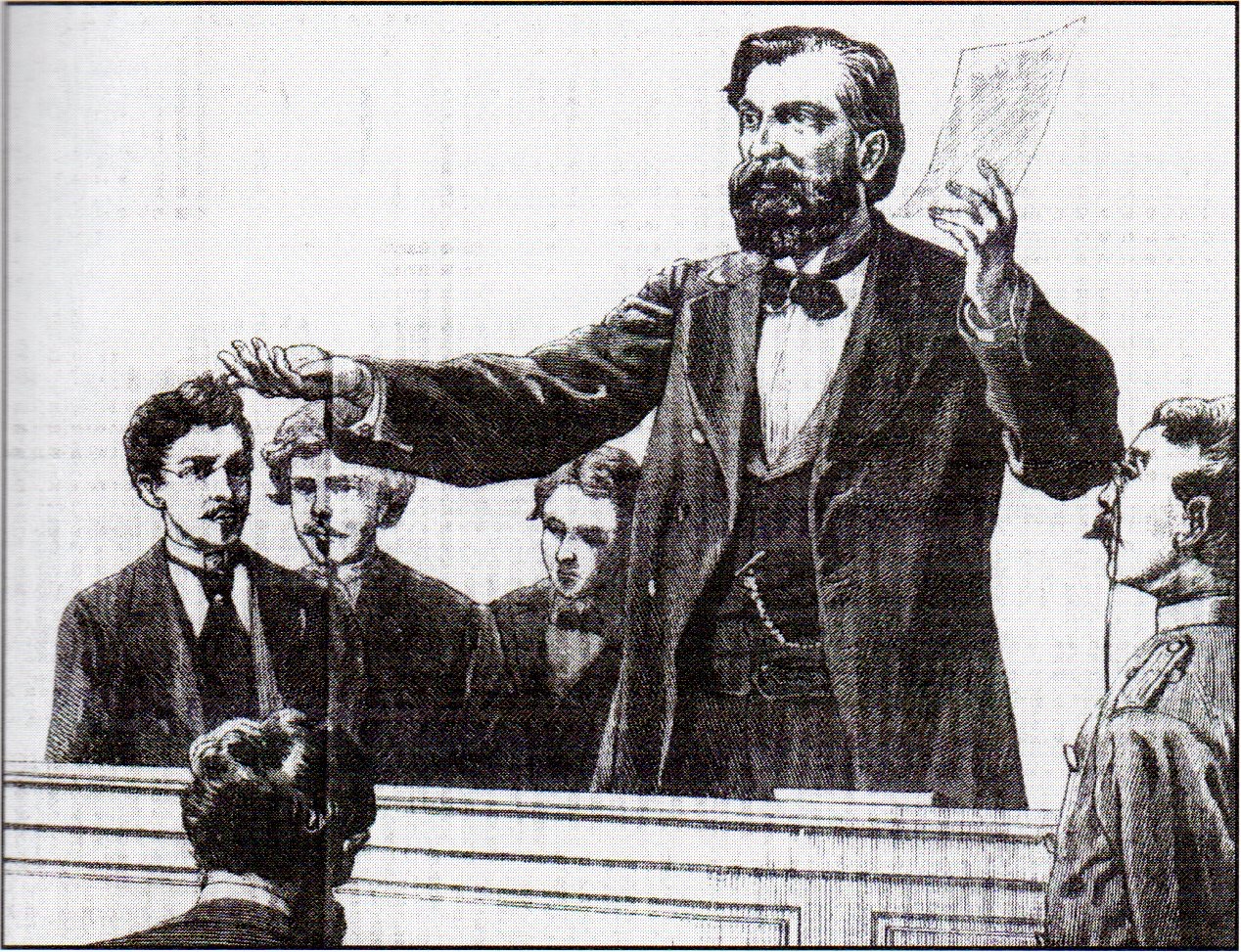
(Contemporary engraving, artist unknown. Public domain.)
Heinrich von Treitschke · 1834–1896
The best-trained history in Europe was put to work for the nation
“The nationalist and anti-Semitic outlook propagated in Treitschke’s influential works helped create the climate that led many Germans to support the policies that led to World War I and later made the rise of Hitler possible.” Popkin, From Herodotus to H-Net, p. 89
He is not a failure of the method
Treitschke trained under Ranke, used the archives, cited his sources, held the chair at Berlin. His German History in the Nineteenth Century told the story of unification “in a way that made Bismarck’s accomplishment appear necessary and inevitable” (p. 88) — that is, made the new German Empire look like the destination history had been heading for all along. Ranke’s students, Popkin notes, “saw unification as an expression of the individuality of the German nation, expressing itself as historicist teaching indicated” (p. 88).
What rigour does not prevent
The apparatus performed exactly as designed and produced this. Rigour about evidence is not a safeguard against anything, because it never touches the prior question of what the evidence is being gathered to show.
The seminar · through the nineteenth century
The room that certified historians did not admit most people
“Women remained almost entirely excluded from the university seminars that had now become crucial for the achievement of academic status in the historical profession.” Popkin, From Herodotus to H-Net, p. 94
It was argued for, not merely assumed
Popkin notes that “even some women endorsed this view” — the British writer M. A. Stodart, in 1843, held that women’s “powers of mind are hardly fitted to enter this field… her feelings usurp the seat of judgment” (p. 93). Meanwhile women wrote a great deal of history — biography, popular history, the first American house museums — none of it counted as scholarship.
What the historian Bonnie Smith adds
Smith argues the seminar “excluded women, who did not gain access to higher education until the twentieth century” (p. 83), and that the exclusion was part of the model rather than incidental to it. Ranke described archival research in frankly masculine terms — a “sweet, magnificent fling with the object of my love” (p. 80). Objectivity was defined partly against what the profession coded as feminine.
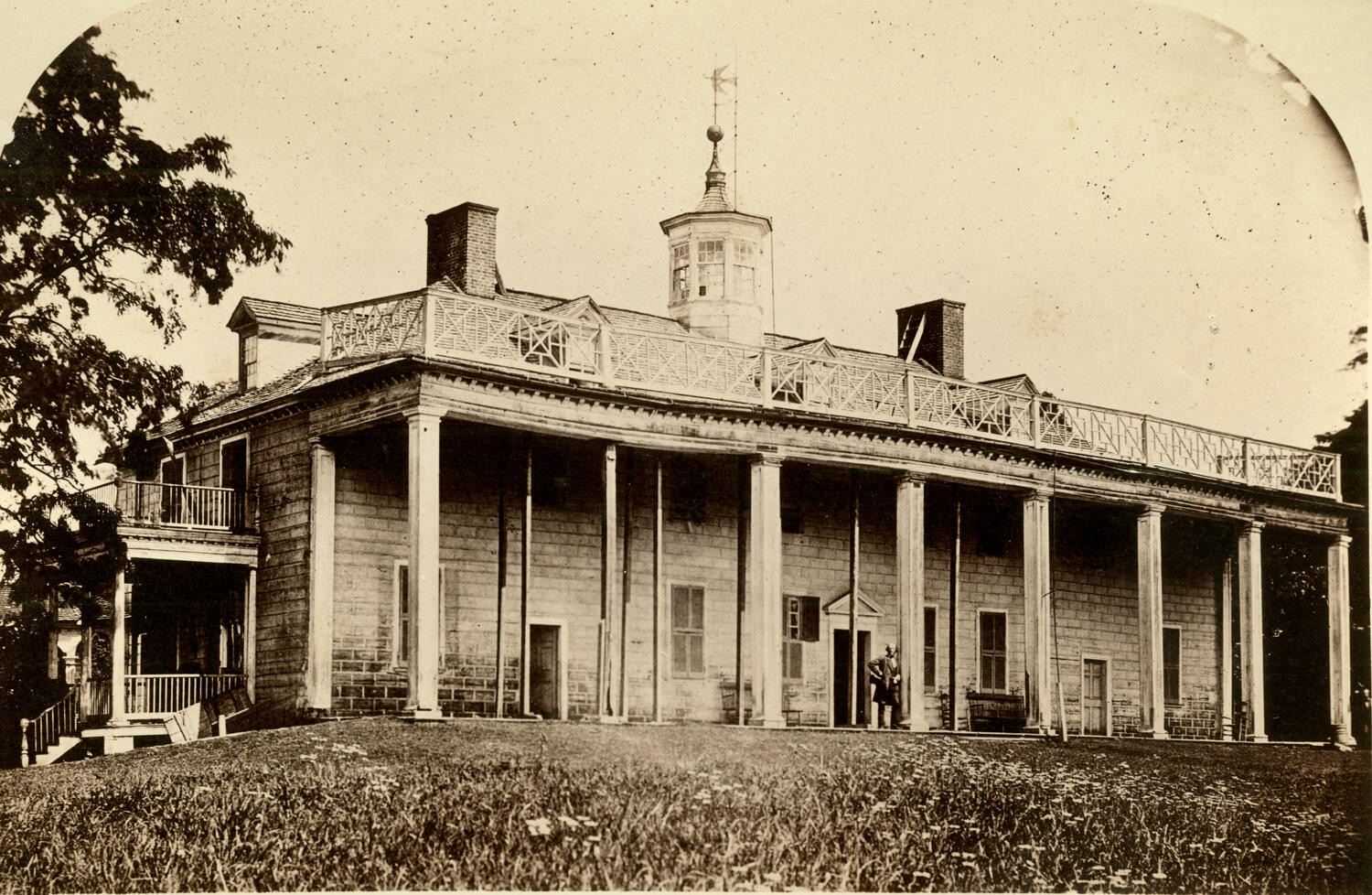
(Photographer unknown, 1858. Public domain.)
Ranke · lectures on world history, 1854
He also throws out the idea Voltaire and Kant were arguing for
“I would maintain that every epoch is immediate to God, and that its value consists, not in what follows it, but in its own existence, its own proper self.” Ranke, 1854 lectures
Aimed straight at Voltaire and Kant
He asks flatly: “What is progress? Where is this progress of mankind to be seen?” To hold that every generation is more perfect than the last, so that earlier ones are “only porters for the following generations,” he calls “a divine injustice.” Of the philosophers of history: “Out of the infinite array of facts, they select those which they wish to believe” (1881–88 notes).
What this does to the week
Scientific history is not the Enlightenment’s story of progress made rigorous. It is partly a refusal of it. Compare Herder in 4.1. But note the limit: Ranke refuses to rank generations, and in the same lecture calls Asia’s history “retrogressive” and dates art’s peak to the sixteenth century.
Discussion · part three
Is “every epoch is immediate to God” a finding, or a preference Ranke brought with him?
Voltaire ranked four ages by taste; Kant argued the species was headed somewhere. Ranke says no generation may be ranked above another, and gives a theological reason for it — while ranking peoples and periods freely in the same lecture.
- What evidence could possibly settle whether epochs are equal?
- If nothing could, is Ranke doing something different from Kant, or the same thing in the other direction?
Answer · part three
Not a result. A premise.
No archive can tell you this
There is no document that establishes epochs are of equal worth. “Immediate to God” is a theological claim, and it does the same structural job as Kant’s secret plan of Nature (compare 4.1): it supplies a shape for history that no evidence could confirm or refute. Both men needed one. Ranke simply chose the shape that flattens rather than the shape that climbs.
The premise that costs more
A ladder lets you skip the ages near the bottom; this premise obliges him to take each period on its own terms — more work, and better history. He does not hold to it consistently: the same lecture ranks peoples, and his 1824 preface had already settled which nations counted. The rule outlived the man who broke it, and Popkin says it is what survives him — “judicious evaluation of evidence, with careful attention to its historical context” (p. 98).
The take home
The discipline kept the answer that could be taught — and inherited everything with it.
What was built, and what it could not do
It began by giving something up: the right to judge and to instruct. What replaced them — a hierarchy of evidence, a citation on every page, a seminar, journals, a doctorate — are not claims about truth but arrangements for catching people out. What they could not do is choose their own questions. States built the archives and paid the chairs; the seminar admitted a narrow few; Ranke settled who mattered in his preface, before any document was opened. The apparatus checks answers. Somebody else has always chosen the question.
The question
Objectivity here never meant a historian with no view; it meant work laid out so that someone who disagrees can find where you went wrong. So “is this person biased?” is the wrong question to put to a claim of objectivity — in a history book, a news report, or a model. Ask instead what it would take to catch them being wrong, who paid for the evidence, and who was in the room when the question was chosen.
Recap
Six things
01 · Humboldt, p. 57
The sentence, then the trouble
“Present what actually happened” — followed by the admission that the senses give you only part of any event.
02 · Ranke, 1824 introduction
A renunciation, not a boast
Judging and instructing handed back. “Only” to show what happened — a smaller job, deliberately.
03 · Ranke, 1824; Popkin, p. 80
The footnote is the argument
Memoirs, letters, ambassadors’ reports, “noted on every page,” plus a whole volume of criticism. Workings published.
04 · Popkin, pp. 81–82
The seminar
Source criticism made teachable and examinable. It polices accuracy — never the choice of question.
05 · Popkin, pp. 83–85, 88, 94
Who paid, who was let in
State archives, state chairs, a nationalist profession of “true believers” — and a seminar that excluded women by design.
06 · Ranke, 1854 lectures
Progress, refused
“Every epoch is immediate to God.” The ladder Voltaire and Ferguson built, thrown out on principle.
Discussion · 4.2
What does “objectivity” mean for a historian — and is it possible?
You now have a specific version of the question rather than an abstract one: a hierarchy of sources, a citation on every page, a seminar of critics, a state that paid for the archive, and a preface that decided who mattered before any of it started. Answer it with those in view.
- If objectivity is a historical idea with a date and a funder, does that make it less binding on us?
- And why has the promise outlived every objection raised to it?