Making History • HIST 1105 • Week 11.1
History, Memory, and Public Space
- James W. Loewen, Lies Across America: What Our Historic Sites Get Wrong (1999), “Some Functions of Public History” and “The Sociology of Historic Sites”, 13–24
- Dolores Hayden, The Power of Place: Urban Landscapes as Public History (1995), ch. 2, “Urban Landscape History: The Sense of Place and the Politics of Space”, 14–43
Loewen is cited by the page of the revised edition (The New Press, 2019), which the course PDF reproduces. Hayden is cited by the page of the MIT Press edition.
Today in context
What makes history happen?
Week 10.1 · Maza, with Jenkins
Language. Sources read as texts, and histories as made things.
Week 10.2 · Campus history with AI
A machine that puts words together the way readers expect. Whether it can write history.
Week 11.1 · Loewen and Hayden
Commemoration and space. What gets put up, by whom, and who a place lets in.
Week 11.2 · AI and campus history
The campus as a landscape with a past, and the archive behind it.
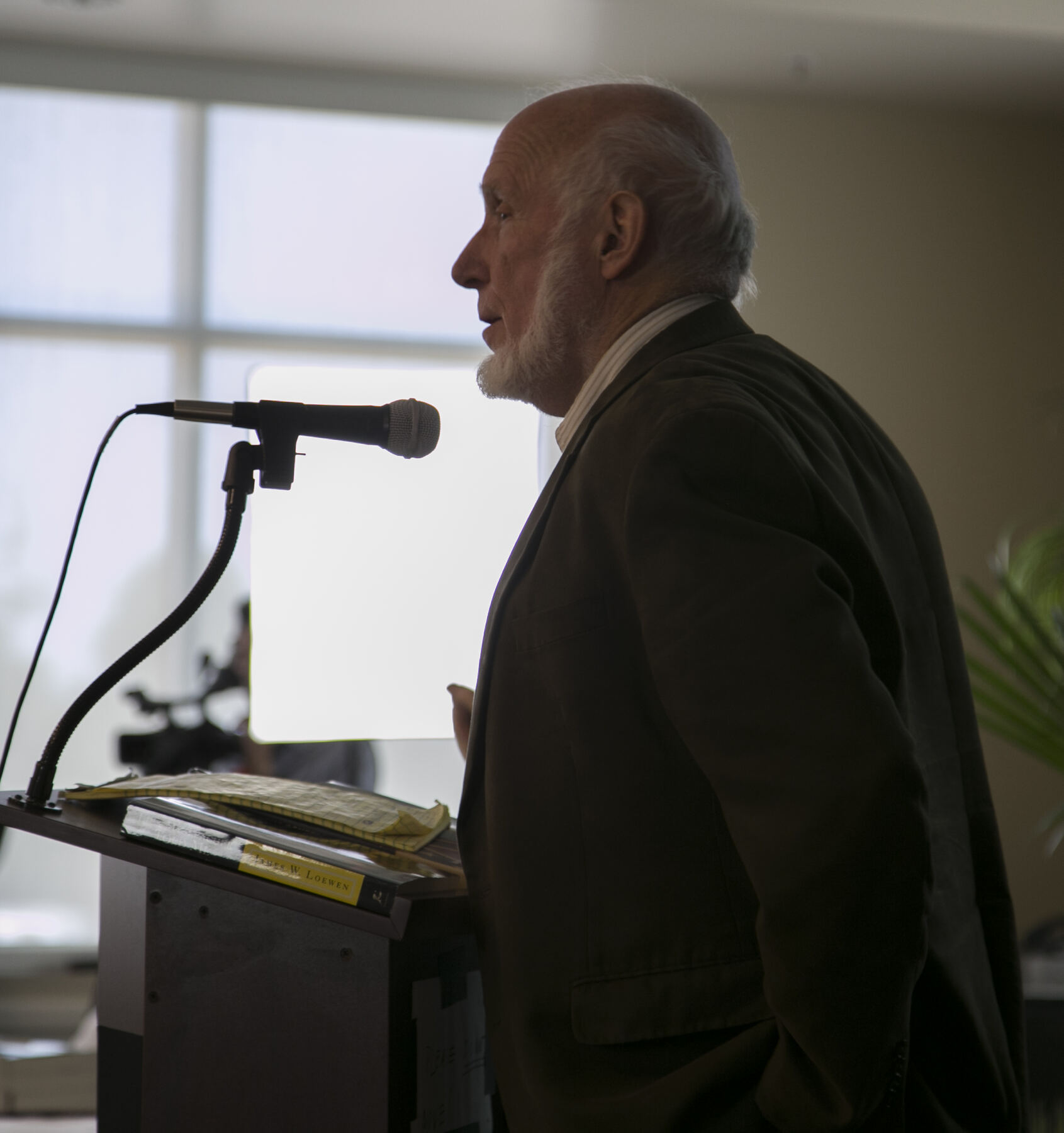
Loewen · “Some Functions of Public History”
For Loewen, teaching the past is not the main reason for a monument
“Why have Americans put up hundreds of thousands of markers and monuments across the landscape?”
His answer
Learning from the past is “hardly the only reason for public history,” and “not even the primary reason” (p. 13). He starts with stories, class power and a civil religion (pp. 13–14).
Loewen · stories
Human beings live by stories, Loewen argues, and monuments supply the heroes
“Individuals who have not forged a heroic narrative of their own can nonetheless feel part of something important—in this case, our nation’s progress—by identifying with others who performed heroic deeds.”
On the landscape
A heroic story can be borrowed. Remembering these deeds “on the landscape,” Loewen says, “meets this human need” (p. 13).
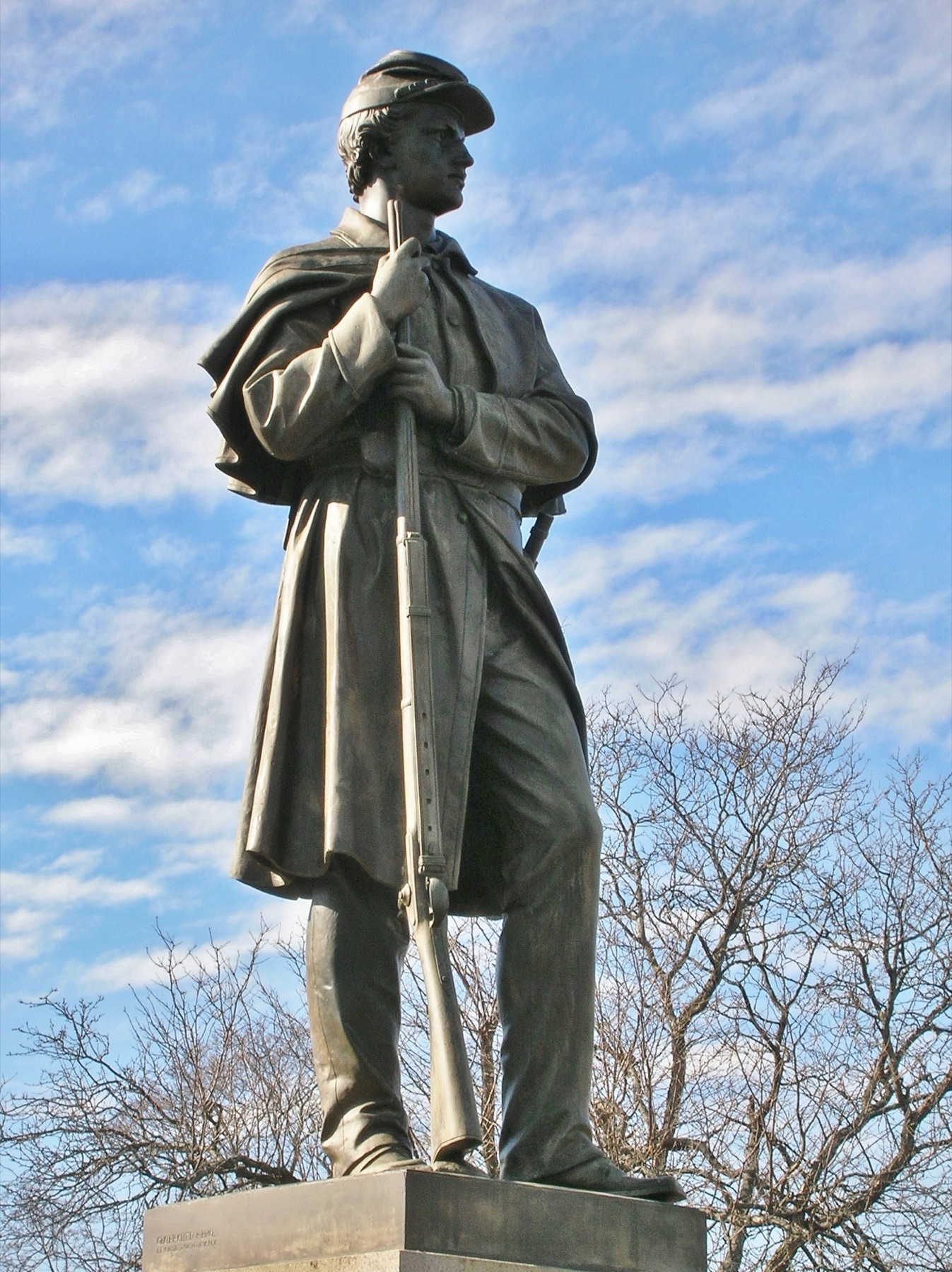
(Marty Aligata, 2016. Wikimedia Commons, public domain.)
Loewen · class
Loewen argues that commemorating history helps the upper class stay upper
“Usually, behind even the simplest aluminum plaque lurks someone who feels good about its installation. The efforts of the upper class to commemorate their history help them feel better psychologically; the results also help them stay upper. History is power.”
Who shapes the memory
Those on top of society know this, Loewen says, so “they take the time to determine how history will be remembered” (pp. 13–14).
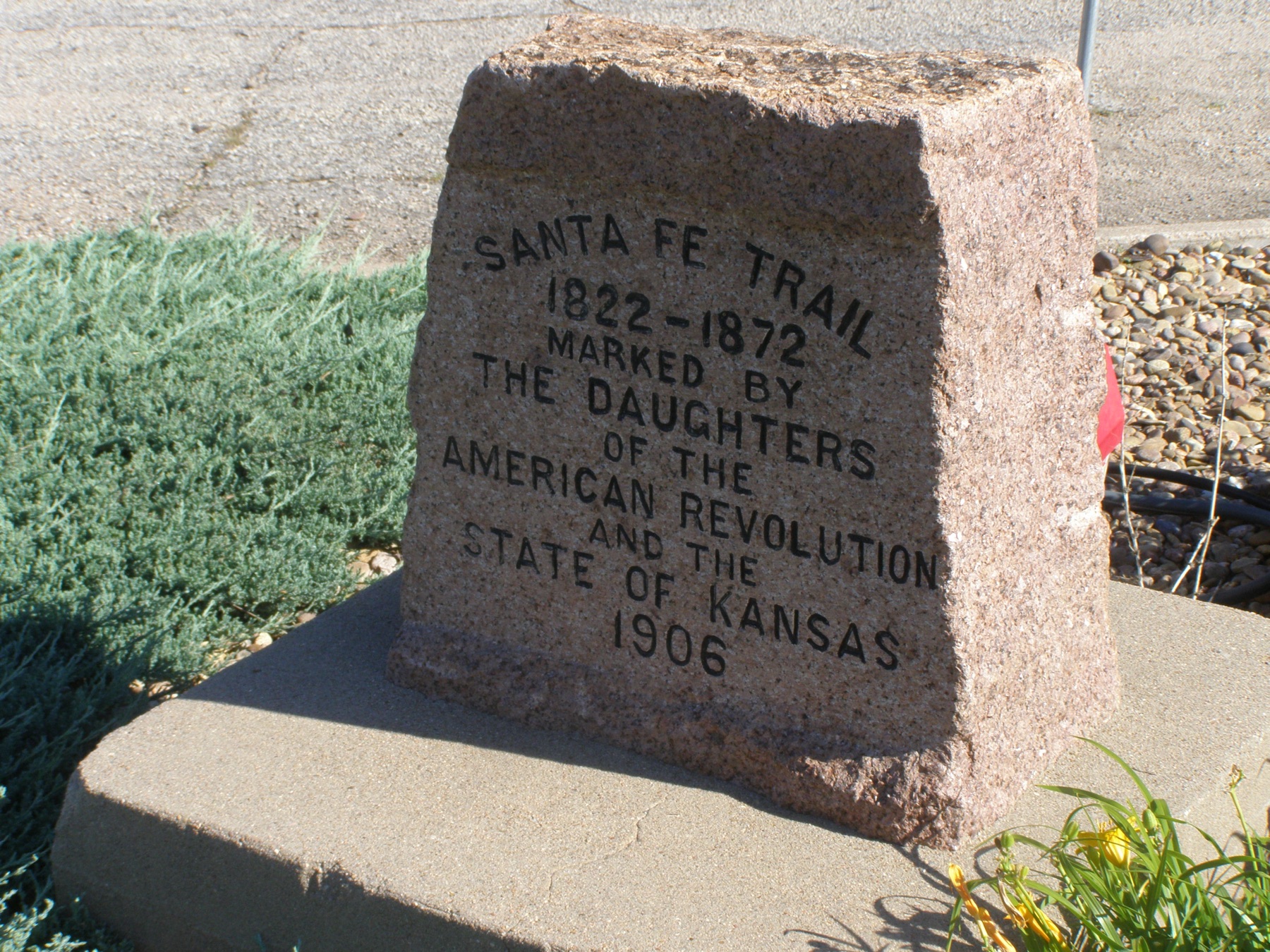
(Chris Light, 2012. Wikimedia Commons, CC BY-SA 4.0.)
Loewen · a civil religion
Memorials, Loewen argues, mostly declare that the state is worth dying for
“Monuments and markers provide sacred sites for what sociologist Robert Bellah called America’s ‘civil religion.’ Memorials, in particular, declare what is worth dying for, which turns out to be mostly the state, in war.”
A shared heritage
Tenth-generation Americans and recent immigrants alike can “glory in what the founders achieved in Philadelphia” and mourn at the Vietnam Veterans Memorial (p. 14).
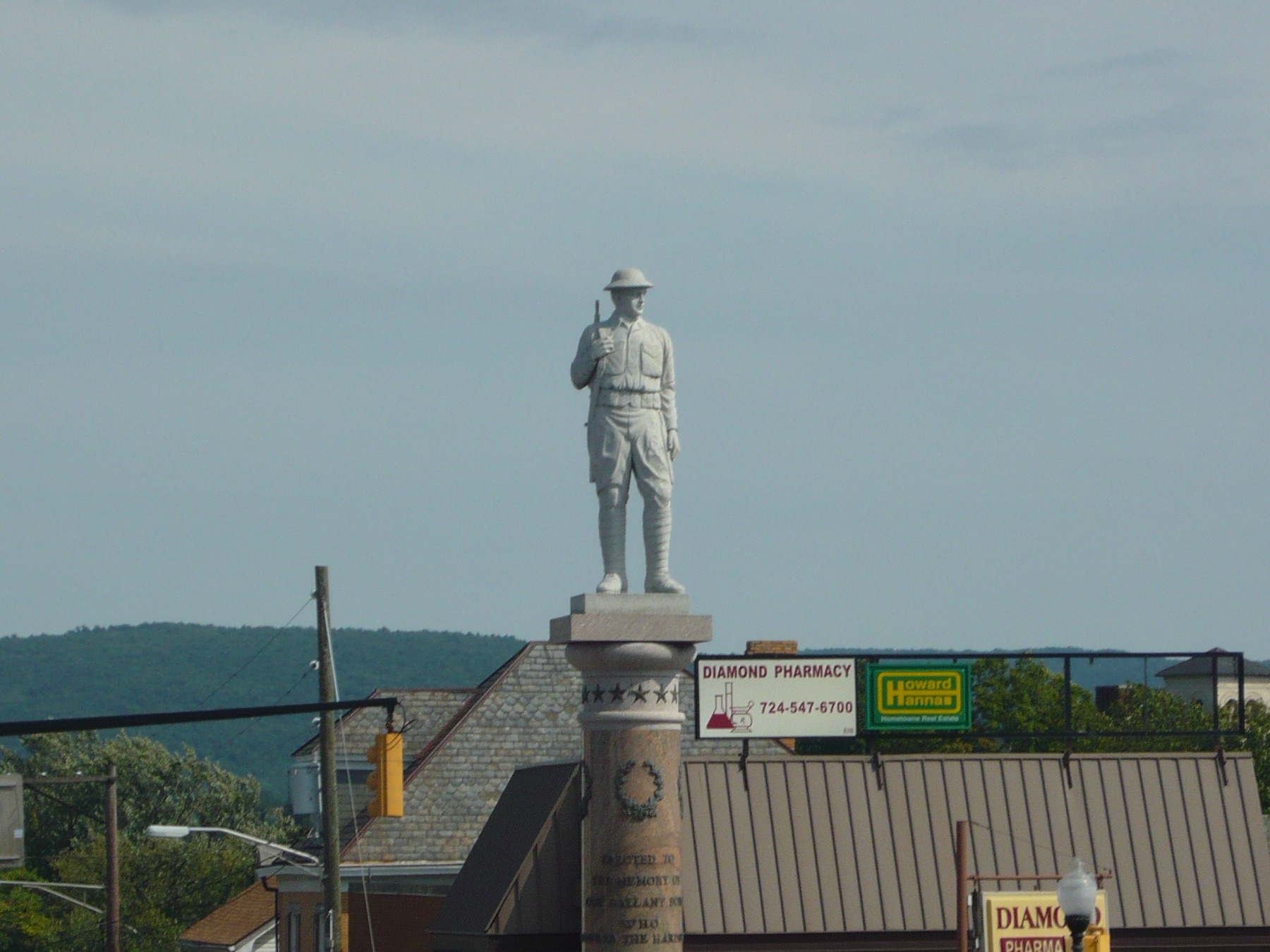
(Canadian2006, 2011. Wikimedia Commons, CC BY-SA 3.0.)
Loewen · what monuments do to thinking
Most monuments, Loewen argues, tell visitors that whatever happened was good
The state is rarely criticized
Most war memorials turn their conflicts into “noble causes.” Markers rarely criticize the government (p. 14).
Thinking is discouraged
A modest plaque “speaks with authority,” as if its message were “incontestable” (p. 14).
The future inherits it
One generation’s monuments become “a force imprisoning the minds” of the next. Local ones can “empower people” too (p. 17).
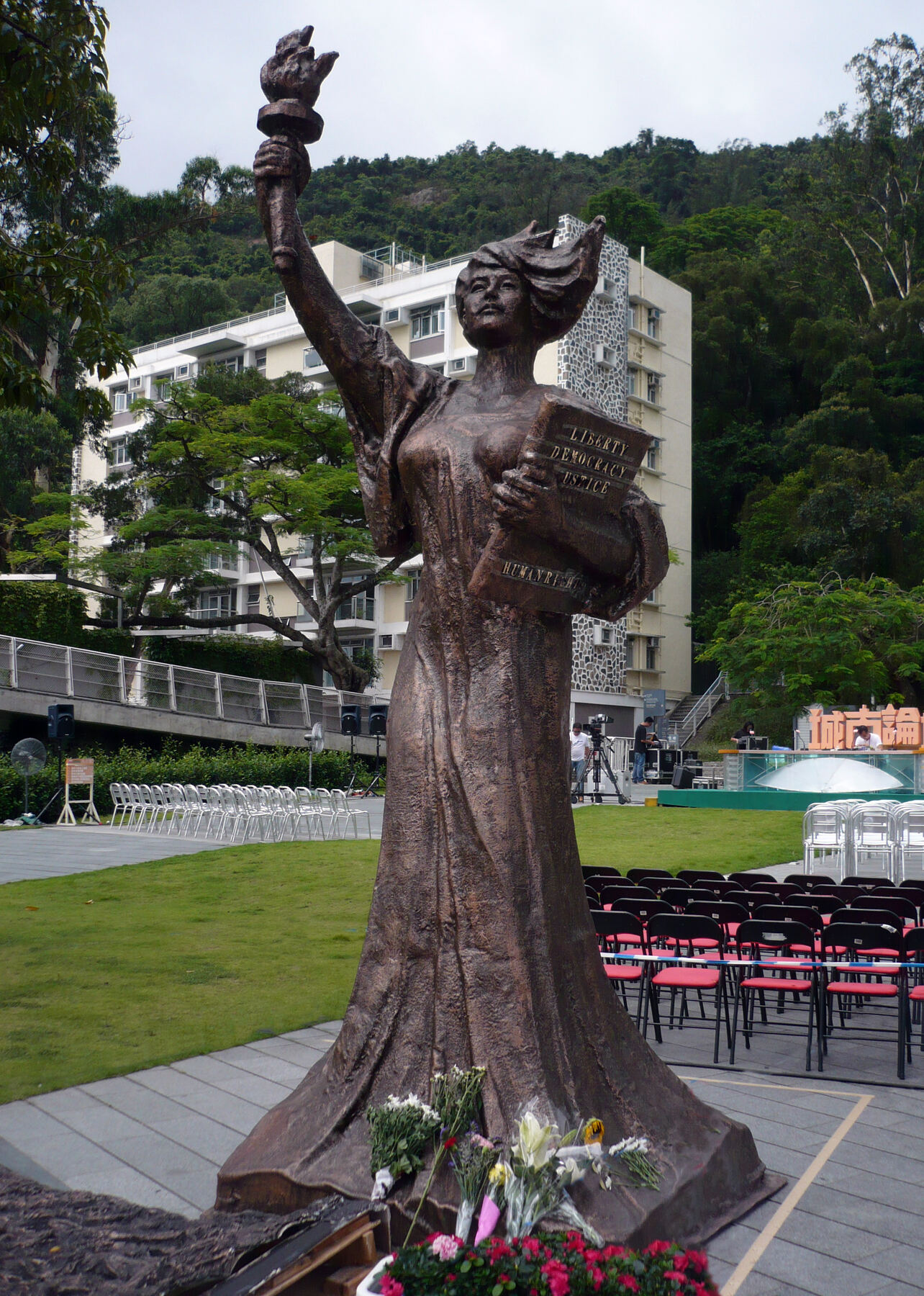
(Cyberviewer, 2010. Wikimedia Commons, CC BY-SA 4.0.)
Loewen · “The Sociology of Historic Sites”
Monuments need approval, and only certain kinds go up
State marker offices
Early one-person offices made errors; review boards from the late 1950s did better. In Georgia, a legislator’s call could still take a marker down (pp. 18–20).
Sponsors
Often a private club raises part of the cost and a city or state pays the rest. No relatively disinterested state body reviews monuments (pp. 20–21).
Who gets remembered
Indian wars, which many textbooks drop; labor, which has influence and money; and the upper class, “always” (pp. 21–22).
Happy history
Communities usually mark “only their happy history.” Burlington honors Ethan Allen, whom Abenakis see as “a rapacious Indian-hater” (p. 23).
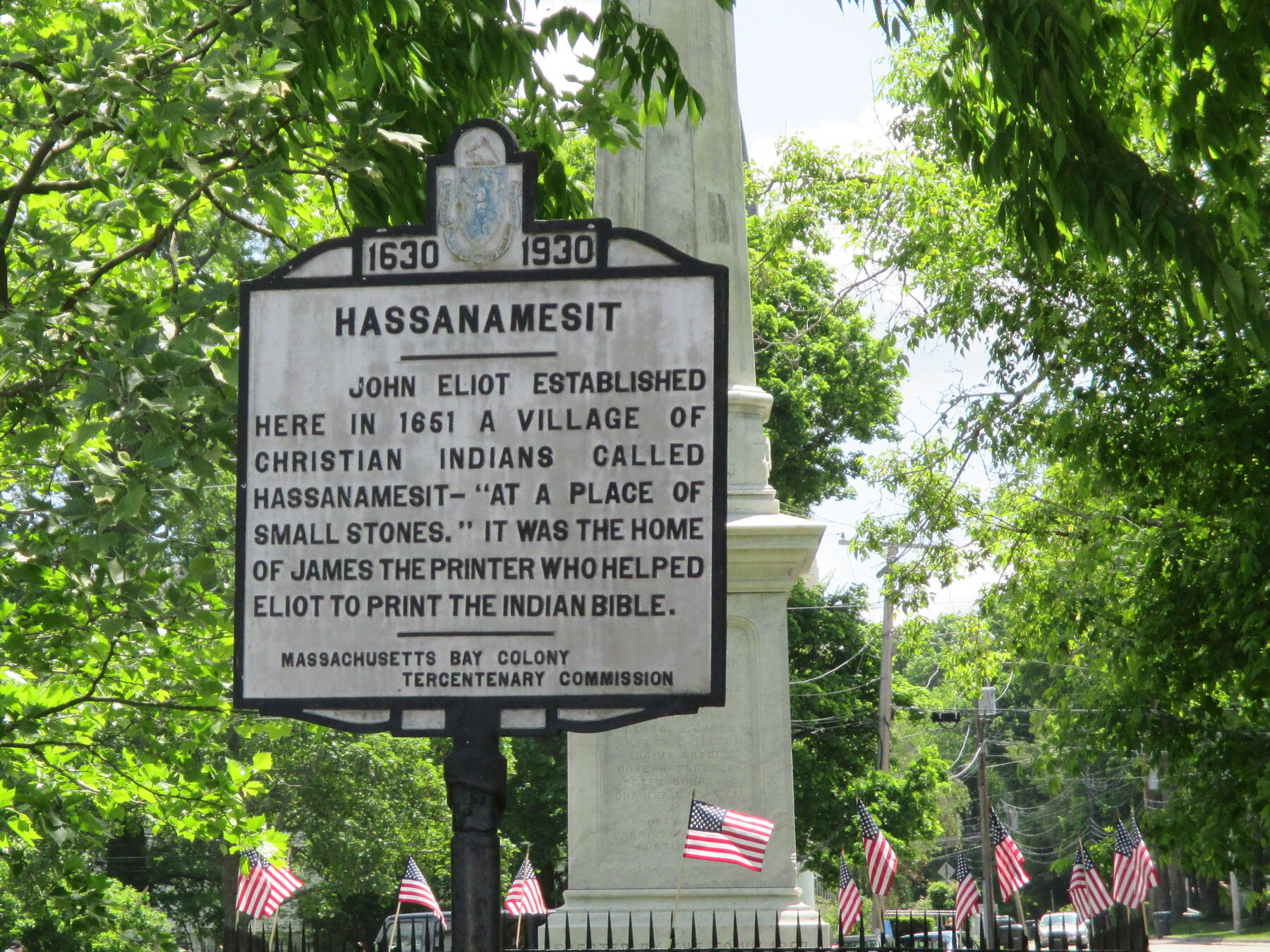
(Elizabeth Thomsen, 2014. Wikimedia Commons, CC BY-SA 4.0.)
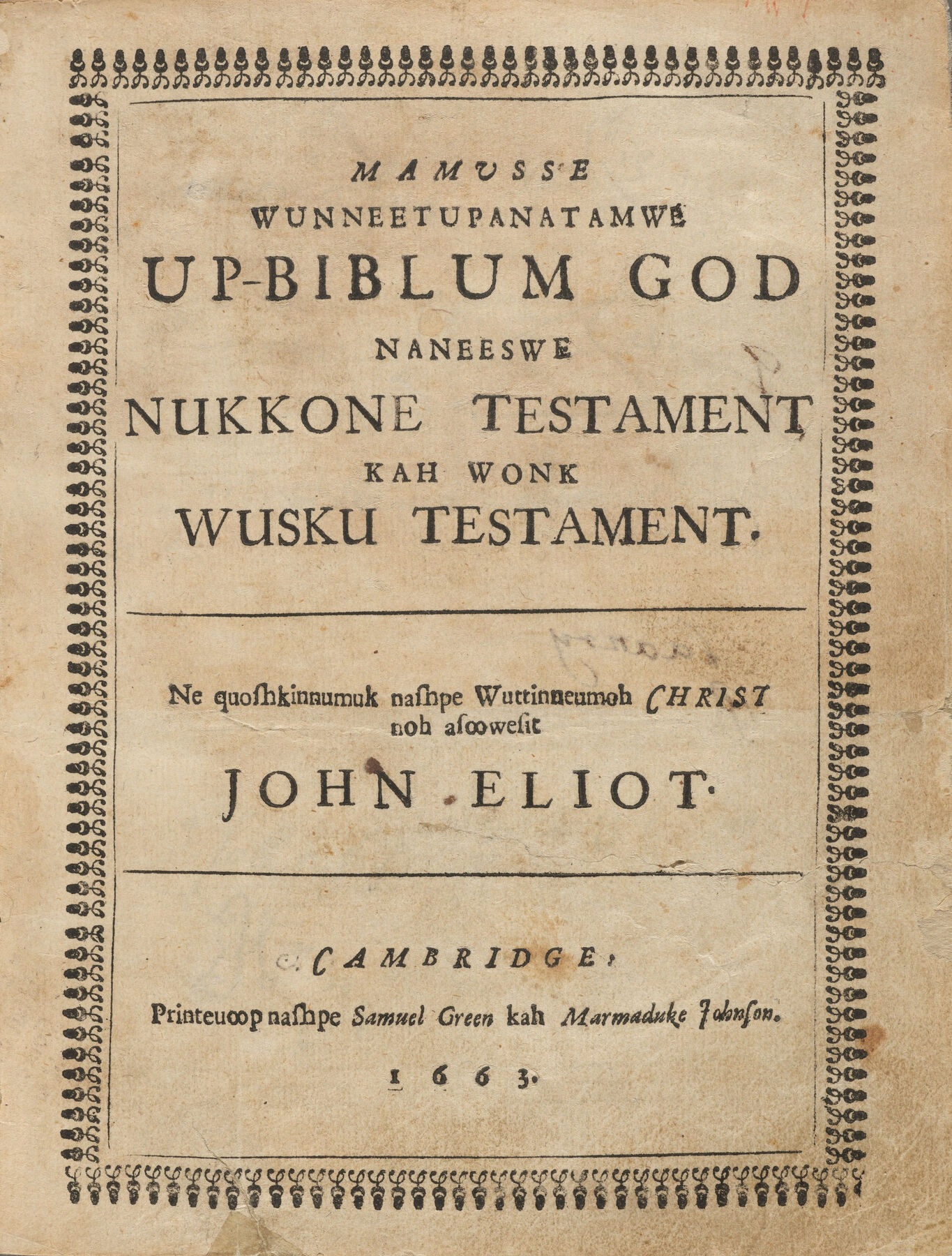
(Houghton Library, Harvard University. Wikimedia Commons, public domain.)
Hassanamesit · November 1675
The marker leaves out the war that emptied Hassanamesit in 1675
“they will either force you all to some Island as the Natick Indians are, where you will be in danger to be starved with cold and hunger, and most probably in the end be all sent out of the country for slaves.”
Deer Island
About two hundred went with the fighters. By December the colony held five hundred other Christian Indians on Deer Island, “bleak and cold” (pp. 476, 485).
Still in Grafton
Hassanamisco Nipmuc families still hold a small reservation in Grafton.
Loewen · how to read a marker
People, not gods, write markers, so ask how each might be wrong
“Markers and monuments are often written in stone, but they are not written by gods. People put them up.”
His questions
Ask, “How might this be wrong?” Distrust “According to tradition . . .” Ask why the sponsors went to the trouble of putting it up (pp. 20–21).
Hayden · The Power of Place, 1995
An architect and urban historian reads the whole city as social history
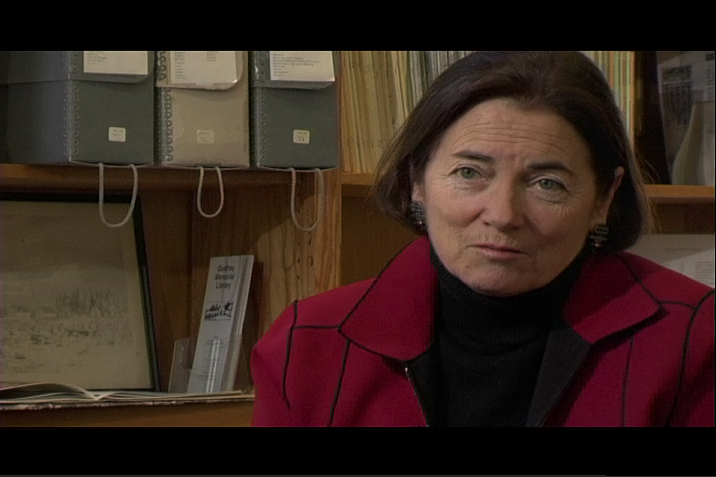
“This chapter sketches a way to frame the social history of urban space, a scholarly terrain where many fields overlap.” Hayden, The Power of Place, p. 15
Loewen stops at markers and monuments. Hayden, an architect who taught at UCLA and Yale, ran The Power of Place in Los Angeles, marking sites of working people’s lives.
Hayden · Lefebvre, 1974
Chapter 2’s starting point: space is produced
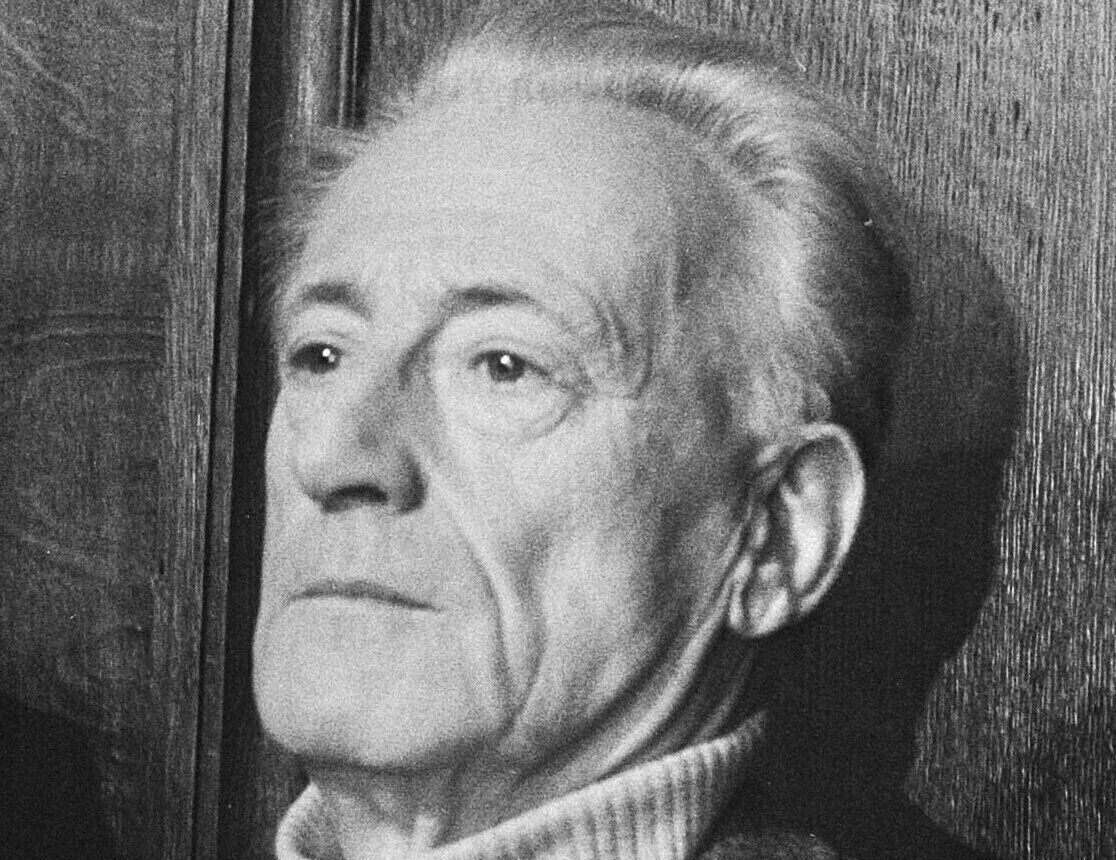
“Authentic knowledge of space must address the question of its production.” Henri Lefebvre, The Production of Space (1974), Hayden’s epigraph, p. 14
Hayden builds the chapter on the French sociologist Henri Lefebvre. Her question is how any place gets made, and for whom.
Hayden · the production of space
Hayden counts ditchdiggers and housewives among a city’s makers
“Indigenous residents as well as colonizers, ditchdiggers as well as architects, migrant workers as well as mayors, housewives as well as housing inspectors, are all active shaping the urban landscape.”
Lefebvre’s term
The production of space: how places are “planned, designed, built, inhabited, appropriated, celebrated, despoiled, and discarded” (p. 15).
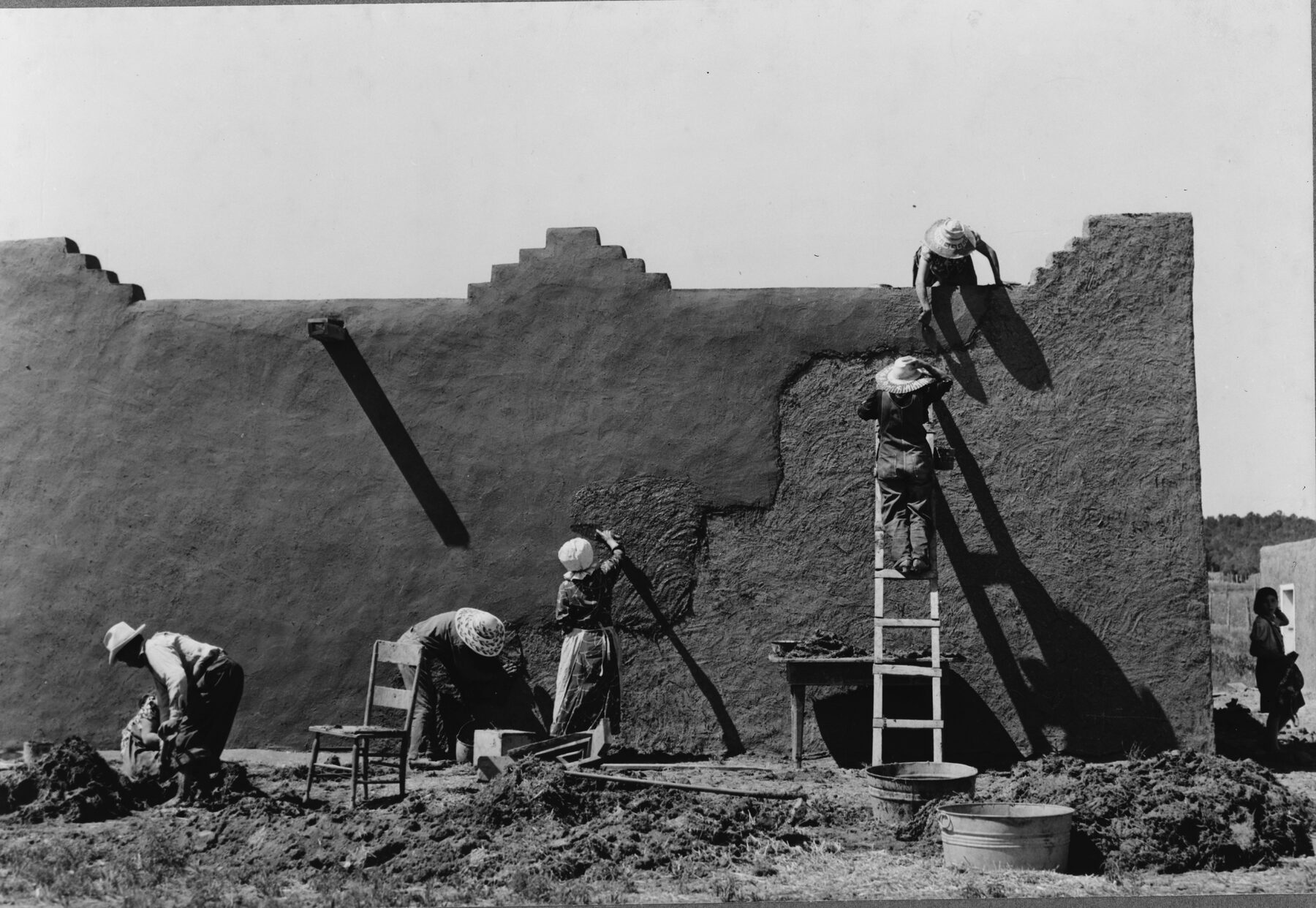
(Russell Lee, Farm Security Administration. Library of Congress. Public domain.)
Hayden · “place”
Hayden joins the sense of place to the politics of space
“‘Place’ is one of the trickiest words in the English language, a suitcase so overfilled one can never shut the lid. It carries the resonance of homestead, location, and open space in the city as well as a position in a social hierarchy.”
The sense of place
Place reaches all five senses, which makes it “powerful as a source of memory” (p. 18).
The politics of space
Phrases like “knowing one’s place” are spatial and political at once (p. 16). Cultural geography, she says, kept to rural landscapes, “avoiding issues of political contestation” (p. 17).
Lefebvre, through Hayden · pp. 18–19
Every society, Lefebvre argues, builds space for production and for social reproduction
Production
Spaces “shaped for mining, manufacturing, commerce, or real estate speculation.”
The body
Biological reproduction, in the space in and around the body.
Housing
Reproduction of the labor force, in the space of housing.
The city
Reproduction of social relations, in the public space of the city.
Hayden · three histories to write
Hayden turns Lefebvre into three kinds of history a historian can write
Working landscapes
Who built and kept up the farms, mines, railroads and streetcars, a history that has “barely been studied” (pp. 20–22).
Territorial histories
Ghettos and barrios, reservations and camps; for women, the body, the home and the street: territories with enforced boundaries (pp. 22–29).
Building types
The political life of ordinary buildings: who built, owned, regulated and rented them (pp. 30–34).
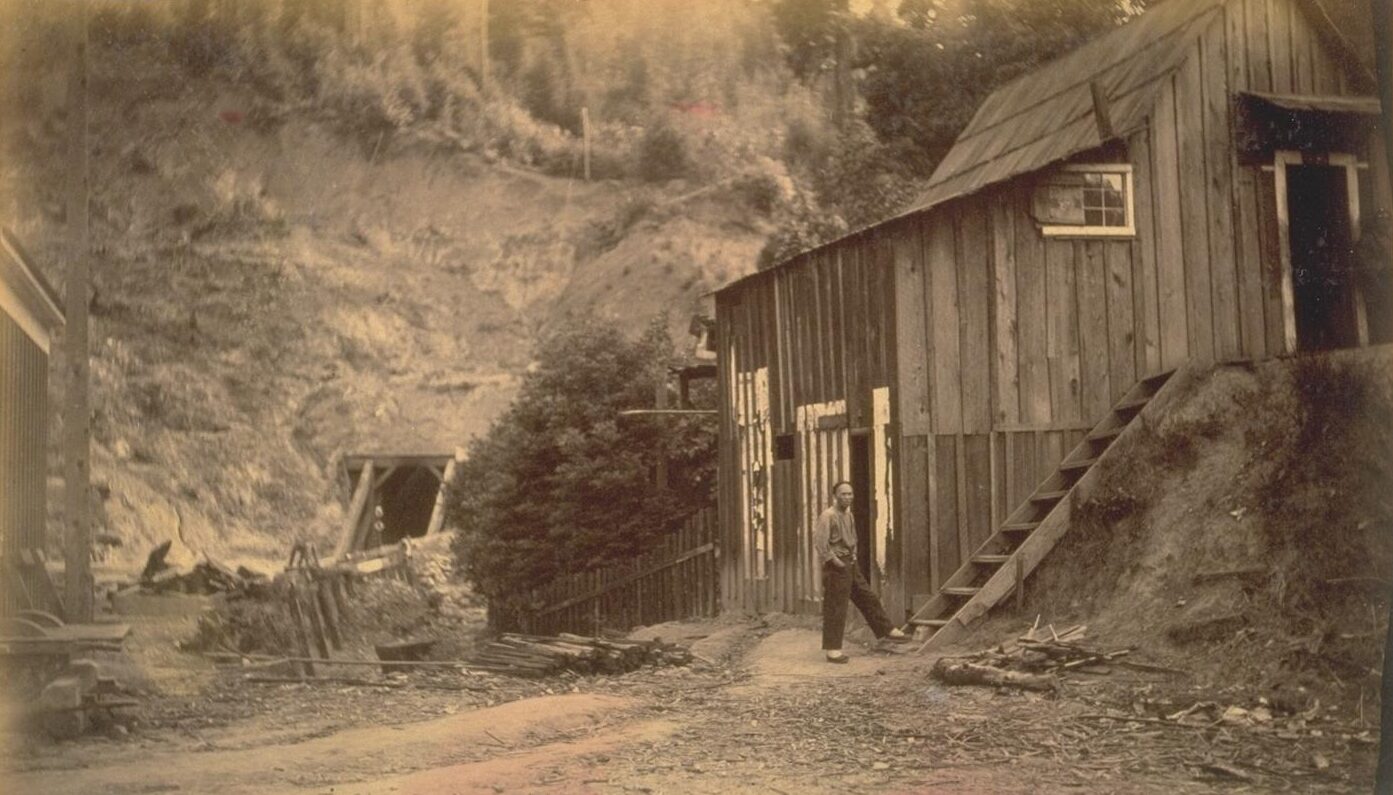
(Photographer unknown. Bancroft Library, via Wikimedia Commons, public domain.)
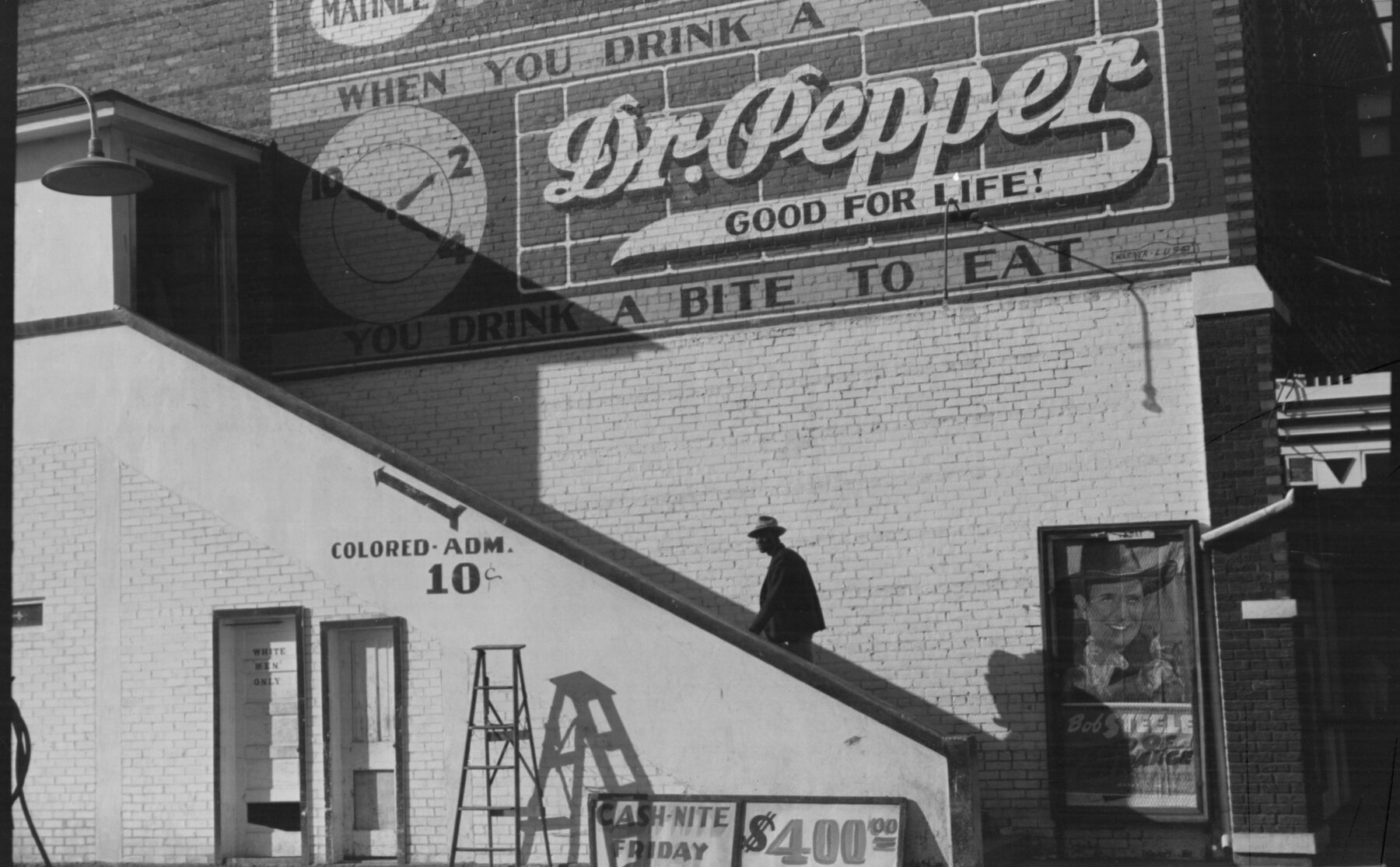
(Marion Post Wolcott, Farm Security Administration. Library of Congress. Public domain.)
(Carol M. Highsmith. Library of Congress. Public domain.)
Hayden · territorial histories
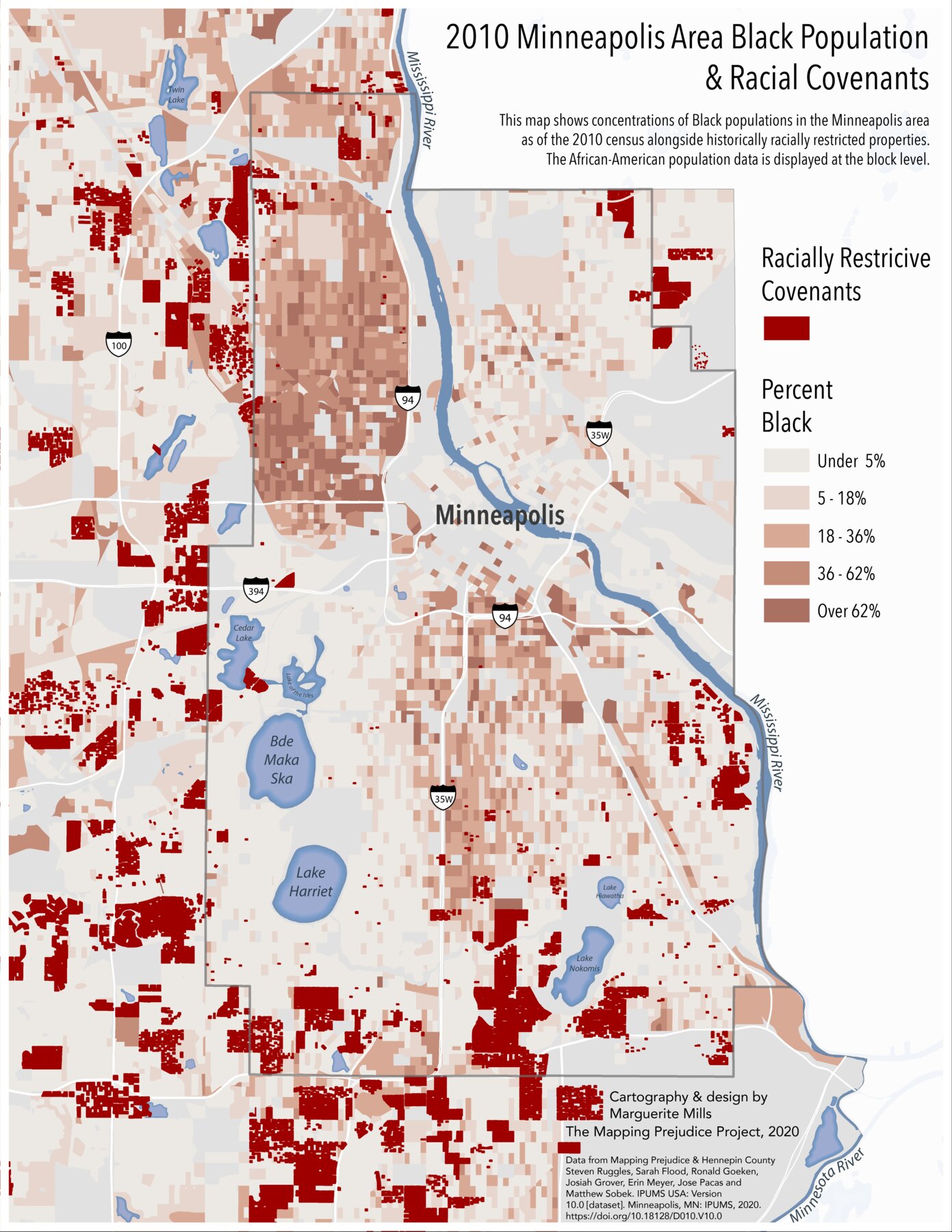
Keeping people out of space, Hayden argues, is a way of limiting their rights
“One of the consistent ways to limit the economic and political rights of groups has been to constrain social reproduction by limiting access to space.”
Los Angeles · the 1940s
An African American lawyer who grew up there remembered, “As teen-agers, we knew not to drive into Compton, to Inglewood, not to drive into Glendale” (quoted in Hayden, p. 23).
Hayden · ordinary buildings
Hayden reads an ordinary building as a record of power
“most buildings can be understood in terms of power or authority—as efforts to assume, extend, resist, or accommodate it.”
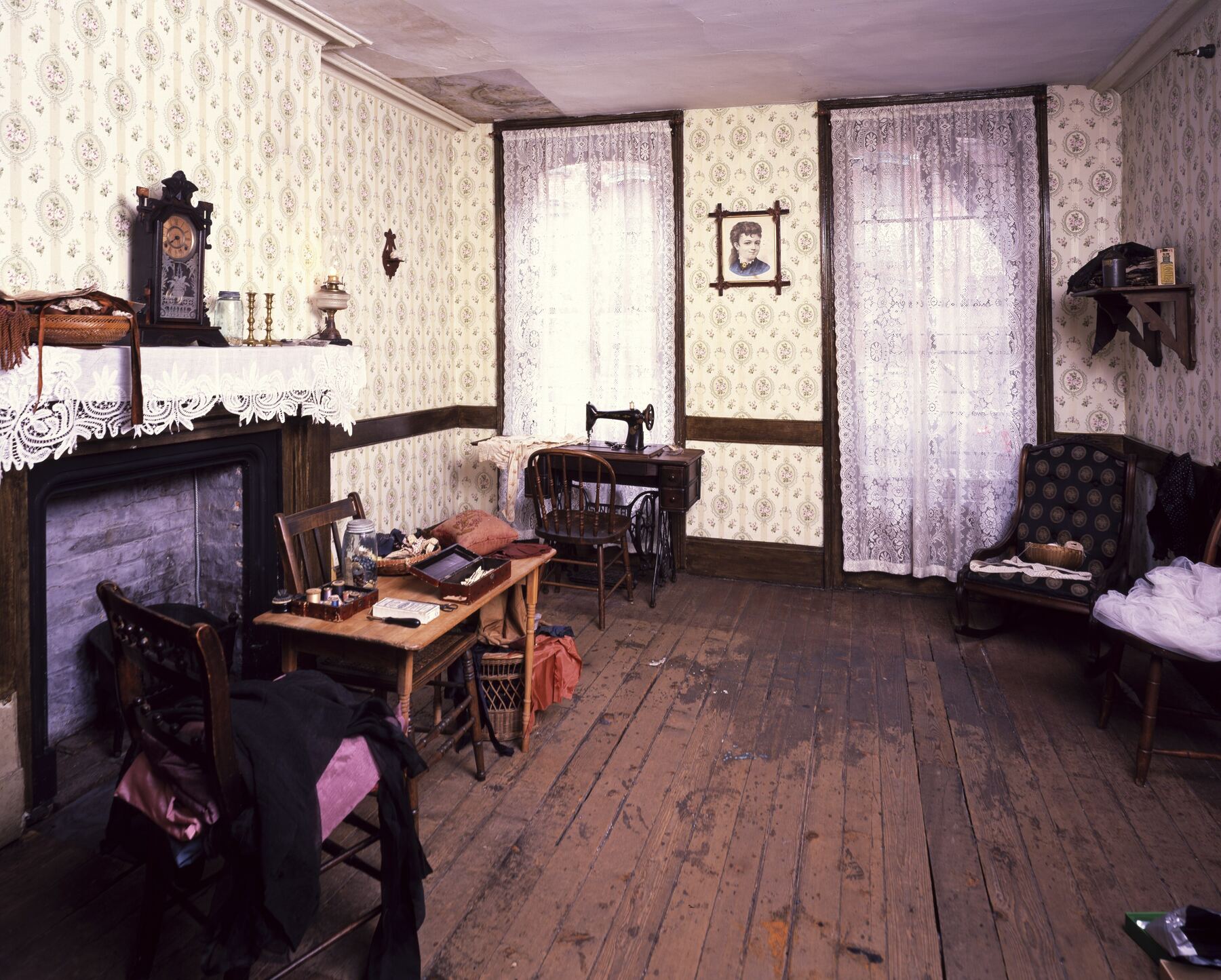
The tenement
A New York tenement around 1900 could return its landlord 25 percent a year. “One building tells the story of thousands of developers and millions of tenants” (pp. 33–34).
(The Land of Sunshine, New Mexico’s handbook for the 1904 fair, via Internet Archive; no known restrictions.)
(Kenneth C. Zirkel, via Wikimedia Commons, CC BY 4.0.)
Wilson · The Myth of Santa Fe, 1997
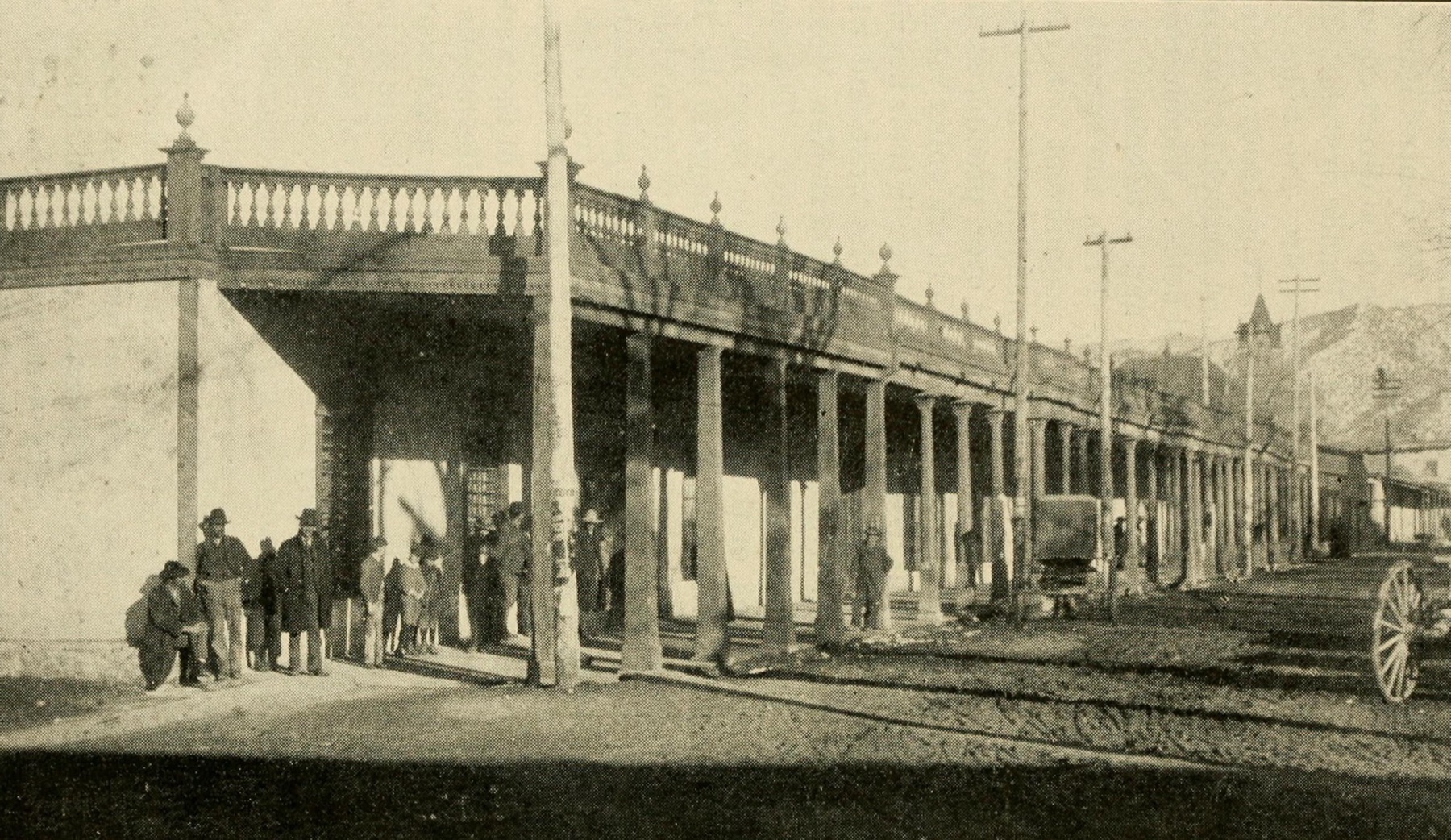
Wilson argues that Santa Fe’s famous look was built in the early twentieth century
Chris Wilson
Founding director of UNM’s Historic Preservation and Regionalism program. His book asks how a small capital of about 5,000 people in 1912 got the look it is known for.
How it was made
Largely by Anglo-American newcomers, Wilson argues. After statehood in 1912, leaders built the town’s economy on its heritage: restorations that were partly speculation, visible signs of Americanization removed, new buildings put under design review.
The story it tells
Three peoples living in harmony. Wilson argues that story oversimplifies Native American culture, the mixing of cultures, and the tensions between them.
(The Land of Sunshine, 1904, via Internet Archive; no known restrictions.)
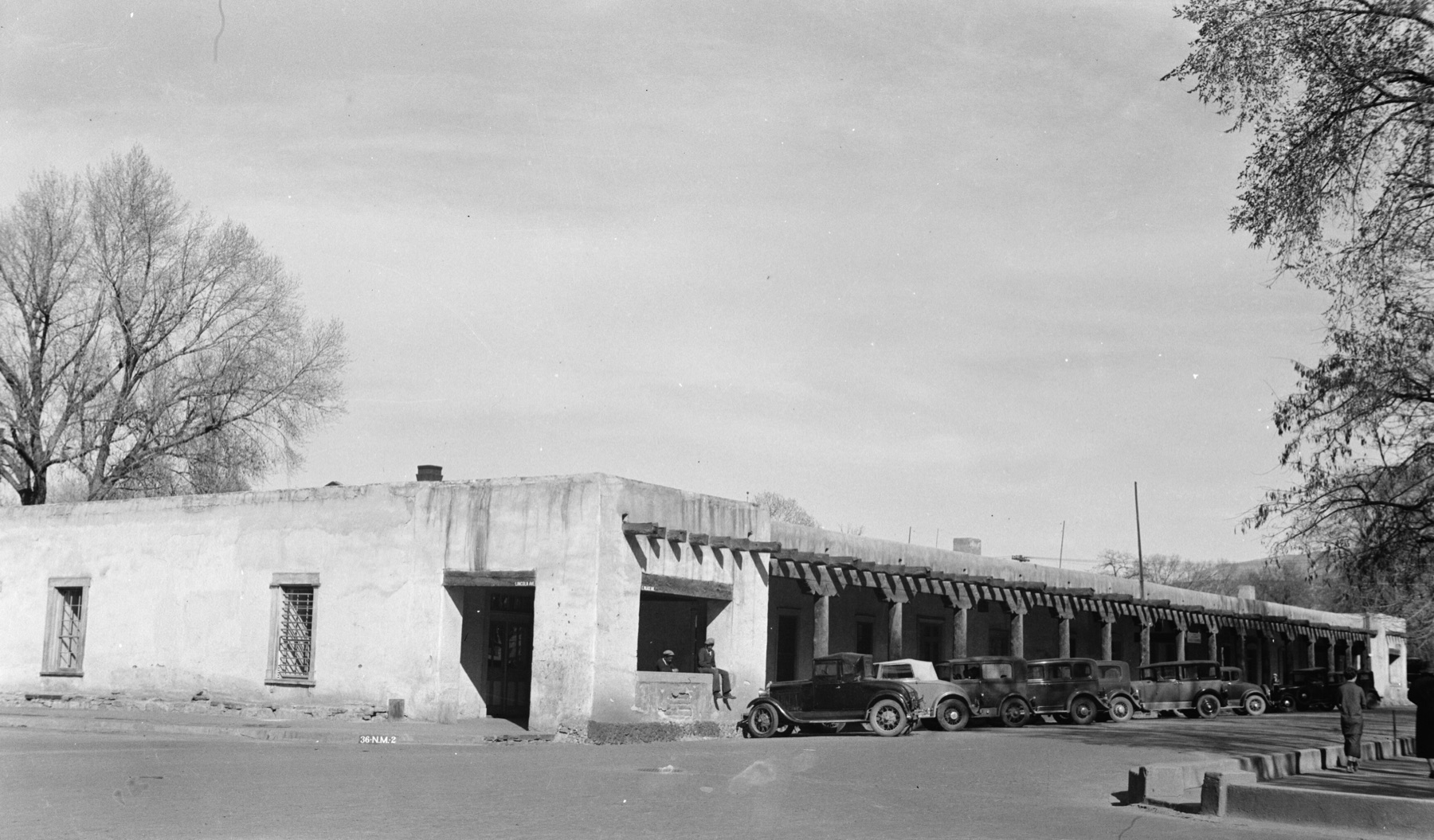
(M. James Slack, Historic American Buildings Survey, 1934. Library of Congress, via Wikimedia Commons, public domain.)
Hayden · the chapter’s end
For Hayden, how a place feels and who controls it are bound together
“Places make memories cohere in complex ways. People’s experiences of the urban landscape intertwine the sense of place and the politics of space.”
Counter-space
In East Harlem, Puerto Rican organizers built casitas, island houses, among abandoned tenements. They “produced their own public space,” Hayden’s example of Lefebvre’s “counter-space” (pp. 35–36).
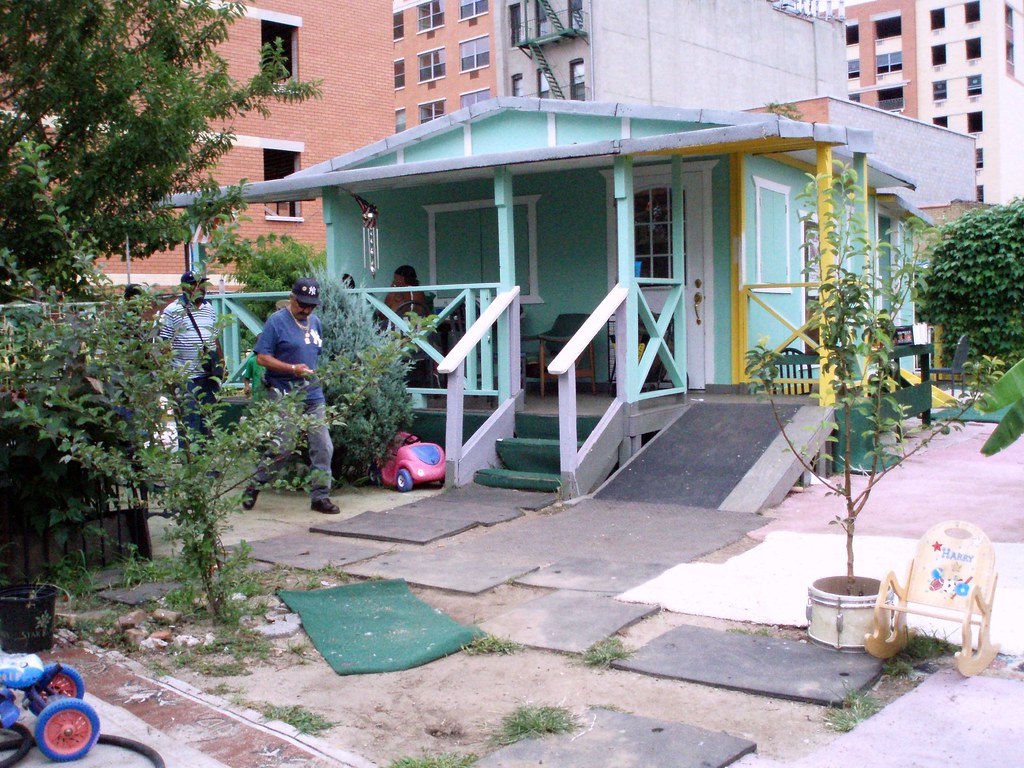
(Miss April NYC, via Flickr, CC BY 2.0.)
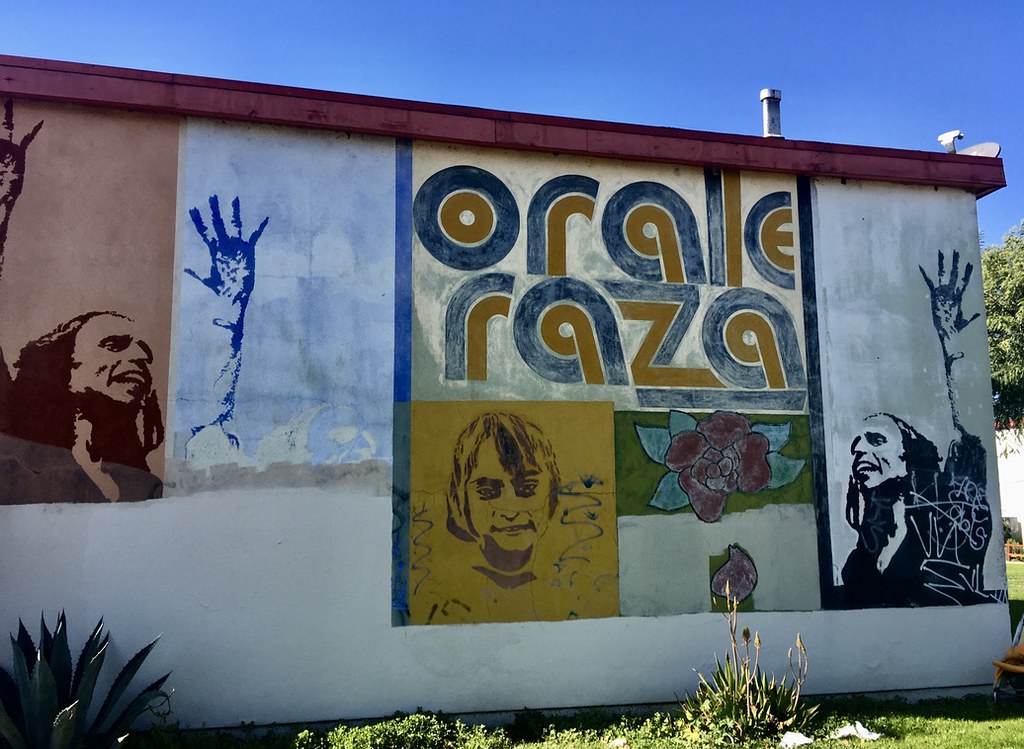
(waltarrrrr, via Flickr, CC BY-NC-ND 2.0.)
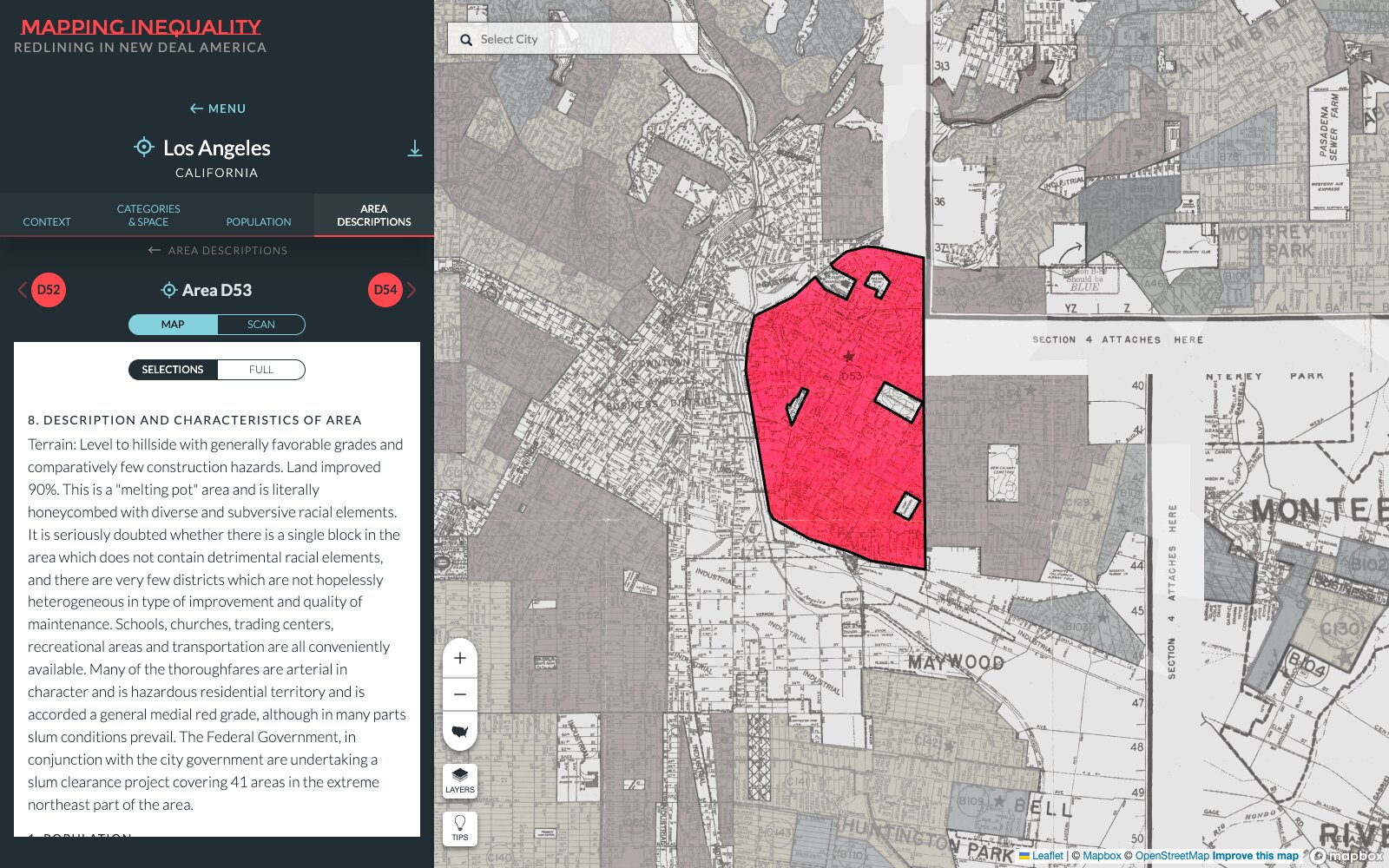
(Screenshot, dsl.richmond.edu/panorama/redlining.)
(Marguerite Mills, Mapping Prejudice, 2020. CC BY-NC 4.0.)
Loewen and Hayden
Loewen reads what was put up; Hayden reads everything that was built
Loewen · Lies Across America, 1999
Markers and monuments are documents with sponsors. Ask who got them approved, who paid, and how they might be wrong (pp. 18–21).
Hayden · The Power of Place, 1995
Every street and building was produced by someone, for work and for daily life, and its boundaries often keep people out (pp. 19–22, 30).
The lecture · looking back
From what monuments do to how all space gets made
Loewen, pp. 13–24
What monuments do
Supply heroes, help the upper class stay upper and unify more than they teach, and usually mark only the happy history.
Hassanamesit
The happy version
A mission village marker without the war that emptied the village.
Hayden, ch. 2
How space gets made
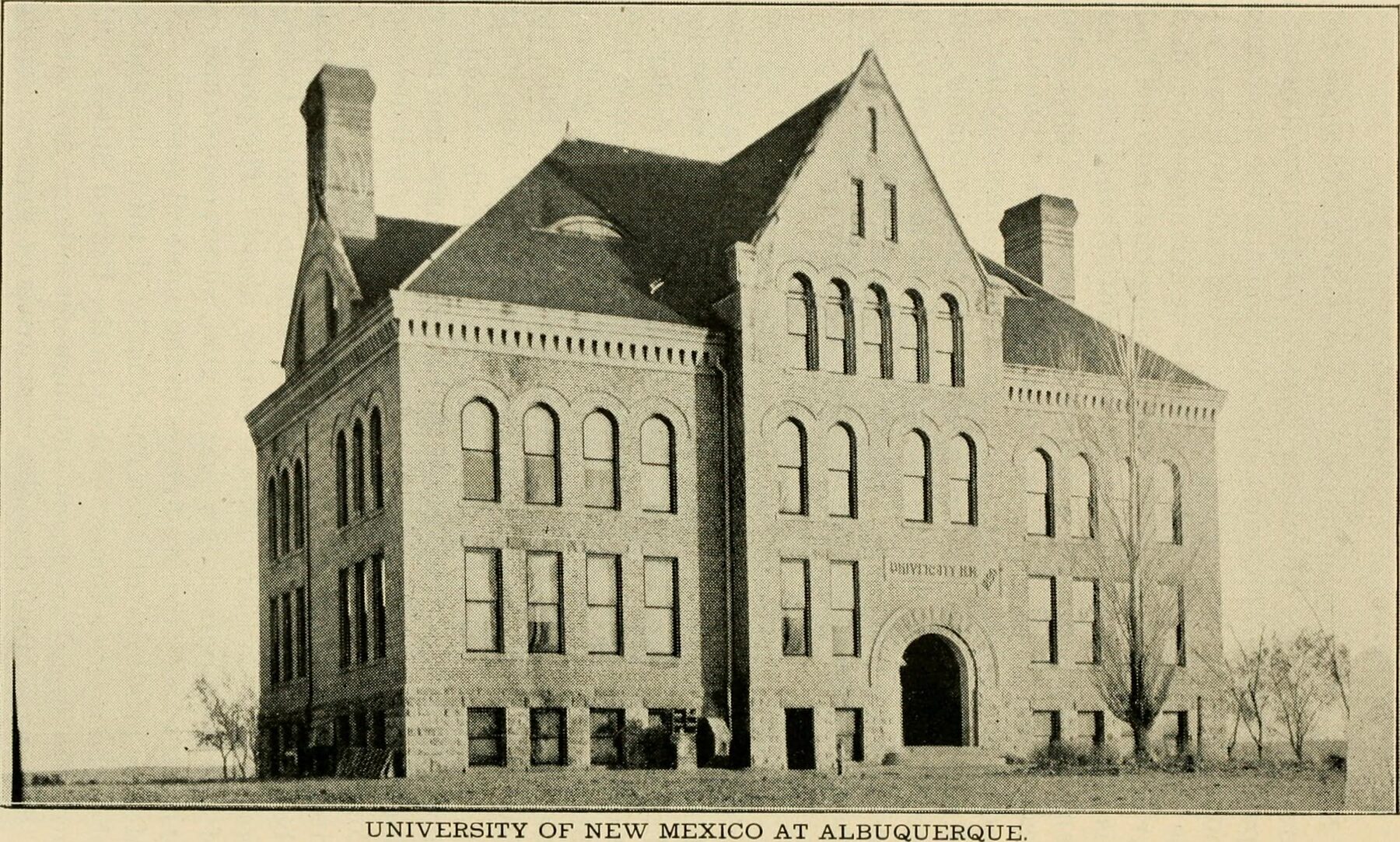
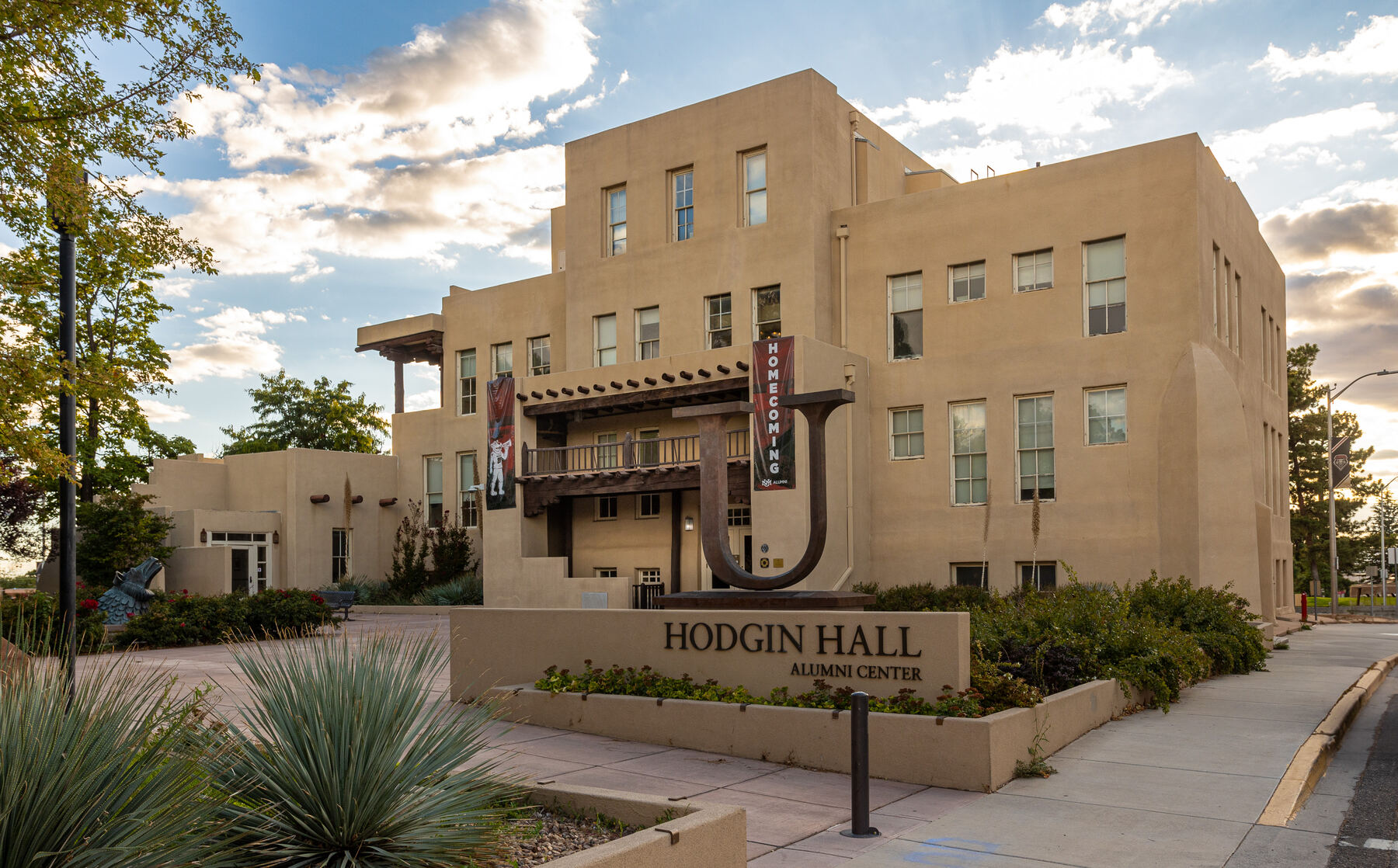
Work, territory and ordinary buildings, read as the production of space, down to a remodeled Hodgin Hall.
The take home
A monument is a source about the people who put it up
What it records
When it went up, who paid, and what they were proud of. The Grafton marker tells more about 1930 than about 1651.
What Hayden adds
The rest of the landscape is a source too. Tunnels, movie houses and tenements record who built them and who was kept out (pp. 20–34).
The catch: a corrected marker is still a marker. It speaks with the same authority Loewen distrusts.
Next · Thursday, 11.2
Next: AI and the future of history, and the archive behind your campus history
Hodgin Hall stands on the campus you are researching. Its records may show who argued over the 1908 remodel, and why.