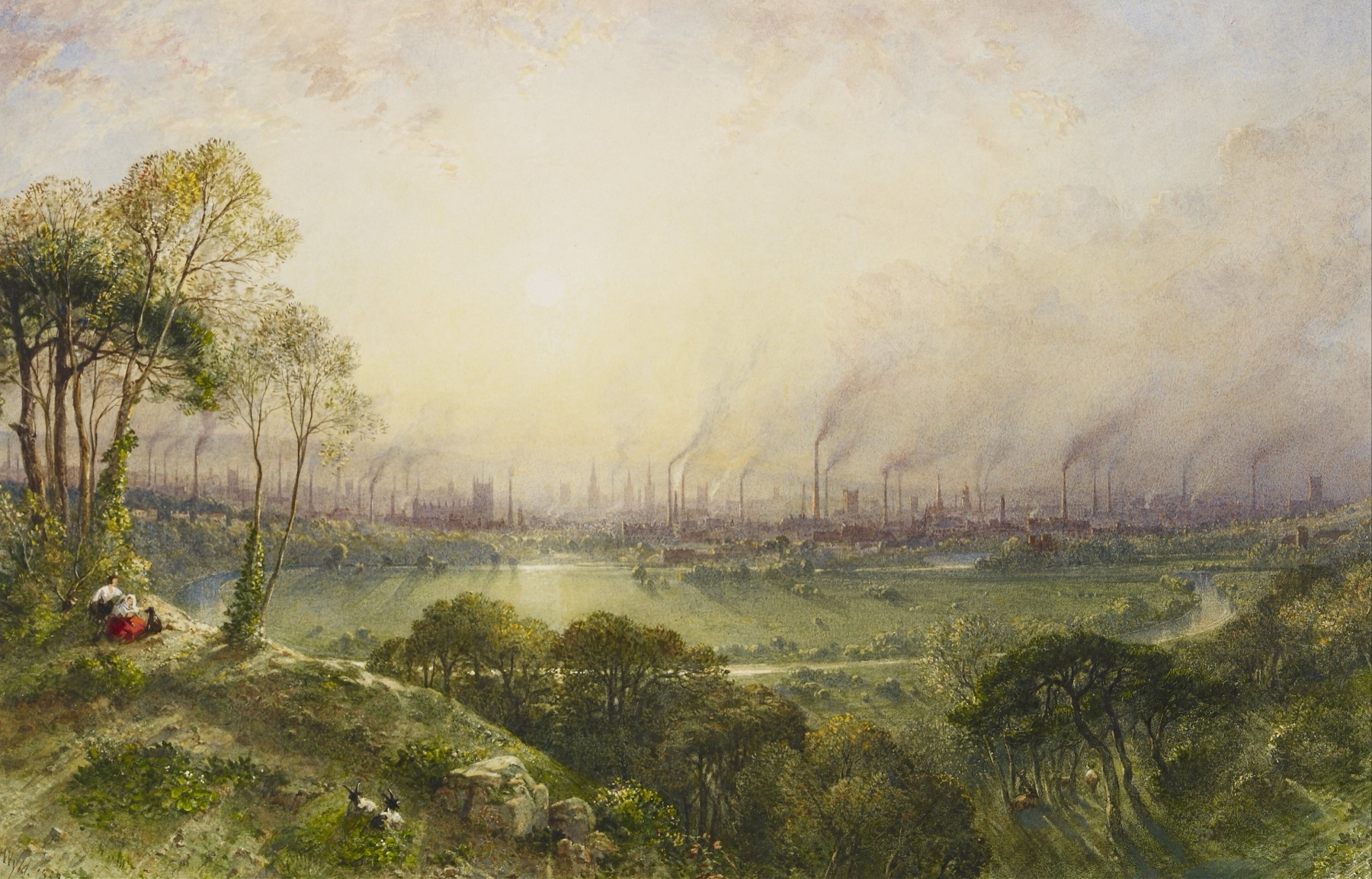
(Royal Collection, via Google Art Project. Public domain.)
- The chimneys are the horizon. They run the full width of the picture, and each one is a steam engine burning coal. Manchester’s population grew roughly fourfold in the first half of the century. If nobody decided this, what kind of explanation could account for it?
- The foreground is a century older than the background. Goats, trees, a couple resting on a bank: the furniture of eighteenth-century landscape painting, set in front of industrial production. Both are in the frame because both were in the county. When a new way of producing things arrives, does the old one vanish — or stay on in the foreground?
- The people who work in the mills are not in the picture. The only figures are at rest in a field; the thousands tending machines are out of sight under the smoke. A history of forces can explain the chimneys. Where does it put the people inside the mills?
Before we start
Who decided Manchester would look like this?
- Nobody voted for the mill, the chimney, or the move from field to factory.
- If the largest change of the century had no author, what kind of explanation fits it — and what is left for the people living through it?
Making History • HIST 1105 • Week 5
Marx and the Motor of History
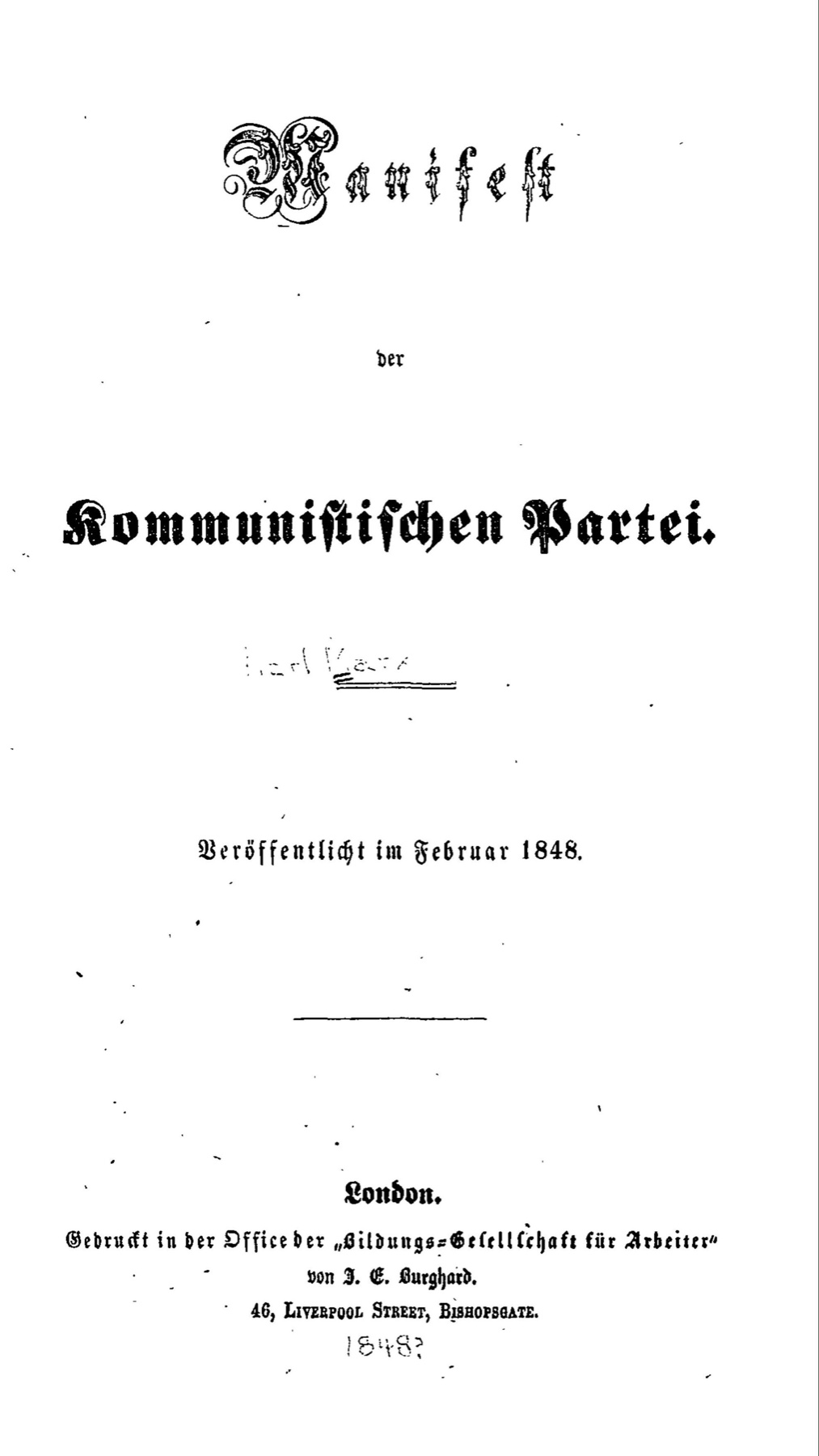
- Marx and Engels, Manifesto of the Communist Party (1848), Part I: “Bourgeois and Proletarians”
- Background: Green and Troup, The Houses of History, ch. 2: “Marxist historians,” 33–41
Marx’s explanation of what drives historical change, the problem it ran into in 1848, and what historians did with that problem. Green and Troup cited by page; the Manifesto by section, since the assigned PDF reprints the 1888 Moore translation without the original pagination.
The take home · three things
How people make a living drives history. People still have to act.
01 · The motor
Marx explains change by production, not by what rulers decide. Needs come first; classes form around the work; conflict breaks each order, and the next stage is “equally inevitable.”
02 · The problem
Revolutions spread across Europe in 1848 and failed. Writing the history of France’s, Marx concedes that people “make their own history, but they do not make it just as they please.”
03 · What historians did
How much the structure decides, and how much people do, is the argument Marxist historians kept having.
Where we’re going · three parts
An explanation, the problem inside it, and the historians who worked on it
01 · 1846–1867
The motor
Where Marx looked, the four parts of his explanation, and whether it can be proved.
02 · 1848–1852
The problem
Revolutions spread across Europe and failed. Marx’s history of France’s concedes that people have to act.
03 · Since 1931
What historians did
Hill, Hobsbawm and Thompson take the motor into the archive, and disagree over how much it decides.
Part one · Ranke, 1824
Ranke’s history is built from what participants saw and decided
“The basis of the present work, the sources of its material, are memoirs, diaries, letters, ambassadors’ reports, and original accounts of eyewitnesses…” Ranke, 1824 introduction
What those sources record
Each is one person’s account of what they saw, intended or negotiated: kings, ministers, envoys, witnesses. Compare 4.2.
What they cannot explain
Green and Troup: putting economic relationships at the core “fundamentally differentiated” Marx from Ranke (p. 36). No minister decided Manchester’s skyline.
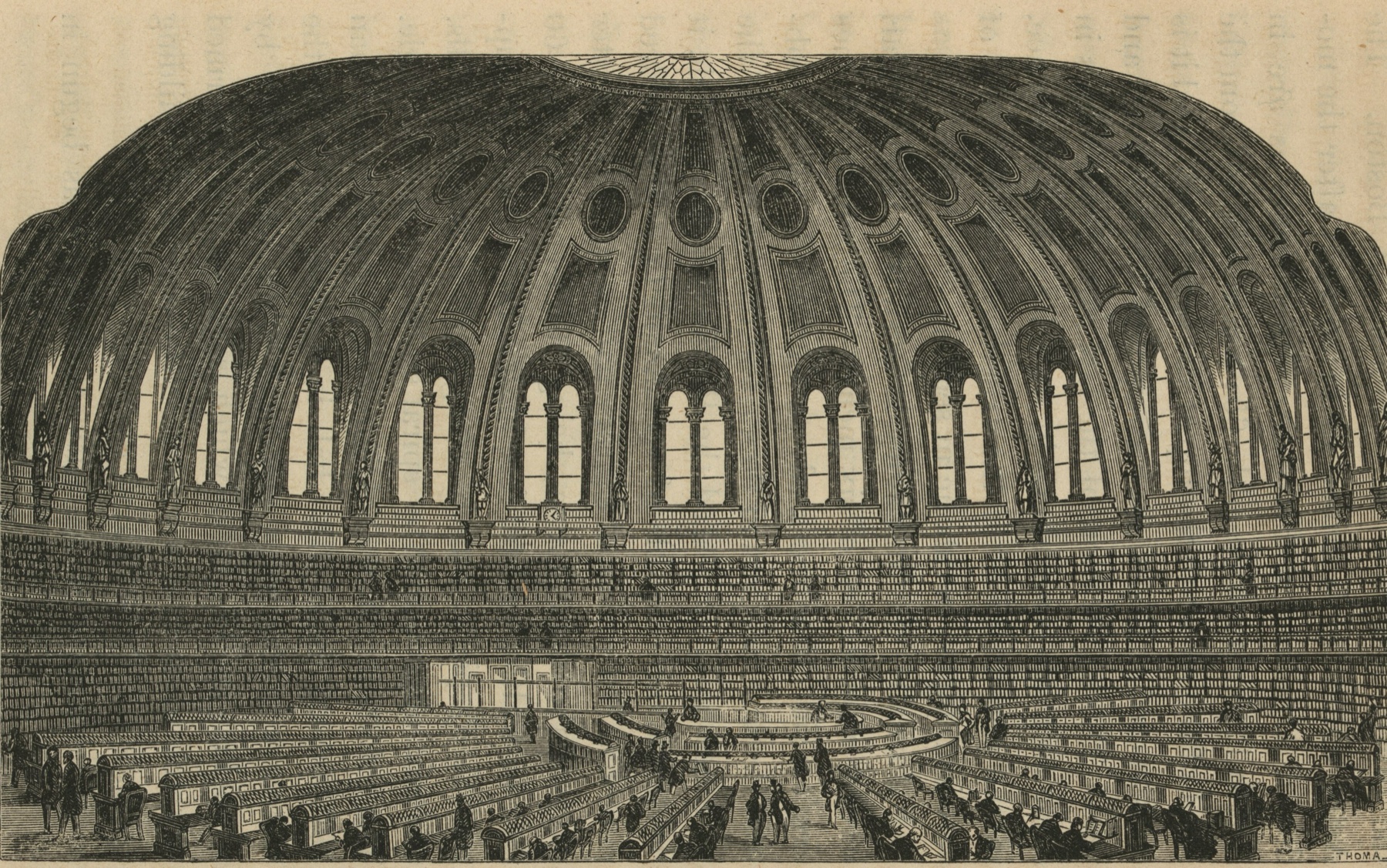
(Wood engraving, 1859. Library of Congress, LC-DIG-ppmsca-15551. Public domain.)
- Find the readers. They are the small dark shapes at the desks, nearly lost under the dome. Marx spent years at desks like these on a question nobody had assigned him: what drives economic and social change. Where does a historian’s question come from, if not out of the archive?
- Everything on these shelves is print. Among it, the reports of Britain’s factory inspectors and royal commissions: the state documenting factories in order to regulate them. Capital reads the same pages as evidence of a system. What can reports like these show about a system, and what do they leave out about the people counted in them?
- The shelves run the whole circumference. A claim about one decision can rest on one letter. A claim about what drives every society needs cases across centuries and countries. How many cases does it take before a pattern counts as a cause?
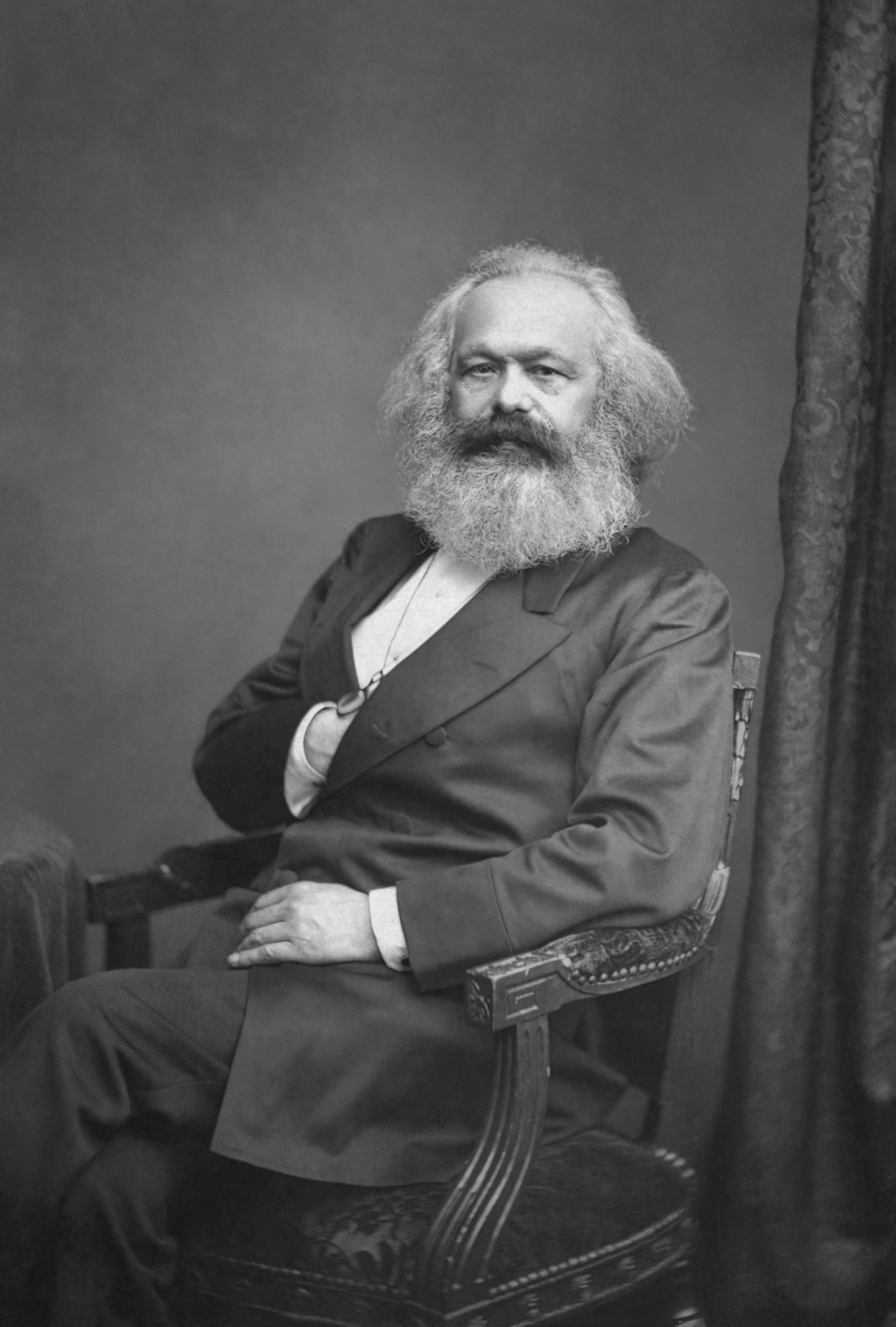
Why he matters: “the single most influential theorist for twentieth-century historical writing” (p. 33) — who never held a post in history, or in any other subject.
(John Jabez Edwin Mayall, 1875. Städel Museum. Public domain.)
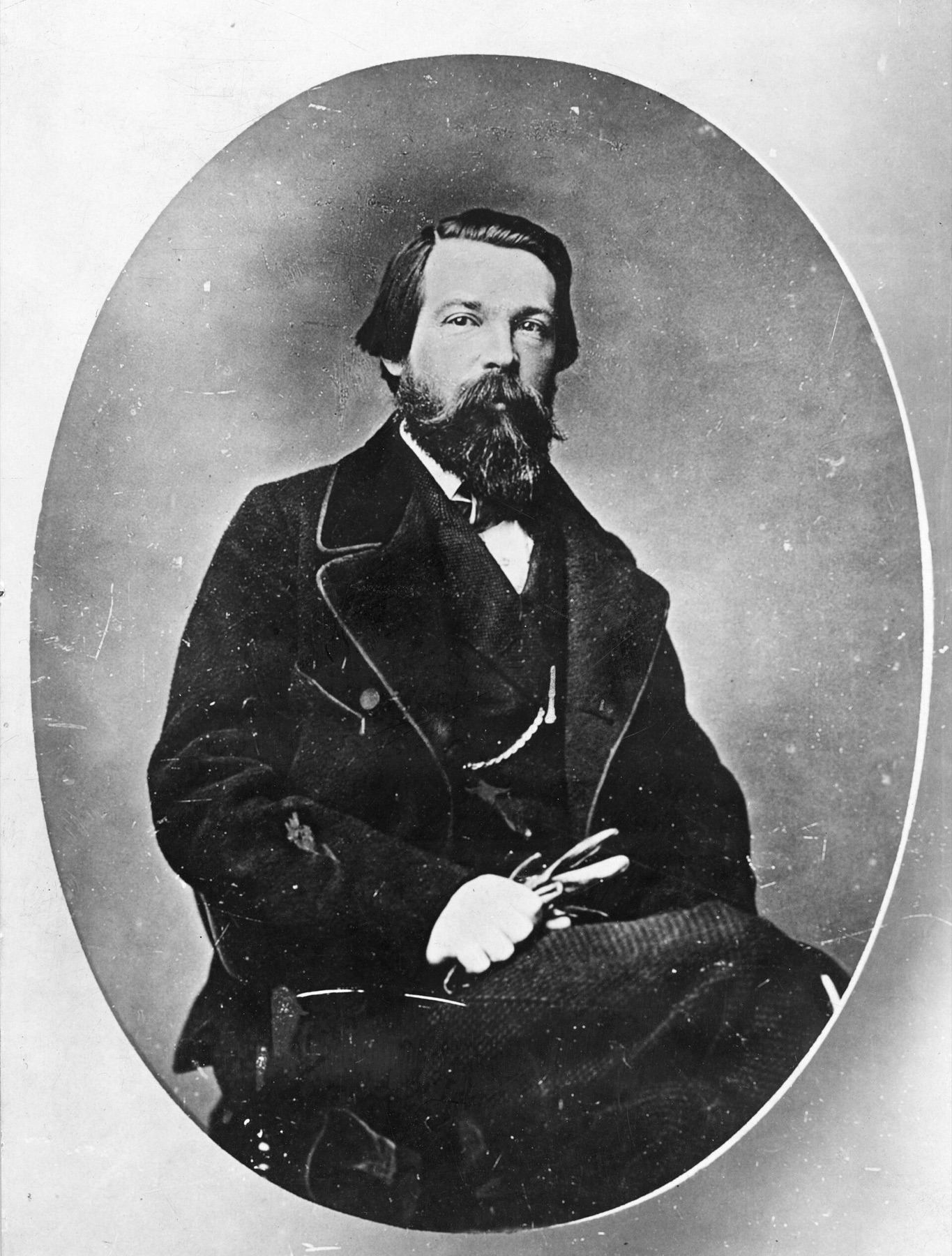
Why he matters: much of the factory evidence in the Manifesto is his, and so are the footnotes qualifying it forty years later.
(Amsler & Ruthardt, c. 1860. Public domain.)
The motor · four parts
Marx’s motor of history has four parts
01 · 1846, 1859
Production
People must first produce what they need to live. Law, politics and ideas rest on how they do it.
02 · Manifesto
Classes
Each way of producing divides people into those who own and those who work for them.
03 · Manifesto
Contradiction
Production outgrows the property order built around it, and the order breaks.
04 · Manifesto
The next stage
Capitalism creates the working class that will overthrow it.
Step 1: The German Ideology (1846) and the 1859 preface. Steps 2–4: the Manifesto, Part I.
The motor · 1 · production
Before anything else, people have to eat
“life involves before everything else eating and drinking, a habitation, clothing and many other things. The first historical act is thus the production of the means to satisfy these needs, the production of material life itself.” Marx and Engels, The German Ideology, quoted in Green and Troup, p. 34
The two storeys
- Base — the forces of production (tools, technology, raw materials) and the relations of cooperation or subordination people enter to use them (p. 35).
- Superstructure — law, politics, religion and ideas, which Marx saw as arising out of material life rather than existing on their own (p. 35).
The 1859 version
Marx’s preface puts the order in one sentence: “It is not the consciousness of men that determines their being, but, on the contrary, their social being that determines their consciousness” (p. 35).
Where that leaves people
If social being determines consciousness, people’s beliefs and choices follow from how they work.
(Public domain.)
The motor · 2 · classes
Every society so far has divided into oppressor and oppressed
“The history of all hitherto existing society is the history of class struggles.” Manifesto, Part I
The pairs
“Freeman and slave, patrician and plebeian, lord and serf, guild-master and journeyman, in a word, oppressor and oppressed, stood in constant opposition to one another” (Part I). Each pair is defined by its place in producing things.
A class is a position, not an income
Engels’s 1888 note defines the bourgeoisie as “owners of the means of social production and employers of wage labour,” and the proletariat as those who, owning none, “are reduced to selling their labour power in order to live.” Neither mentions how much anyone earns.
Classes and people
A class is made by its place in the work, not by what its members choose.
The motor · 3 · contradiction
What builds an order is what breaks it
“the feudal relations of property became no longer compatible with the already developed productive forces; they became so many fetters. They had to be burst asunder; they were burst asunder.” Manifesto, Part I
The mechanism
Productive forces develop; the property order obstructs them; the order breaks, as feudalism did. Each stage holds “a dominant class, and one which would overthrow it” (p. 35).
Turned on the present
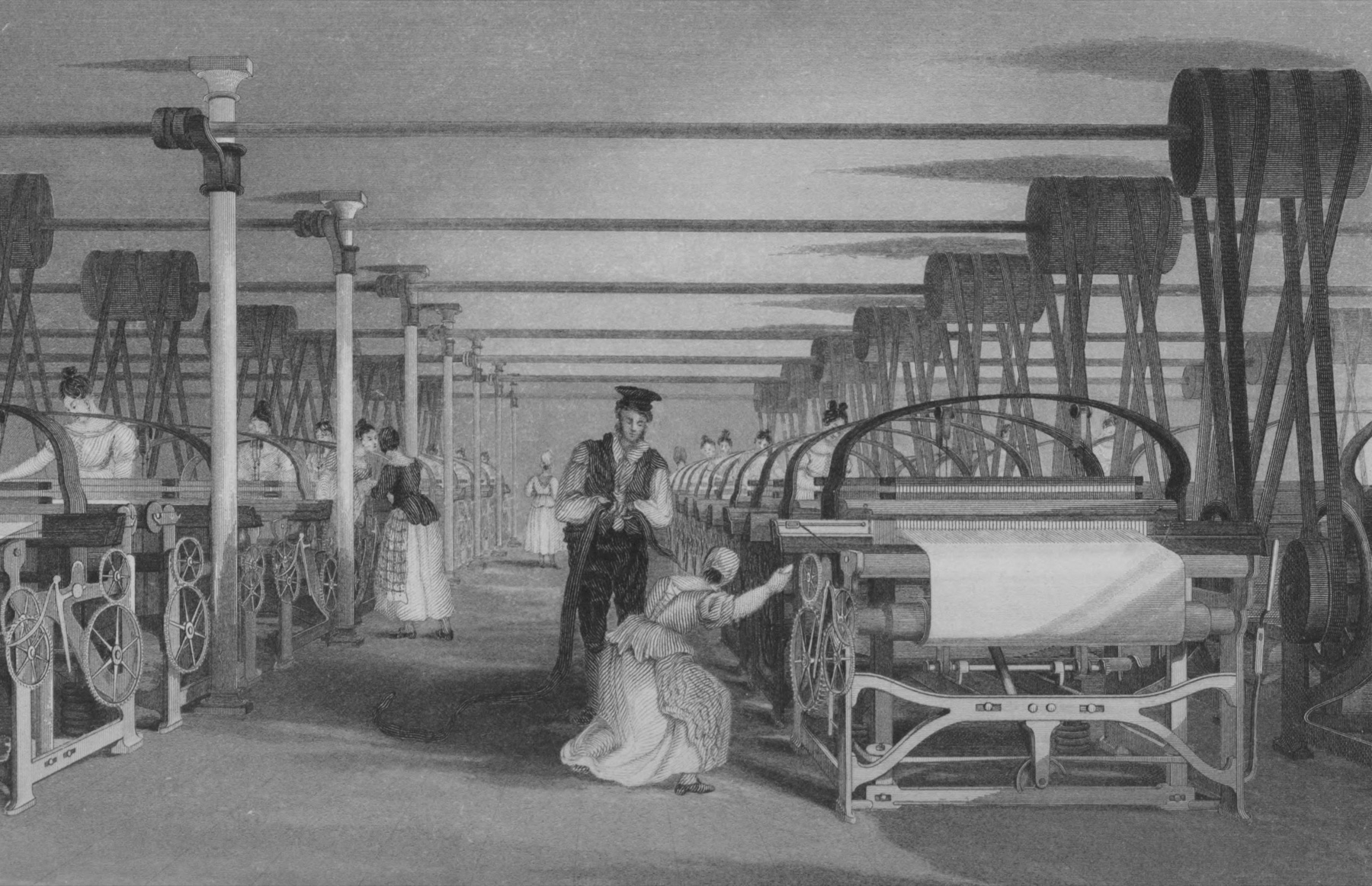
Capitalism’s crises come from “too much civilisation, too much means of subsistence, too much industry, too much commerce.” The crisis comes from the system, not from anyone’s decision.
(T. Allom, engraved by J. Tingle, 1835. Public domain.)
The motor · 4 · the next stage
Capitalism builds the class that will overthrow it
“…its own grave-diggers. Its fall and the victory of the proletariat are equally inevitable.” Manifesto, Part I
How the factory makes a class
- Deskilled. The worker “becomes an appendage of the machine.”
- Cheapened. Wages fall toward “the means of subsistence.”
- Assembled. “Masses of labourers, crowded into the factory, are organised like soldiers,” and their clashes with employers “take more and more the character of collisions between two classes.”
The word “inevitable”
Here the motor finishes the story by itself. Nobody has to choose the outcome.
Discussion · the motor
Is this provable? What would proof look like?
Part I claims a pattern across “all hitherto existing society” and an outcome that is “equally inevitable.” Marx spent much of the next twenty years in the Reading Room, working it out against evidence.
- Which parts could a historian check against records, and which could no record settle?
- What would count as evidence against it?
Answer · the motor
The pieces can be checked. The whole is judged by what it explains.
What records can settle
Wages, hours, deskilling, factory size, the timing of crises: the kind of evidence in the inspectors’ reports Marx read. Some held and some did not. Real wages rose across the later nineteenth century, and the unions that formed were “primarily reformist in intent” (p. 38).
What no single record settles
A pattern across “all hitherto existing society” is judged by how many cases it explains, and how well. A forecast of what is “inevitable” can only be waited for.
Where the evidence leads
The records that test the motor are records of what people did — and it was not what “inevitable” predicted.
Part two · 1848–1849
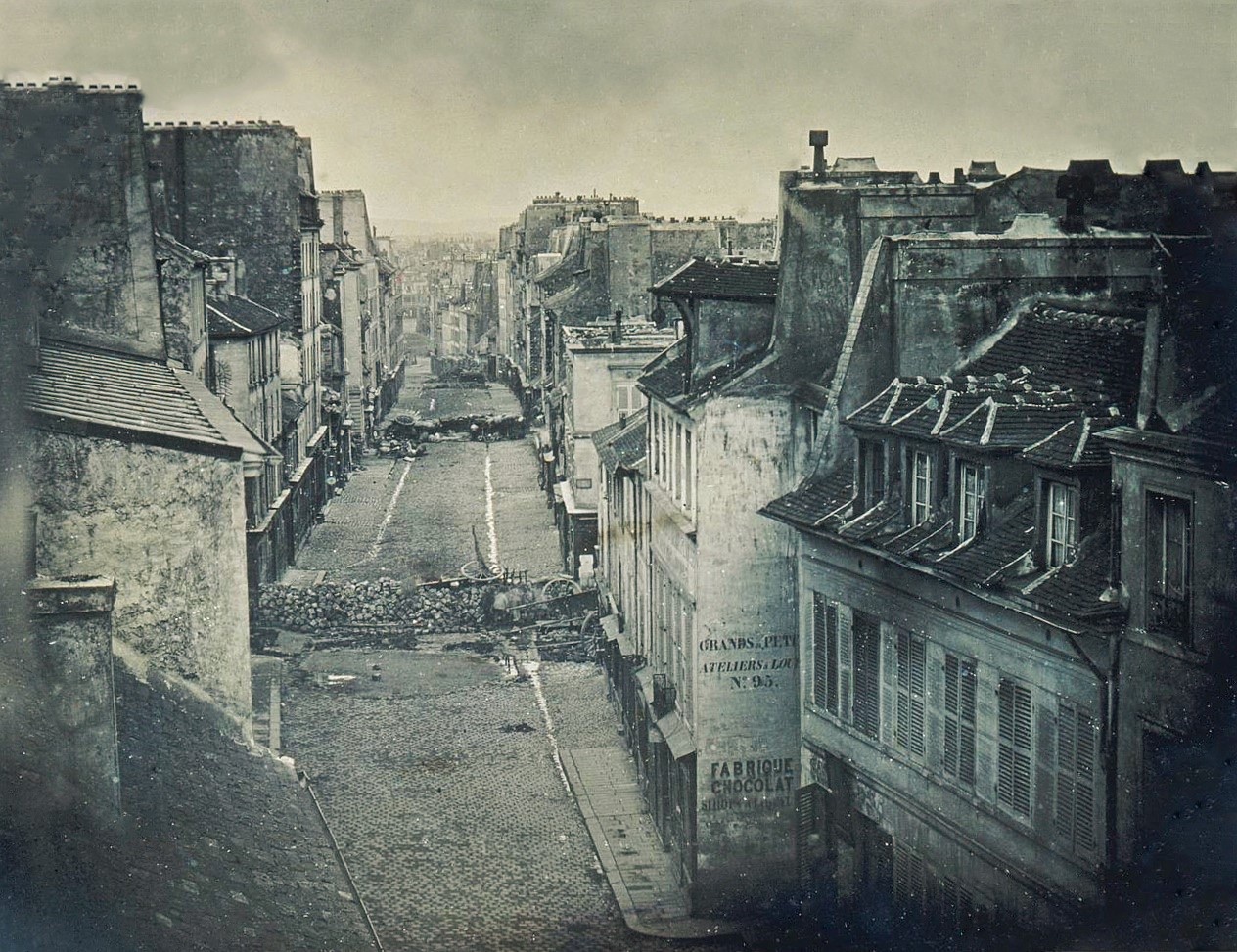
In 1848 revolutions spread across Europe. In Paris, workers rose and lost.
The year
- February. The pamphlet is printed in London. That same month Paris rises and the king abdicates.
- March to May. Vienna, Berlin, Milan, Venice, Budapest, Prague: mostly liberal and national revolts.
- June. Paris workers build barricades and are cleared from them in four days. By August 1849 the last holdouts, Hungary and Venice, have surrendered.
What the motor does not say
The motor explains why workers had grievances. It does not explain who went to the barricades, or why they lost.
(Charles François Thibault. Musée d’Orsay. Public domain.)
The Eighteenth Brumaire of Louis Bonaparte · 1852
Marx’s own answer: people make history, but not as they please
“Men make their own history, but they do not make it just as they please; they do not make it under circumstances chosen by themselves, but under circumstances directly encountered, given, and transmitted from the past.” Marx, quoted in Green and Troup, p. 36
What the book is
Marx’s history of what had just happened in France: how the revolution of 1848 produced the rule of Louis Bonaparte. The sentence explains why people who make a revolution do not get the one they intended.
A paradox inside the motor
Green and Troup: the dialectic of change “is, nonetheless, dependent upon the consciousness and actions of men and women” (p. 36). The structure changes only when people act.
Discussion · the problem
If the motor runs by itself, why did 1848 turn on what people did?
The Manifesto calls the outcome “equally inevitable.” The Brumaire says people make history “under circumstances directly encountered, given, and transmitted from the past.”
- What does the Brumaire sentence give to people, and what does it keep from them?
- If people have to act for the structure to change, is “inevitable” still the right word?
Answer · the problem
The structure sets the terms. People decide what happens within them.
Both halves of the sentence
Circumstances “given, and transmitted from the past” limit what anyone can do. Within them, what people understand and choose decides the outcome. Green and Troup read this as challenging a determinism that “can be seen as implicit” in the theory (p. 36).
The argument Marx left
Hobsbawm: “the crucial argument about the materialist conception of history has concerned the fundamental relationship between social being and consciousness.” Green and Troup suggest it “might be described as one of the strongest unifying themes” of Hill, Hobsbawm and Thompson (p. 36).
What historians inherited
How much the structure decides, and how much people do.
Part three · Christopher Hill and Eric Hobsbawm
Hill and Hobsbawm took the motor into the archive
“The bottom fell out of our universe in 1931, the year I went up to Balliol… Marxism seemed to me (and many others) to make better sense of the world situation than anything else, just as it seemed to make better sense of seventeenth-century English history.” Christopher Hill, quoted in Green and Troup, p. 36
Who they were
Members, with E. P. Thompson, of the Communist Party Historians Group, formed 1947. Hill and Thompson broke with the Party after the Soviet invasion of Hungary in 1956; Hobsbawm never did. Harvey Kaye gives their “core proposition… that class struggle has been central to the historical process” (p. 34).
How far the structure decides
- Hill made the English Civil War a class war, mapping Parliament’s support in “the economically advanced south and east of England” — while paying “a great deal of attention to the world of ideas” (p. 37).
- Hobsbawm traced a well-paid “upper strata” of workers whose politics followed their wages, an equation critics called “far too neat” (p. 38).
Hobsbawm, unrepentant
“I remain sufficient of a traditionalist Marxist to stress its determination by the economic base” (pp. 38–39). Hill gave ideas more room; Hobsbawm stayed closest to the economic base.
(Richard Carlile, hand-coloured aquatint and etching, 1 October 1819. Public domain.)
E. P. Thompson · The Making of the English Working Class, 1963
Thompson: class is something people make
“[C]lass happens when some men, as a result of common experiences (inherited or shared), feel and articulate the identity of their interests as between themselves, and as against other men whose interests are different from (and usually opposed to) theirs… If the experience appears as determined, class-consciousness does not.” Thompson, quoted in Green and Troup, p. 39
What the verb does
Class happens. The experience is “largely determined by the productive relations in which men are born — or enter involuntarily,” and class-consciousness is the way those experiences are “handled in cultural terms: embodied in traditions, value-systems, ideas and institutional forms” (p. 39).
The other half of the Brumaire sentence
Thompson keeps the base and refuses to read consciousness off it. People make their class, under circumstances they did not choose. Week 6.1 reads his preface.
Discussion · what historians did
Thompson’s book is called The Making of the English Working Class. Who is doing the making?
Thompson “emphasized that the new consciousness and actions were due as much to human agency as to the economic structure within which people were born” (p. 39). Nairn and Anderson held that the structure left workers almost no room to act (pp. 39–40).
- If the structure decides, what is a historian of working people actually studying?
- If people decide, what work is the theory still doing?
Answer · what historians did
Both. Then the question is which people count as makers.
Why the answer has to be both
Nobody chooses the productive relations they are born into, and nobody’s politics follow from them automatically — the paradox Green and Troup find in the Brumaire sentence (p. 36). Thompson’s version predicts what you will find in the record: traditions, chapels, ballads, pamphlets. He went and found them.
The limit, in three moves
- Thompson cast radical working-class women as “giving moral support to the men,” and was “unrepentant.”
- Joan Scott: “a story about men,” with class “constructed as a masculine identity.”
- James Epstein largely agreed, yet found too little recognition of the “limited participation women did achieve” (p. 40).
Whose movement it was
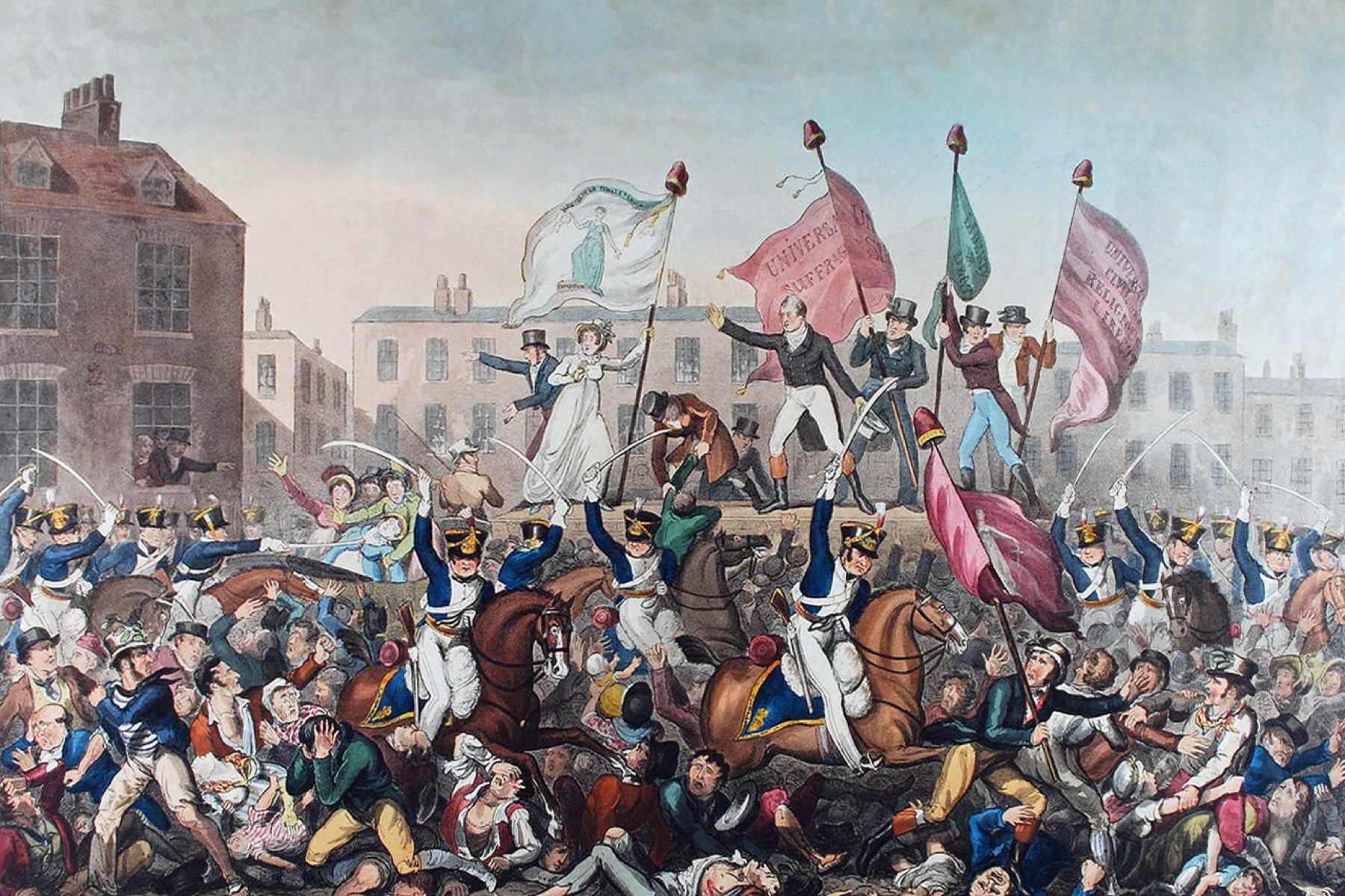
Carlile’s 1819 print was dedicated to the female Reformers. Did they make history, or support the men who did? Week 6.2 takes this up.
Recap
How people make a living drives history. People still have to act.
01 · Manifesto; Green and Troup
The motor
Production, then classes, contradiction, and an “inevitable” next stage. Checkable in pieces; judged as a whole by what it explains.
02 · Green and Troup, p. 36
The problem
“Men make their own history, but they do not make it just as they please.” The structure changes only when people act.
03 · Green and Troup, pp. 36–40
What historians did
Hobsbawm stayed closest to the economic base; Hill gave ideas room; Thompson’s class “happens.” Which people count as makers is Week 6.2.