Making History • HIST 1105 • Week 13.1
The History of Science
- Background: Sarah Maza, Thinking About History (2017), ch. 3: “The History of What?”, 83–108
- Steven Shapin, The Scientific Revolution (1996), Introduction, 1–14
- Optional: Thomas Kuhn, The Structure of Scientific Revolutions (1962), 1–22
Kuhn is cited by the pages of the second edition (1970). Johns is quoted from The Nature of the Book (1998), ch. 1.
1913–36 · the old story
Early histories credited a few chosen spirits and the occasional genius
Garrison, An Introduction to the History of Medicine (1913)
“It is no exaggeration to say that science owes most to the shining individualism of a few chosen spirits.” (p. 36)
Lovejoy, The Great Chain of Being (1936), in Maza’s words
“Ideas, in this sort of approach, are like a set of building blocks with which thinkers play and from which the occasional genius constructs something dazzling” (Maza, pp. 86–87)
Discuss
Who disappears from a history that credits “a few chosen spirits”?
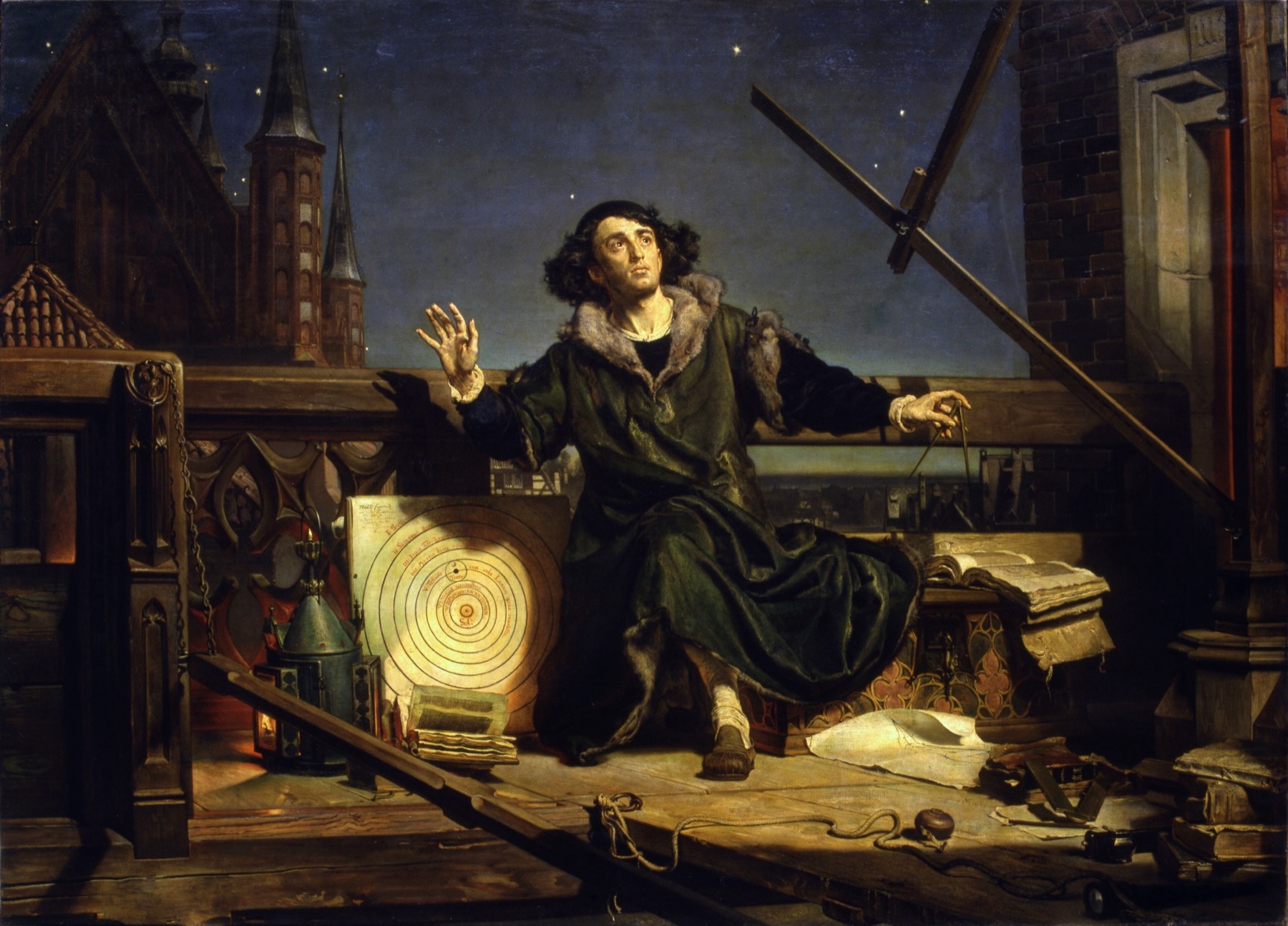
(Wikimedia Commons. Public domain.)
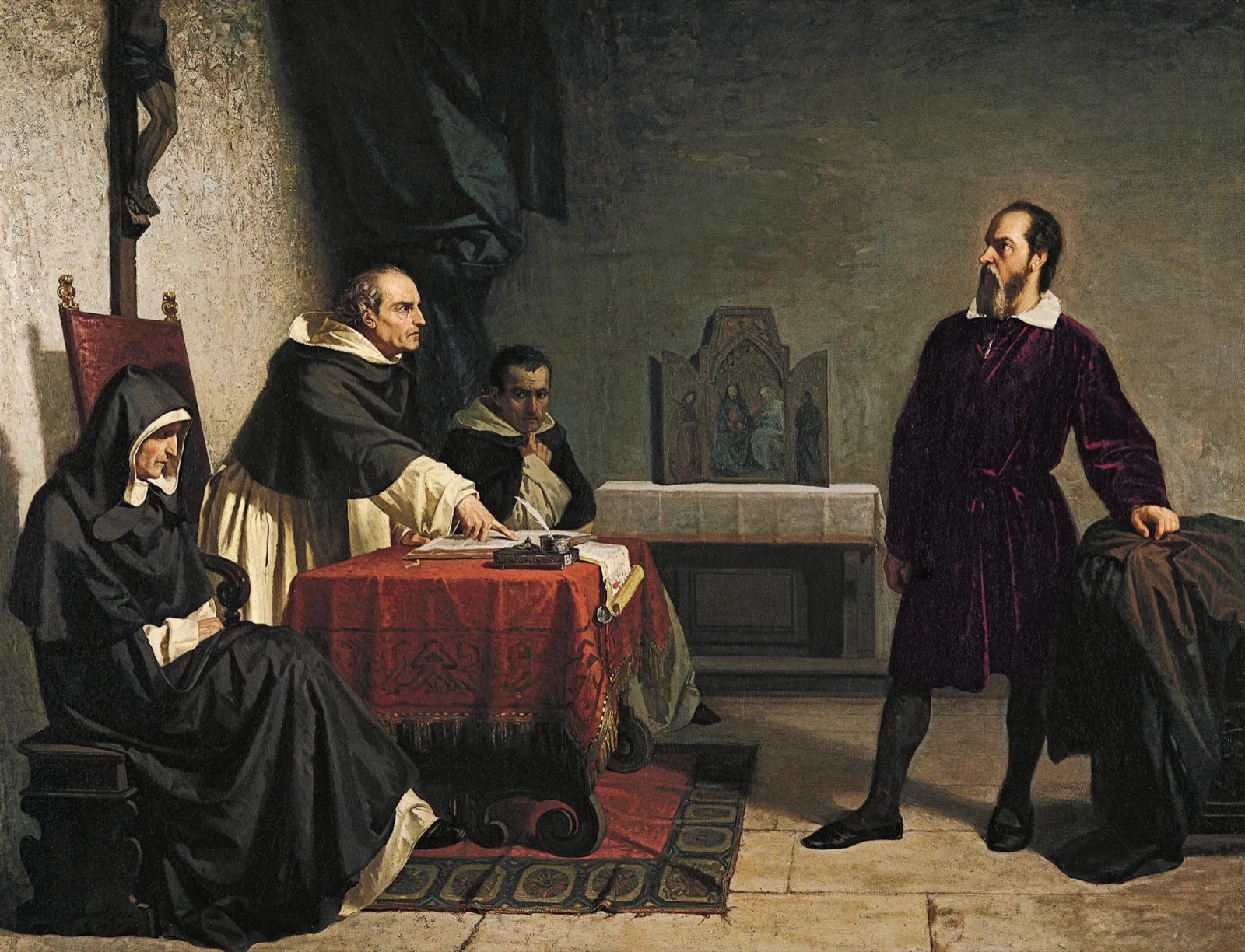
(Wikimedia Commons. Public domain.)
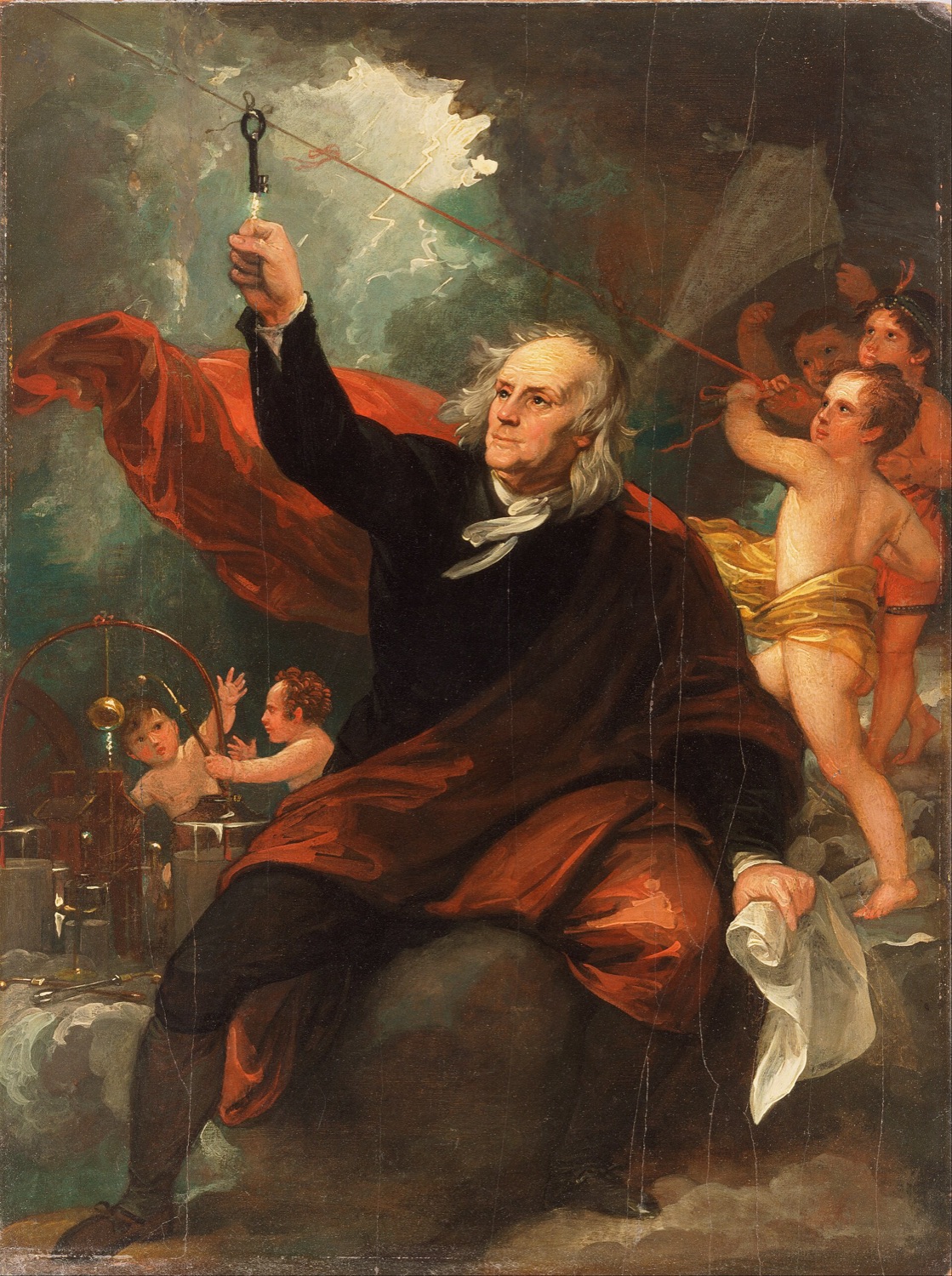
(Philadelphia Museum of Art, via Google Art Project and Wikimedia Commons. Public domain.)
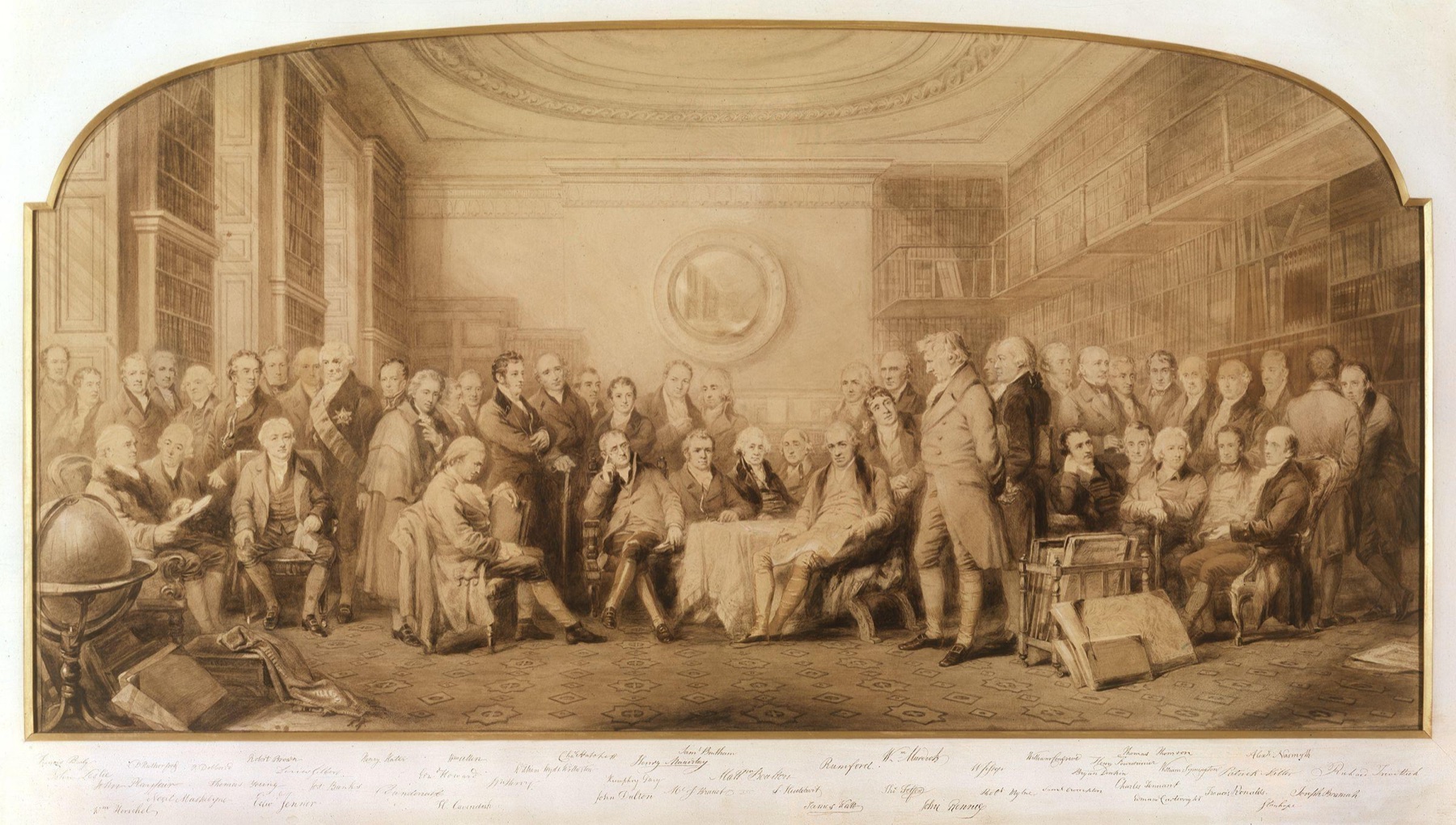
(National Portrait Gallery, London, via Wikimedia Commons. Public domain.)
1931–49 · the old story
Science was told as the making of the modern world
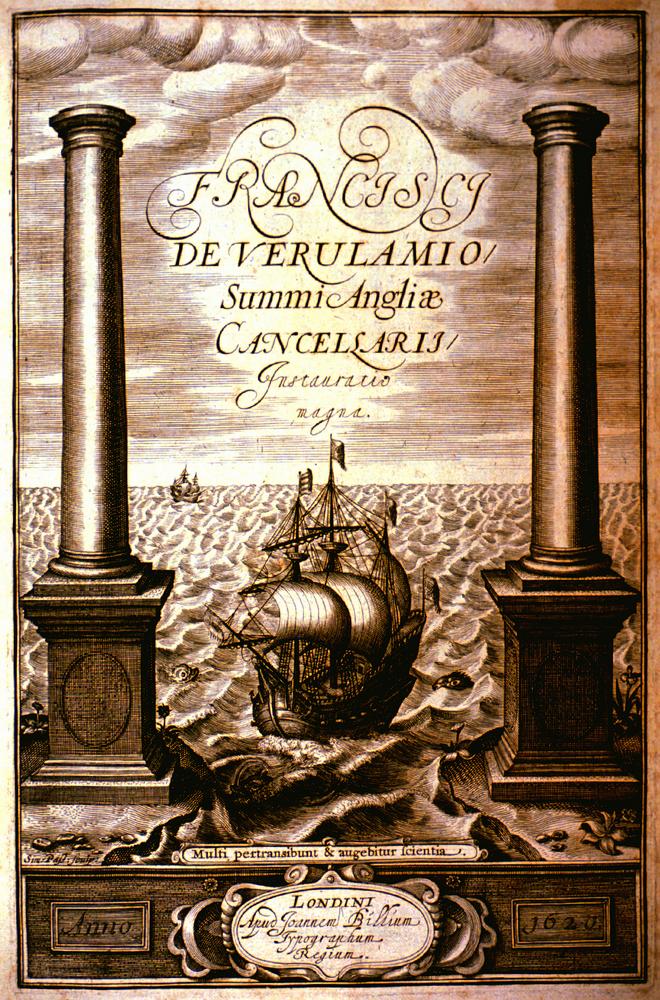
The Scientific Revolution “outshines everything since the rise of Christianity and reduces the Renaissance and Reformation to the rank of mere episodes” Herbert Butterfield, The Origins of Modern Science (1949), quoted in Shapin, p. 1
Herbert Butterfield named the “Whig interpretation of history” in a 1931 book of that title: judging the past as the road to the present. Historians told science that way “through the Cold War” (Maza, p. 92).
Internal and external · 1930s
Historians split on whether science changed by its own ideas or by its society
Inside: ideas and methods
Alexandre Koyré, Galilean Studies (1939), read Galileo’s science as a change in thought: mathematics, more than experiment, remade physics.
Outside: economics, religion, politics
Boris Hessen (1931) tied Newton’s Principia to the needs of shipping, mining and war; Robert Merton (1938) tied English science to Puritan values.
Internalist and externalist
Later historians named the sides. Internalists explain scientific change from inside science, by ideas, methods and evidence; externalists by the economics, religion and politics outside it. The old story of great geniuses was largely internalist.
Kuhn · 1962 · the turn
Kuhn: historians now judged old science by its own time
“Rather than seeking the permanent contributions of an older science to our present vantage, they attempt to display the historical integrity of that science in its own time.”
Paradigms, not accumulation
Kuhn called a shared model of “problems and solutions” a paradigm. When misfit results pile up, a crisis brings a new paradigm, “incommensurable” with the old: the two can’t be judged by the same standards (Maza, p. 93, on Copernicus).
Discuss
If paradigms can’t be judged by the same standards, in what sense is later science better science?
1970s · science and the occult
Newton’s gravitation was rooted in alchemy
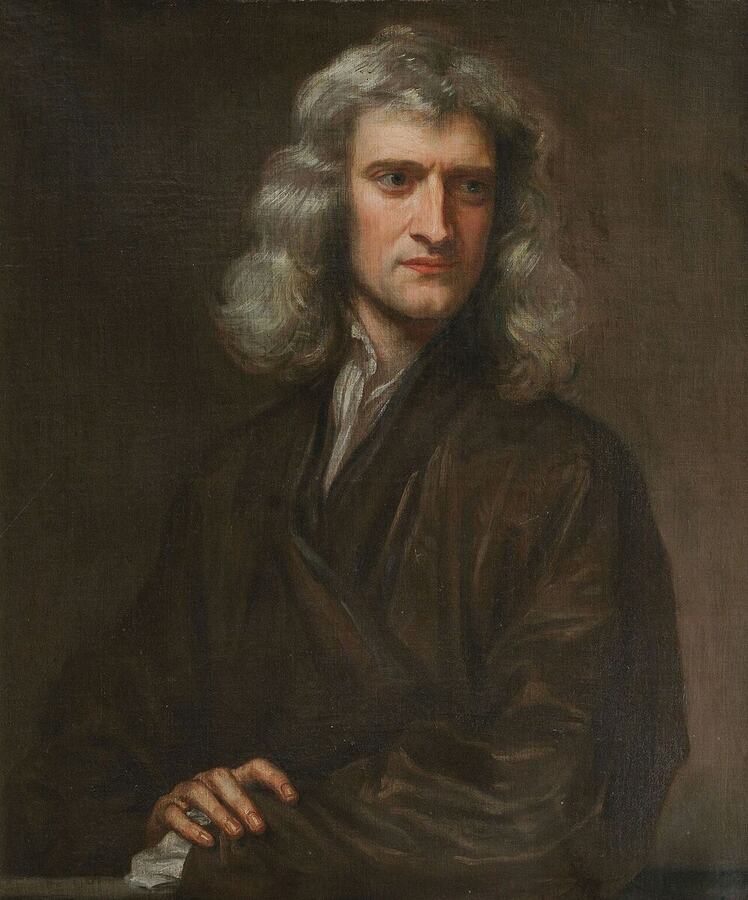
His work toward gravitation was “rooted in the great scientist’s avid and extensive research into the ‘dark arts’ of alchemy.” Maza, Thinking About History, p. 99
Betty Jo Teeter Dobbs, The Foundations of Newton’s Alchemy (1975), made the case. The line between science and “occult” pursuits hardened only in the eighteenth century (p. 99).
1979 · the laboratory
Social scientists followed a laboratory as it made facts

“There is as much society inside the scientist’s laboratory, and internal to the development of scientific knowledge, as there is outside.” Shapin, The Scientific Revolution, p. 10
Bruno Latour and Steve Woolgar’s Laboratory Life (1979) studied a Salk Institute laboratory as an anthropologist would a village, and saw facts made by arguing and writing.
1979 · print
One argument held that print made the Scientific Revolution possible
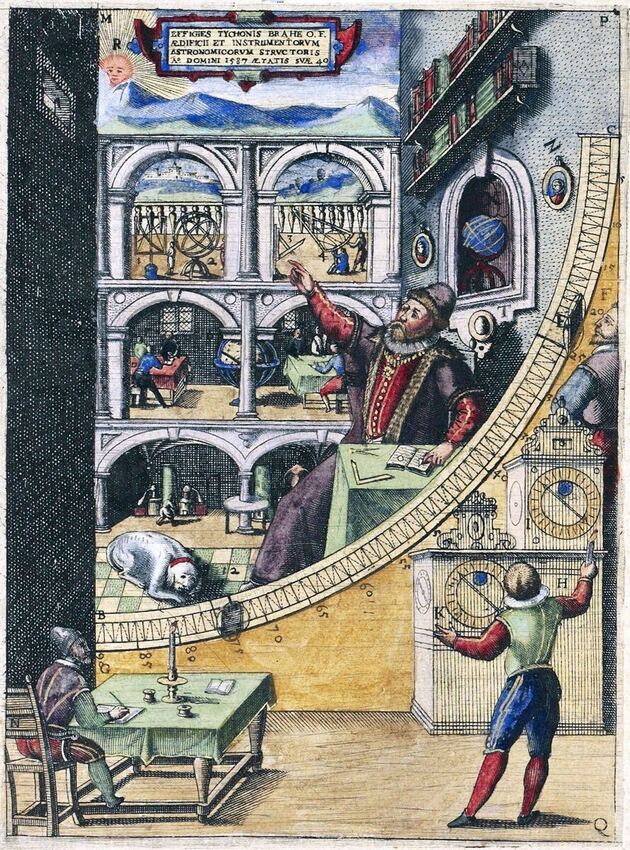
“The ‘Scientific Revolution’ was thus inconceivable without a preceding printing revolution.” Adrian Johns, The Nature of the Book (1998), p. 11, summarizing the argument
Elizabeth Eisenstein, The Printing Press as an Agent of Change (1979): print gave texts “fixity,” the same words, repeatable anywhere (Johns, p. 10). Its hero was Tycho Brahe, comparing printed rival models of the universe (pp. 10–11).
After Kuhn · 1970s–80s · constructivism
Constructivists treated scientific knowledge as something people make
“the belief that scientific knowledge is a human creation, made with available material and cultural resources, rather than simply the revelation of a natural order that is pre-given and independent of human action.”
Compare · Week 10.1
The linguistic turn read sources as “texts,” not transparent windows onto the past. Constructivists treated scientific knowledge the same way: as made, not simply found.
Discuss
If a belief has a social cause, has anyone yet said whether it is true?
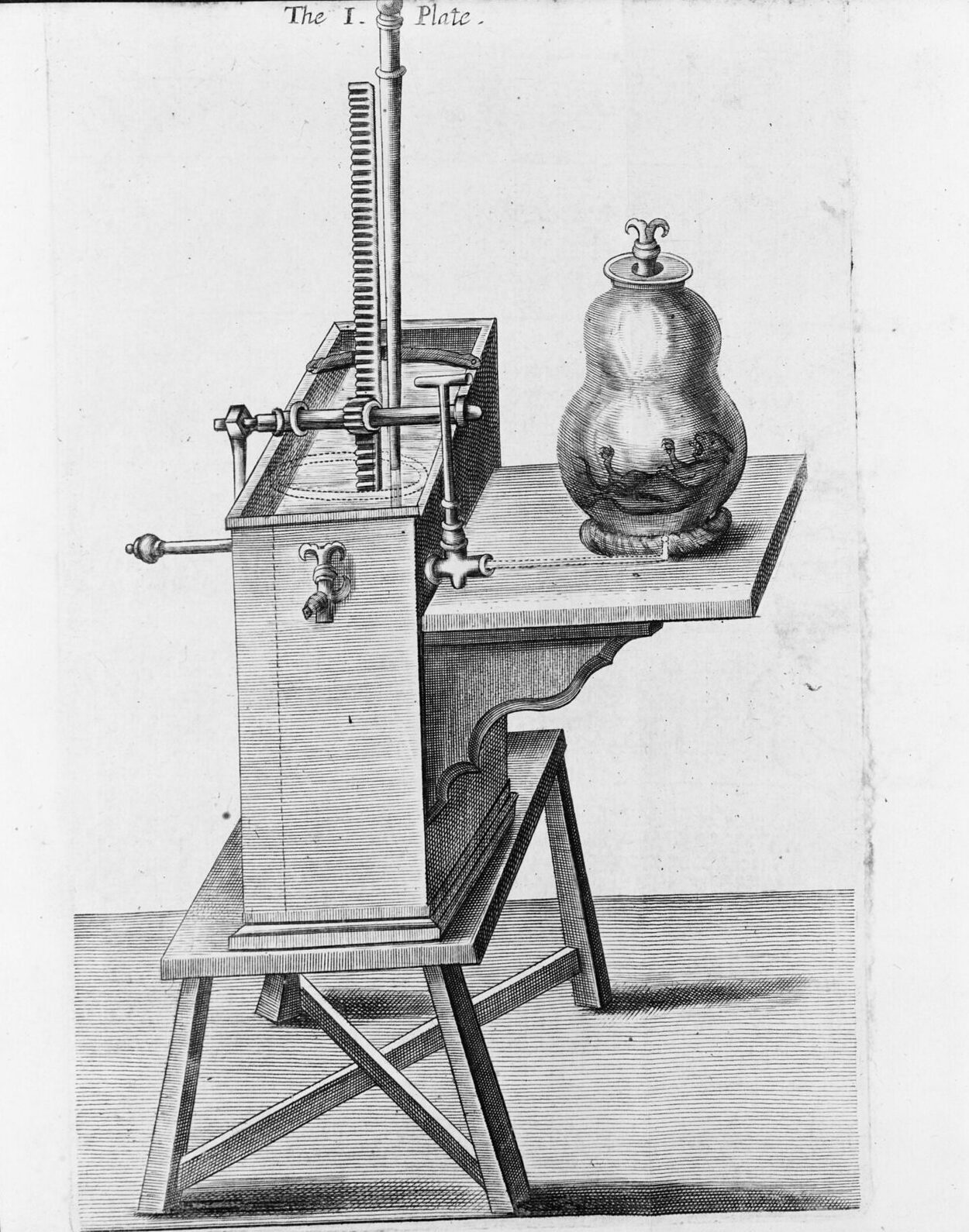
(Library of Congress. Public domain.)
1985 · politics
The air-pump dispute was also a dispute about political order
“solutions to the problem of knowledge are solutions to the problem of social order.”
England, 1660
After two decades of civil war, Boyle’s experimenters stood for freedom used responsibly. Hobbes, author of Leviathan, a defense of absolute rule, trusted only mathematical proof in science and a single authority in the state (pp. 96–97).
Shapin · 1994 · trust
Shapin argued that experimental science flourished in England because gentlemen did it
“Experimental science flourished in seventeenth-century England, Shapin argues, because it was conducted by a group of elite practitioners—’gentlemen,’ members of the landed upper class—who both trusted one another and had moral authority in the society at large.”
Discuss
Whom do you trust on science today, and what makes them trustworthy: credentials, numbers or someone like you?
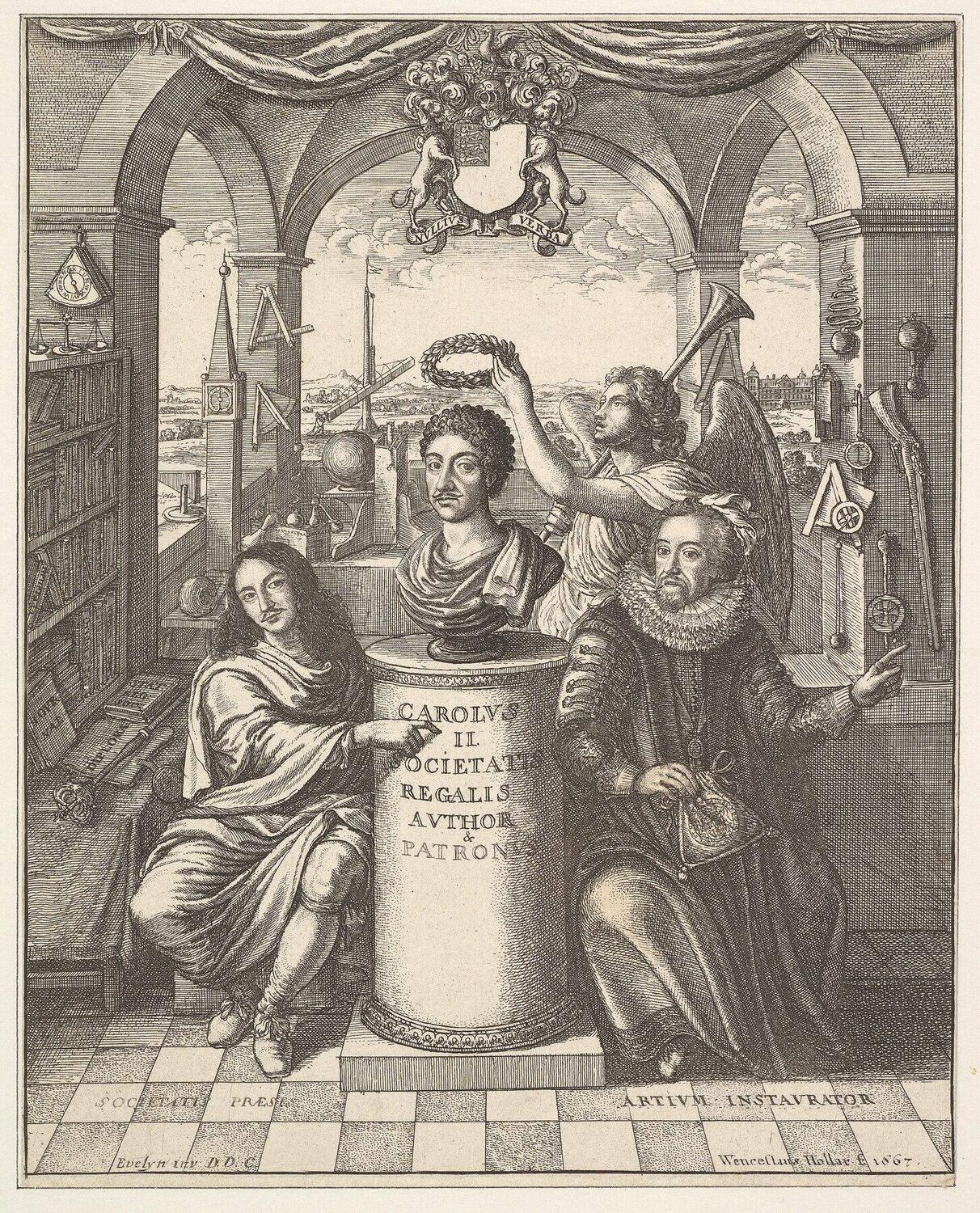
(Wenceslaus Hollar after John Evelyn. Metropolitan Museum of Art. CC0.)
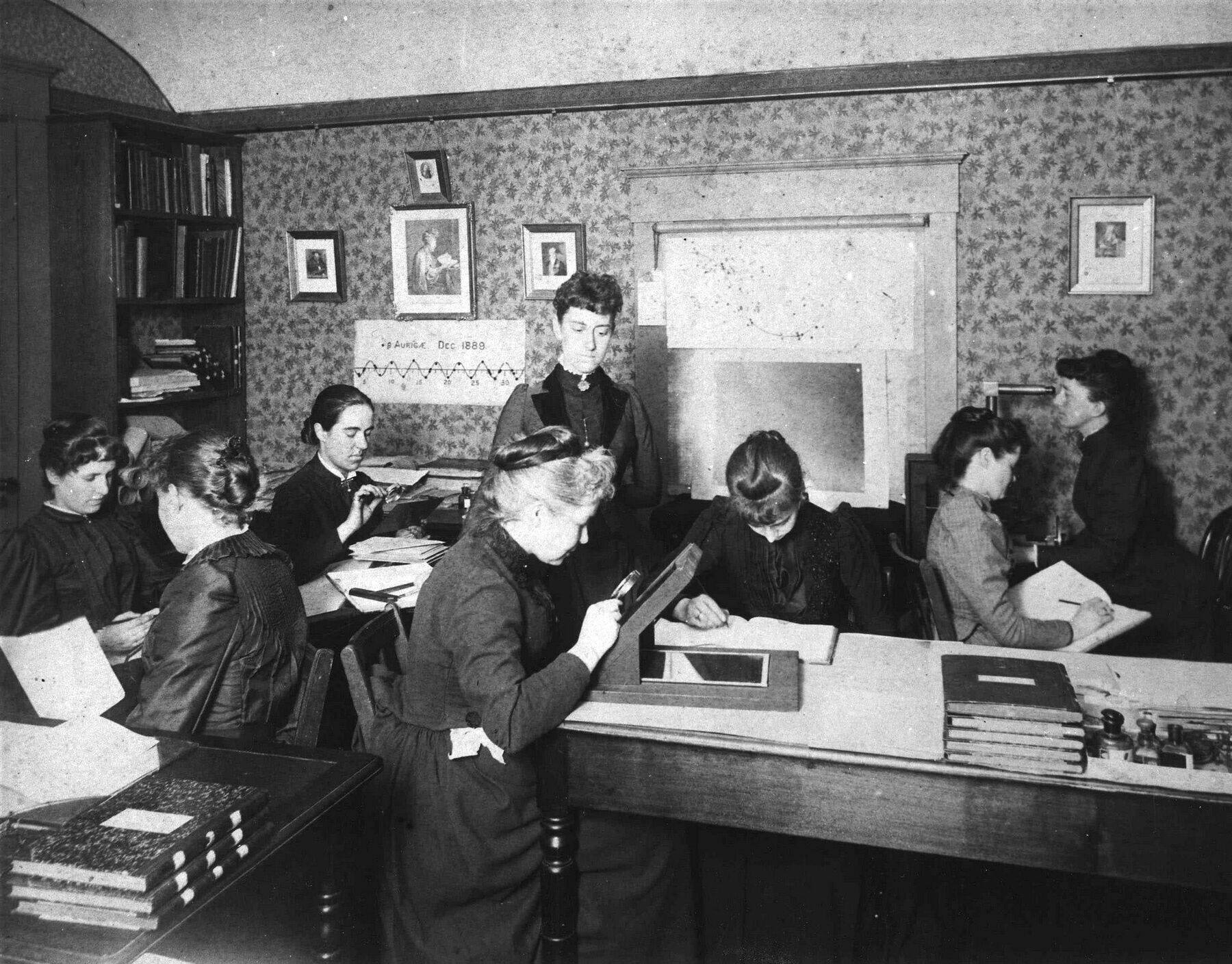
(Harvard College Observatory. Public domain.)
Shapin · 1996
Shapin opens by denying that the Scientific Revolution happened
“There was no such thing as the Scientific Revolution, and this is a book about it. Some time ago, when the academic world offered more certainty and more comforts, historians announced the real existence of a coherent, cataclysmic, and climactic event that fundamentally and irrevocably changed what people knew about the natural world … It was the moment at which the world was made modern, it was a Good Thing”
Shapin · 1996 · what is argued
Historians still argue about what the Scientific Revolution was
One event, or many practices?
Many historians doubt any “singular and discrete event,” and any single “science” or “scientific method” to revolutionize (pp. 3–4).
A break, or continuity?
The continuity of seventeenth-century natural philosophy with its medieval past “is now routinely asserted” (p. 4).
Ideas, or practices?
Older accounts treated ideas as if they “floated freely in conceptual space.” Newer ones ask what people did to make an observation or run an experiment (p. 4).
Inside, or outside?
Whether science’s causes were intellectual or social was long argued. Shapin calls the split “a rather silly demarcation” (p. 9).
Shapin, The Scientific Revolution, pp. 3–4, 9
Shapin · 1996 · who took part
Shapin asks who was left out of the Scientific Revolution
“The half of the European population that was female was in a position to participate in scientific culture scarcely at all, as was that overwhelming majority—of men and women—who were illiterate or otherwise disqualified from entering the venues of formal learning.”
Revolution for whom?
If only a few took part, “in what sense, if at all,” was it the moment “modernity was made, for ‘us’”? (pp. 4–5).
Shapin · 1996 · ancestors
Shapin still tells the story, as one about our ancestors
“Yet there is absolutely no reason we should not want to know how we got from there to here, who the ancestors were, and what the lineage is that connects us to the past.”
Such stories, he warns, are “not likely to be sensitive accounts of how it was in the past”: Galileo, Descartes and Boyle were hardly typical of their countrymen (p. 7).
Discuss
Is it wrong to judge the past as the road to the present if the road really did lead here?
1998 · print and trust
Printed books had to earn trust, a later historian argued
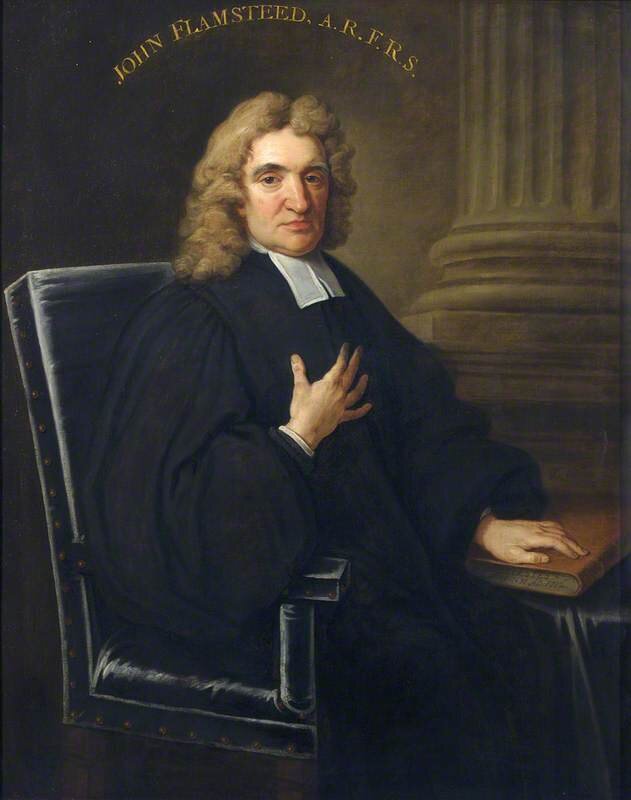
“In such a world, questions of credit took the place of assumptions of fixity.” Adrian Johns, The Nature of the Book (1998), p. 31
Early print was full of piracy and error, so readers had to decide which books to believe (p. 31). In 1712 Newton and Halley printed an astronomer’s star catalogue against his “vehement opposition” (p. 55).
Print and trust
One view put authority in the printed page; another put it in readers
Print fixes texts (1979)
Print fixed texts, so scholars could compare, correct and build on them. The Renaissance and Reformation were “rendered permanent” by permanent texts (as Johns summarizes it, p. 11).
Readers make print trustworthy (1998)
Fixity “exists only inasmuch as it is recognized and acted upon by people” (p. 19). Printed texts were trusted “only as a result of hard work” (p. 36).
From gentlemen to books
The later view builds on Shapin’s trust: not only whom to believe, but which printed books (p. 31). The two authors argued it out in the American Historical Review in 2002.
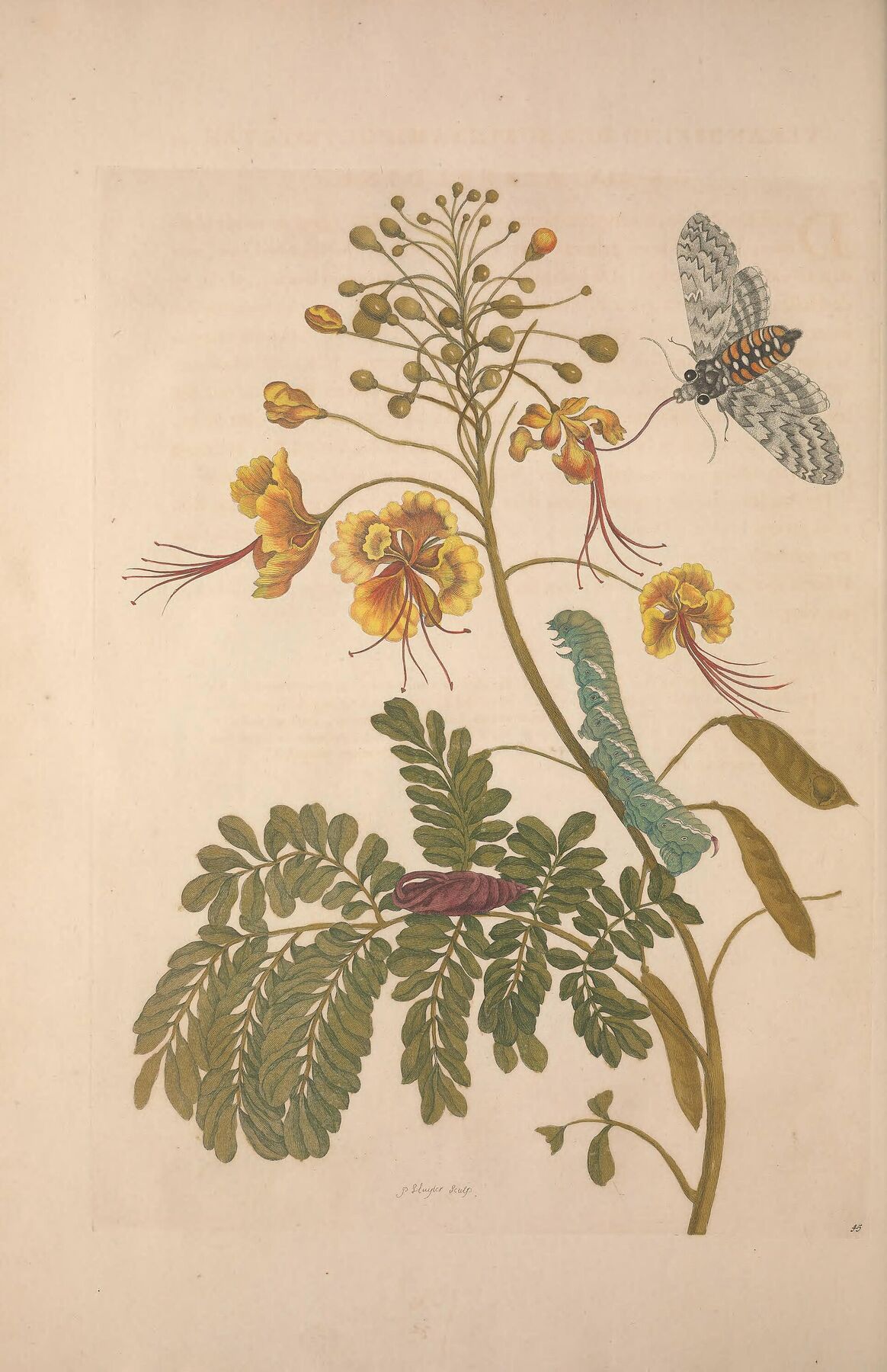
(Biodiversity Heritage Library. Public domain.)
2007 · objectivity
Scientific objectivity itself has a history
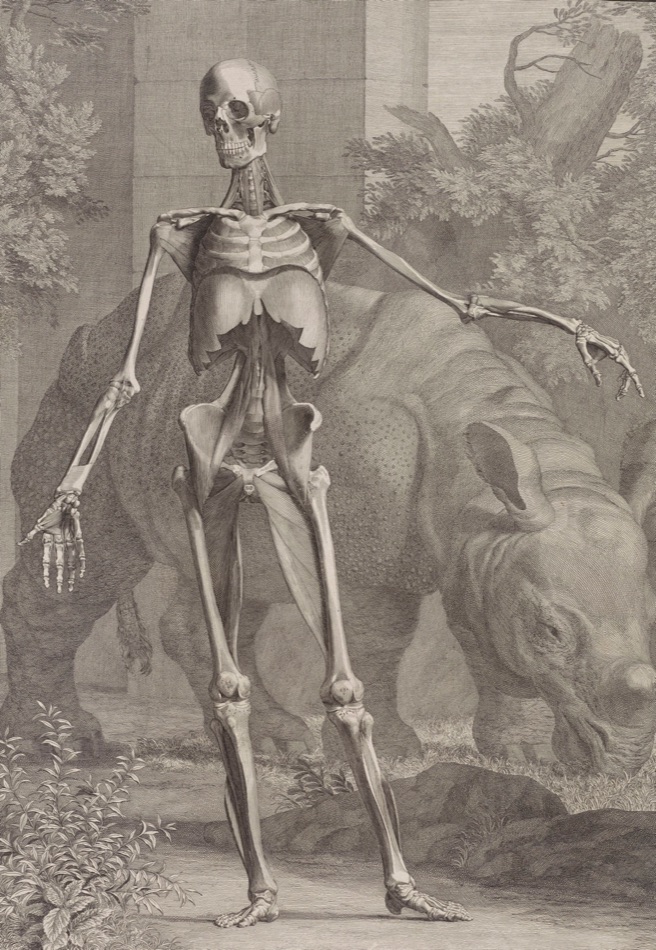
“The objectivity of the experimental matter of fact … was an artifact of certain forms of discourse and certain modes of social solidarity.” Steven Shapin and Simon Schaffer, Leviathan and the Air-Pump (1985), quoted in Maza, p. 97
Lorraine Daston and Peter Galison’s Objectivity (2007) traced scientific atlases and found self-restraint as an ideal of science taking shape only in the nineteenth century. Earlier atlases trusted the expert’s eye to show the typical body.
2007 · circulation
Science was made by circulation, not spread from Europe

“the reframing of historians’ ‘where’ … from the single location to transnational and global expanses, all of which have entailed challenges to Eurocentrism.” Maza, Thinking About History, p. 116
Older accounts had Western science radiating from Europe. Kapil Raj’s Relocating Modern Science (2007) argued that South Asia and Europe made it together.
Maza · 2017 · who did science
Science was practiced by many more people than the old story allowed
“Science, in short, was not just produced by savants in learned societies but practiced by all sorts of people with very concrete needs and agendas—performing at court, impressing wealthy friends, firing an intricate piece of pottery, or, in the case of wives and family members, providing unacknowledged assistance of every sort.”
Discuss
Shapin says women and the illiterate took part in scientific culture “scarcely at all”; Maza says “all sorts of people” practiced science. Who is right, and what is each counting as science?
Next · 14.1 · the history of medicine