Berlin · 13 July 1878
Today’s claim is that this is a picture about gender
There is not a woman in the room. Where would you even start looking?
Making History • HIST 1105 • Week 6.2
Gender: A Useful Category
- Background: Anna Green and Kathleen Troup, The Houses of History (1999), ch. 10: “Gender and History”, 253–260
- Joan Wallach Scott, “Gender: A Useful Category of Historical Analysis”, American Historical Review 91, no. 5 (1986): 1053–1075
Scott is cited by the page of the AHR printing. The Green and Troup pages are the editors’ own introduction to their chapter; where they quote someone else, the slide names both ends.
Today in context
What makes history happen?
Week 5 · Marx and Braudel
Structures. Class conflict over production; sea, soil and climate underneath everything.
Week 6.1 · Thompson, 1963
People — making themselves, out of what they experience and what they do about it.
Week 6.2 · Scott, 1986
Gender, as the system that makes any of those arrangements look natural.
Week 7.1 · Ginzburg, 1976
One miller’s cosmos, and what a single case can be made to carry.
Part one · the 1960s
Women’s liberation in the 1960s is when women set out to correct the record
“…it was during the 1960s’ women’s liberation movement that women began actively working to redress the absence of their lives and experience from most historical writing.”
Part one · why it mattered
Without a history, the way things are looks like the way things must be
“[t]o be without history is to be trapped in a present where oppressive social relations appear natural and inevitable. Knowledge of history is knowledge that things have changed and do change.”
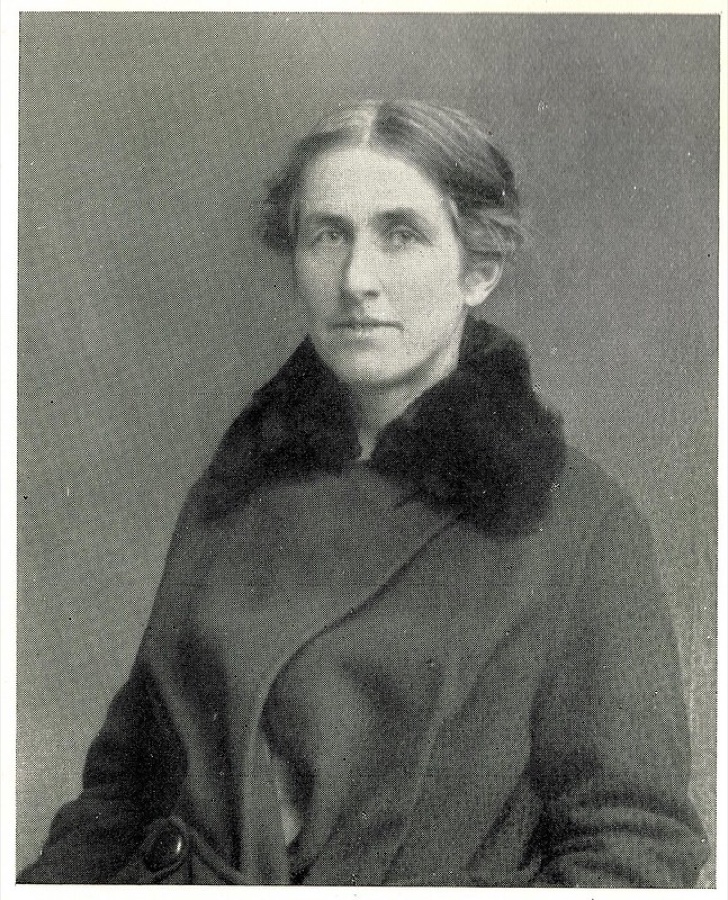
(Photograph: LSE Library, used for teaching. Title page: Internet Archive, public domain.)
Part one · the distinction
Sex is biology. Gender is what a society makes of it.

“Since sex is only rarely subject to change, it is not a useful concept for most historians.” Gender is “the cultural definitions of behaviour defined as appropriate to the sexes in a given society at a given time.”
Part one · the consequence
If gender is made, then gender has a history
“If gender is a social construction, then gender has a history and we can ask the questions: who makes gender and by what means, and how does it endure and change?”
Part one · recovering women
Historians began by finding the women and writing them back in
“In the United States, activists lobbied for equal rights and historians tended to focus on examining women’s status and experience in the past, sometimes writing about famous women.”
Part one · Joan Kelly, 1928–1982
Adding women broke the periods historians already had
A Renaissance historian at City College, who came to women’s history through Gerda Lerner and then asked her own period whether it happened.
“there was no renaissance for women — at least, not during the Renaissance”
Part one · gender and class
Gender seemed to cut across class, and that is what broke the class analysis
“it seemed that some aspects of oppression and experience were common to women of all ranks despite the differences in their lives. And this oppression could be attributed to men, rather than to the specific economic system under which the women lived.”
Part one · the criticism
Women of colour showed that the shared experience was white and middle class
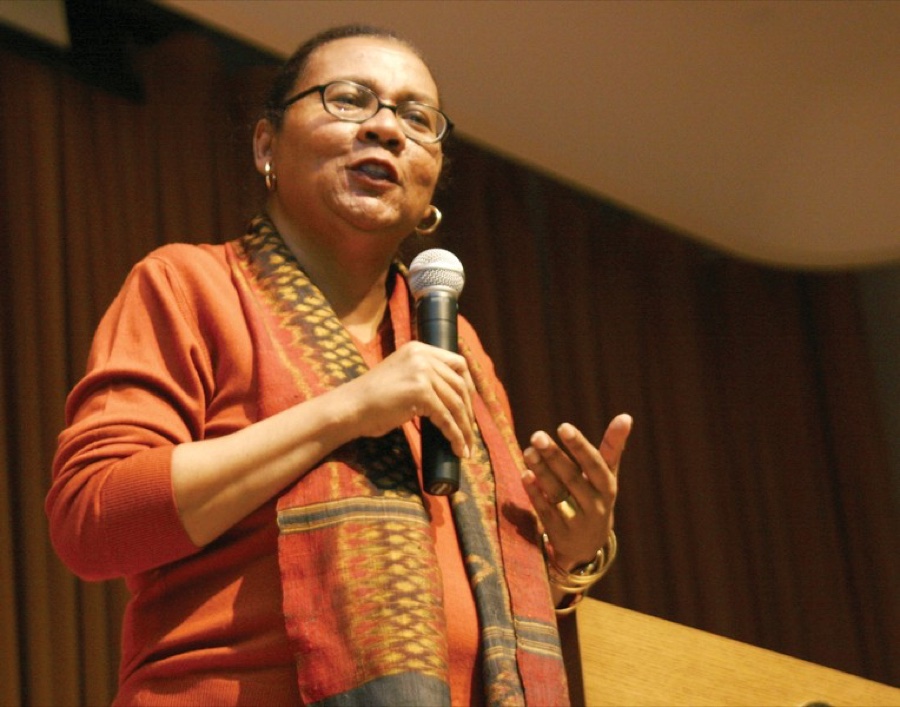
“[t]here is much evidence substantiating the reality that race and class identity creates differences in quality of life, social status, and lifestyle that take precedence over the common experience women share — differences which are rarely transcended”
Part one · where it ended up
Follow gender far enough and it turns up where no women are
“gender is present even when women are not”
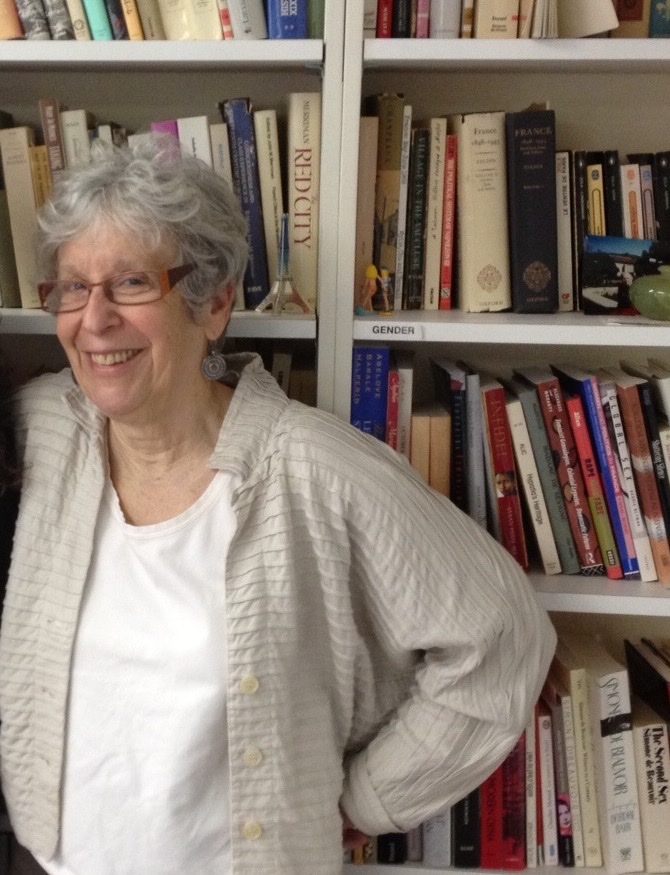
Part two · why “gender”
The word was chosen to say the difference is social, not natural
The word “denoted a rejection of the biological determinism implicit in the use of such terms as ‘sex’ or ‘sexual difference.’”
Part two · what happened to it
Within ten years it had become a quieter way of saying women
“In its simplest recent usage, ‘gender’ is a synonym for ‘women.’”
Part two · the charge
That makes gender a topic, and a topic changes nothing
“Gender is a new topic, a new department of historical investigation, but it does not have the analytic power to address (and change) existing historical paradigms.”
Part two · the definition, first half
Her definition turns on one word: perceived
“gender is a constitutive element of social relationships based on perceived differences between the sexes”
Part two · the definition, second half
Her theory of gender is in the second half
“gender is a primary way of signifying relationships of power”
Part two · where to look
Four places a historian can actually go looking for it
01
Symbols
Eve and Mary, light and dark, purification and pollution.
02
Norms
Doctrines that fix one meaning of male and female and state it “as the only possible one.”
03
Institutions
Kinship, the labour market, education, and the vote.
04
Identity
How particular people were made into gendered subjects.
Scott, pp. 1067–68.
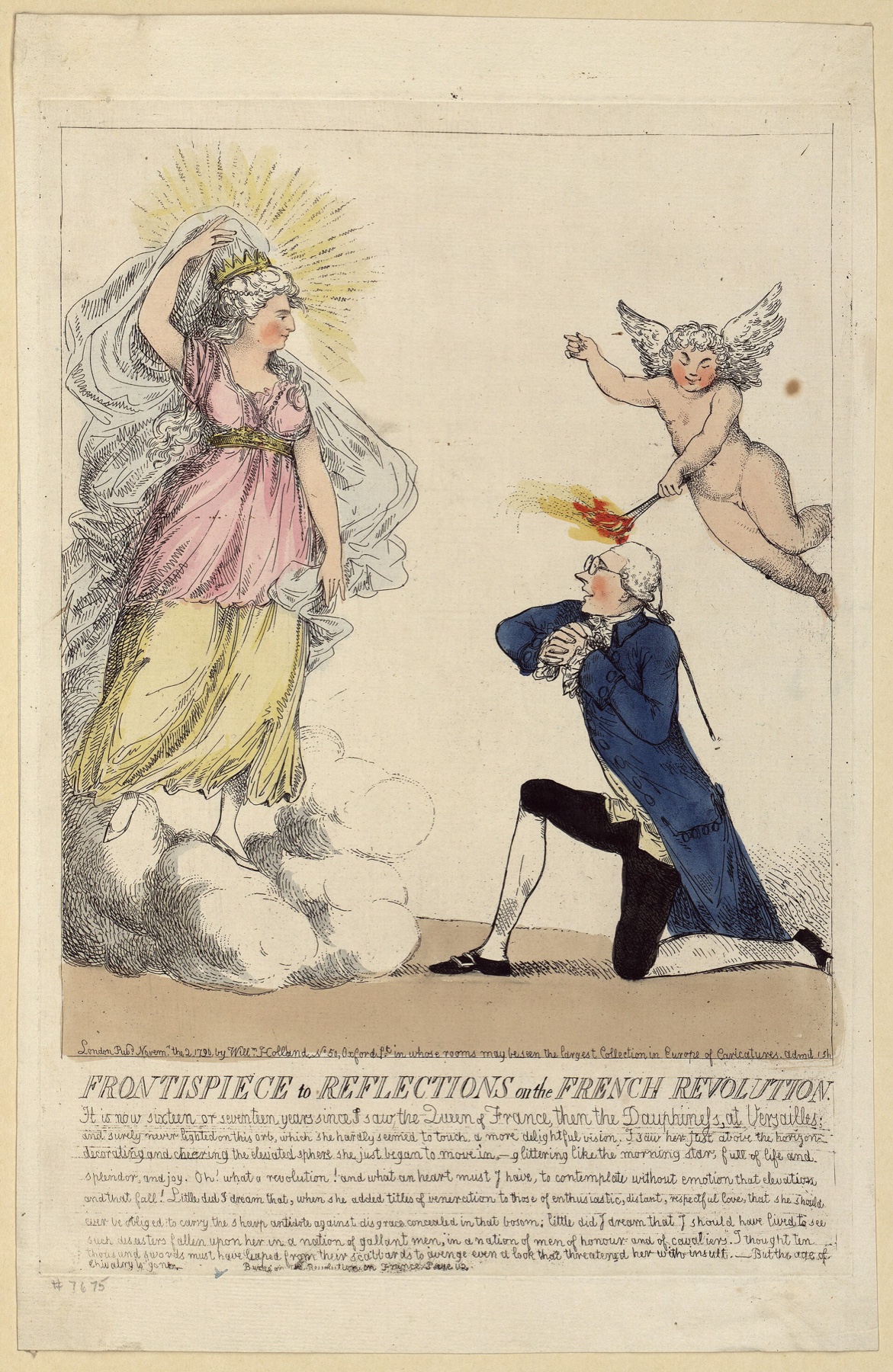
(Library of Congress, British Cartoon Prints Collection. Public domain.)
Part two · Burke, 1790
Burke argues against a revolution using two kinds of women
He sets “the furies of hell, in the abused shape of the vilest of women” against Marie-Antoinette, who fled the crowd to “seek refuge at the feet of a king and husband.”
Part two · high politics
A room with no women in it is the gendered one
“High politics itself is a gendered concept, for it establishes its crucial importance and public power … precisely in its exclusion of women from its work.”
Part two · discussion
Gender without women
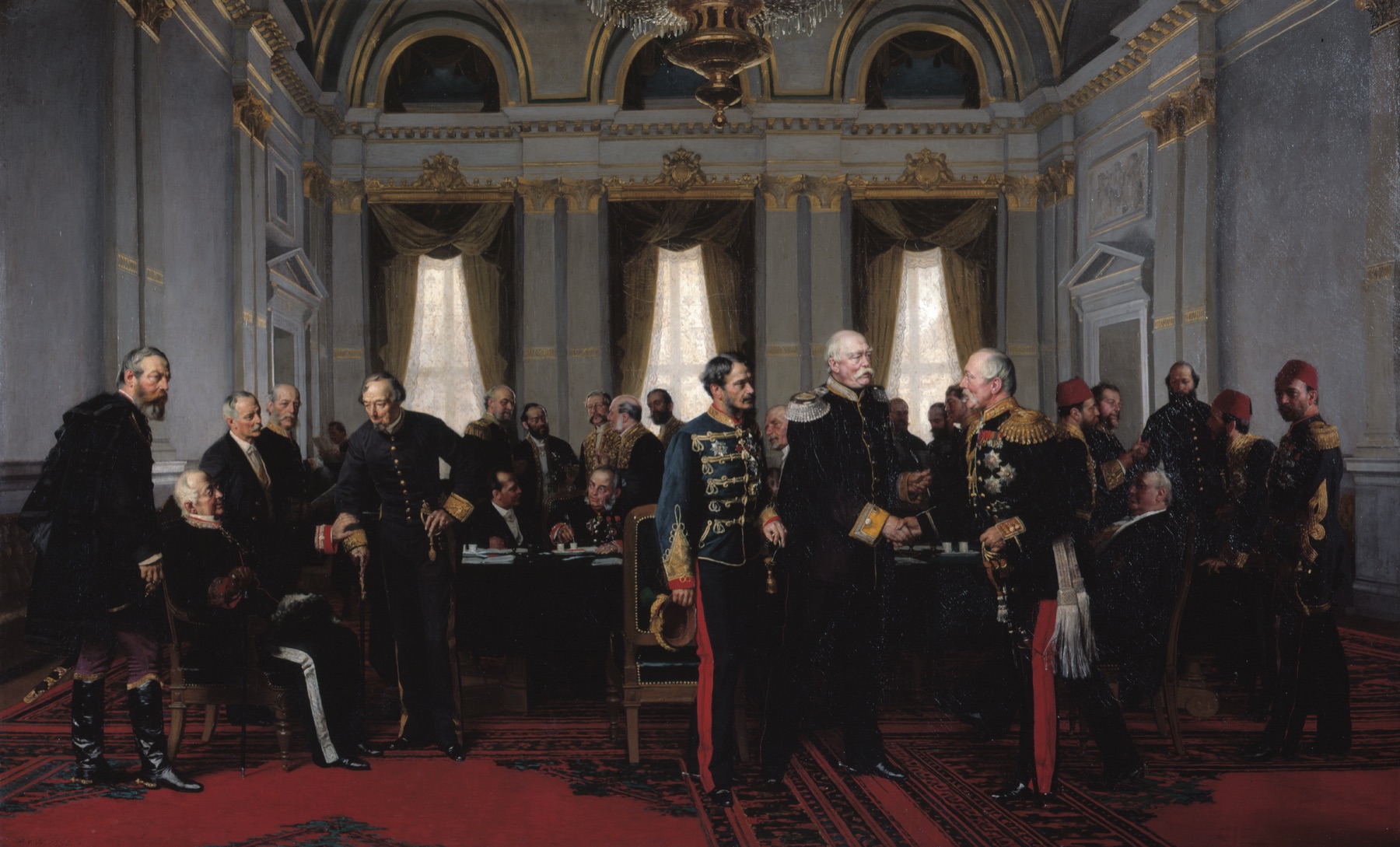
Scott says gender is at work in that room. What evidence would you need to show it, and where would you go looking?
Not the delegates’ sex but what the room claims for itself: strength and weakness in the despatches, protection in the treaties, the laws each power took home about its own women.
The lecture · looking back
Getting women in, fixing the word, and a room full of men
01 · Green and Troup
Getting women in
Recover the women, then break the periods, then set gender beside class — and each of those made the category “women” harder to hold.
02 · Scott, 1986
Fixing the word
“Gender” had gone quiet, meaning “women” and threatening nothing. Her definition puts power back into it.
03 · The payoff
Where it reaches
Burke’s two kinds of women, and a treaty room whose authority runs on who is not in it.
The take home
Gender is not the history of women
It is the reason so much history could be written as though women were beside the point.