Making History • HIST 1105 • Week 4 · part two
Enlightenment Progress
- Voltaire, Age of Louis XIV (1751), Introduction
- Kant, “Idea for a Universal History with a Cosmopolitan Purpose” (1784)
- Background: Popkin, ch. 3, 61–69
Voltaire cited by page (Fleming translation, the edition on the syllabus); Kant by thesis number (Beck translation); Popkin by page.
Where we are · three parts left
Progress was not discovered. It was argued for.
01 · Voltaire, 1751
Progress you can see
Four ages in the whole history of the world, ranked by taste and manners, with one court at the top.
02 · Kant, 1784
Progress you have to argue for
Not which age had the most taste, but why history as a whole should be going anywhere at all.
03 · What became of it
A ladder, and the objection
Condorcet and Ferguson turn the idea into a scale you can measure people on. Herder, the same year as Kant, refuses it.
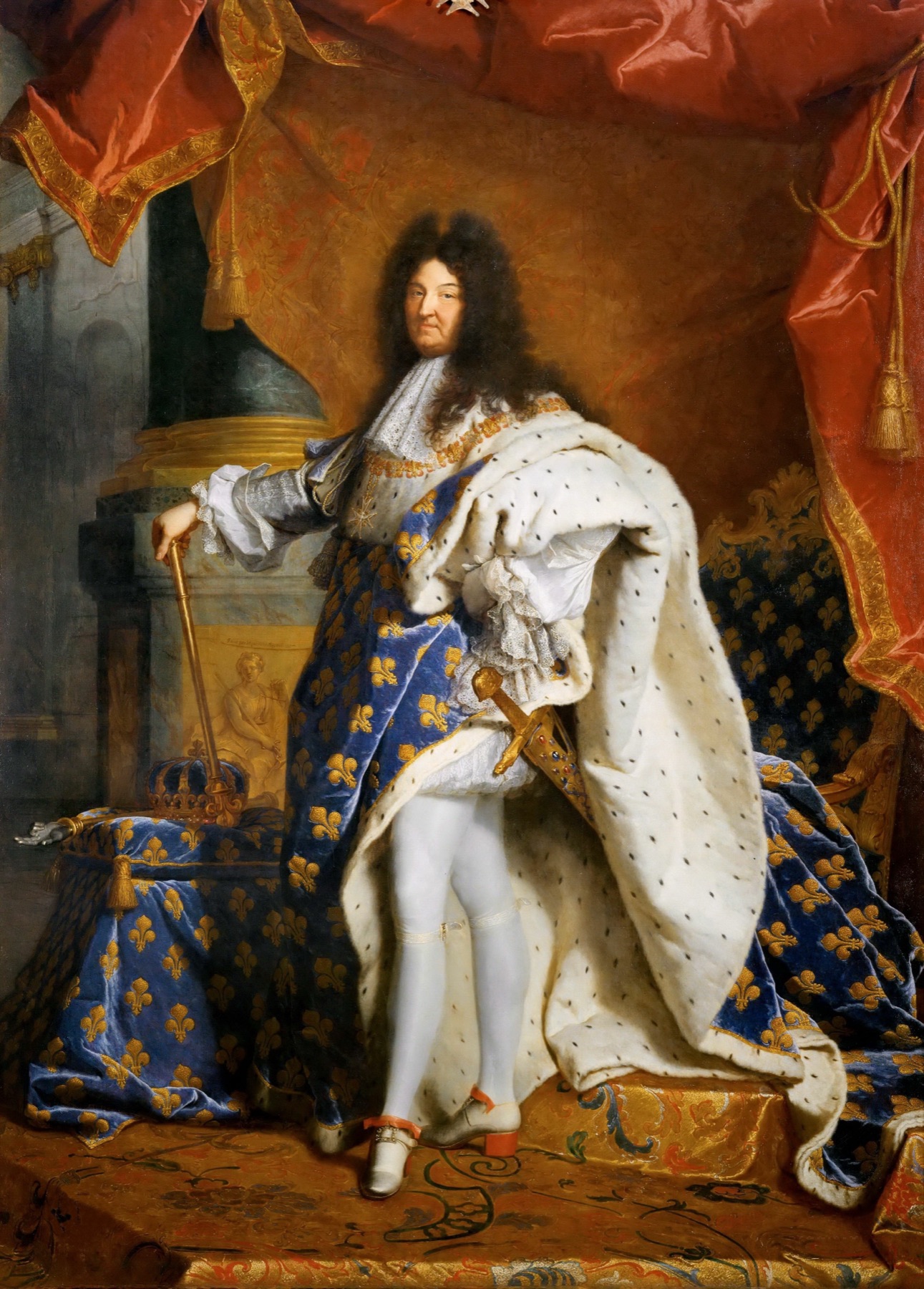
(Hyacinthe Rigaud, Musée du Louvre. Public domain.)
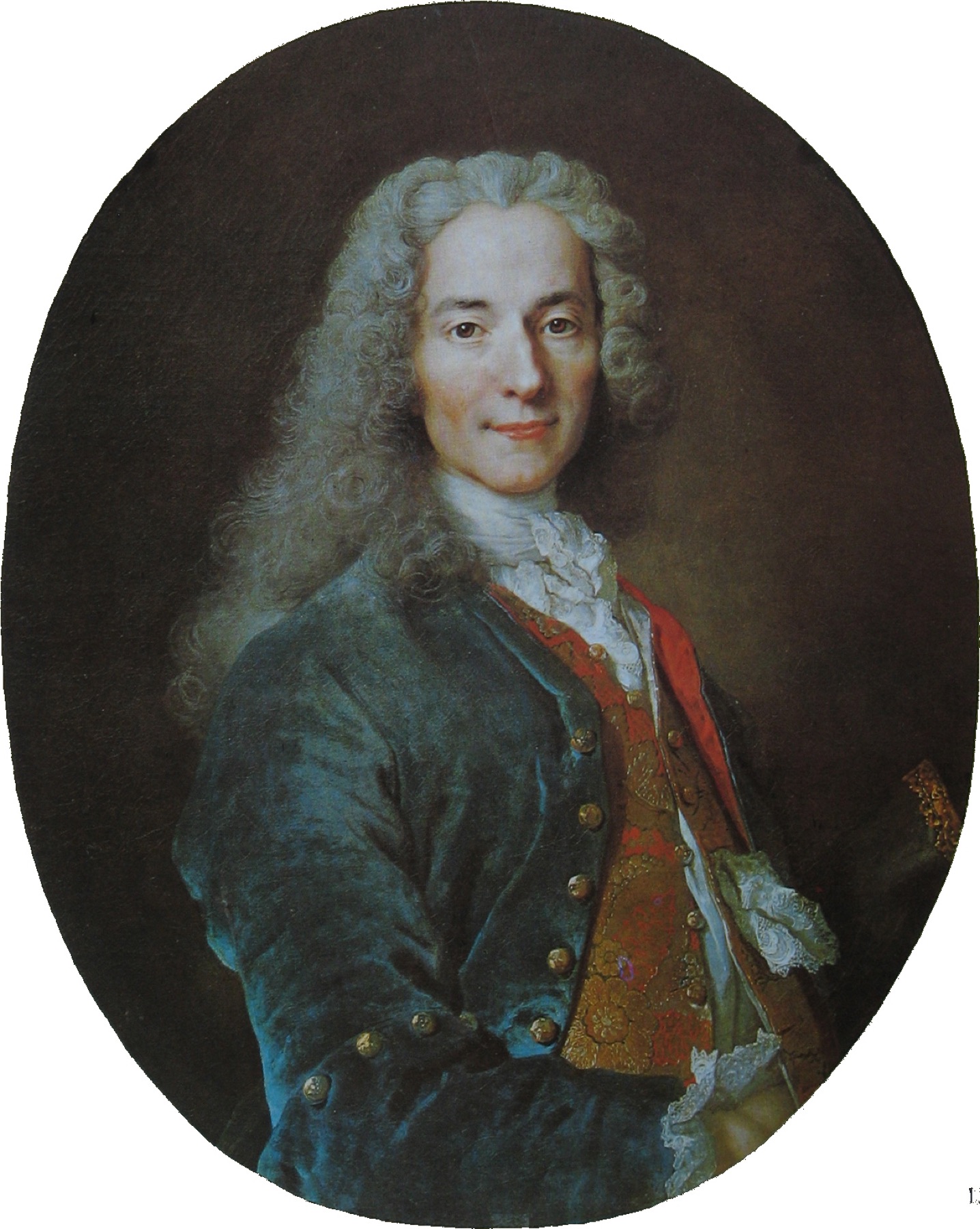
Why he matters: not a court historian with royal archives but an independent celebrity, writing for a European public from outside the country he describes.
(Largillière, c. 1724–25; he was 57 when he finished the book. Versailles, MV 8159. Public domain.)
The text · what the Age of Louis XIV is
Twenty years of work, printed in Berlin, about a king dead since 1715
The book
Two volumes, 1751. Voltaire had been working at it since the 1730s. Roughly the first half narrates the reign’s wars and politics, the way a history was expected to. The rest is chapters on government, commerce, science, the arts, and religion — and that part is what was new.
How it got out
Printed in Berlin, not Paris, and issued under the name of a member of the Prussian Academy, M. de Francheville, rather than Voltaire’s own. Publishing in France meant clearing the royal censor. He wrote about French greatness from beyond French jurisdiction.
What the list is doing
The Introduction is not Voltaire inventing history. It is Voltaire working inside an entirely ordinary genre and telling you, before the narrative starts, that he has changed what the book is about.
Voltaire 01 · The Introduction
Only four ages in the whole history of the world
“Whosoever thinks, or, what is still more rare, whosoever has taste, will find but four ages in the history of the world. These four happy ages are those in which the arts were carried to perfection.” Voltaire, Age of Louis XIV, Introduction, p. 5
The list, and the test for making it
Greece under “Philip and Alexander.” Rome under Caesar and Augustus. Medici Florence. And “the fourth age is that known by the name of the age of Louis XIV” — an age that ended when he was twenty, named as one of only four peaks in recorded history (pp. 5–7). The test for entry is not military success. It’s whether “the arts were carried to perfection.”
Who’s doing the ranking
The qualifier matters: not everyone sees four ages, only “whosoever has taste” — a category Voltaire is visibly placing himself and his reader inside. This is not a neutral inventory. It is a judgment, made by someone claiming the authority to make it.
Take home
“Progress” starts here as connoisseurship: a short list of peaks, picked by people confident they can tell taste from barbarism.
Voltaire 02 · What the book will and won’t do
Not battles. The genius and manners of mankind.
“In this history we shall confine ourselves only to what is deserving of the attention of all ages, what paints the genius and manners of mankind, contributes to instruction, and prompts to the love of virtue, of the arts, and of our country.” Voltaire, Age of Louis XIV, Introduction, p. 11
What he’s refusing to write
A few sentences earlier, on the same page, he names the job he’s leaving to someone else: “the compilers of annals,” whose task is “to point out the marches and countermarches of armies” and which towns were “taken and retaken again by force of arms.” That is a direct jab at the chronicle tradition — recording events in the sequence in which they happened, the form this course has already read.
Whose manners
Popkin’s verdict on the result: Voltaire “practiced history as a form of literature, striving to infuse it with drama and a clear message,” and emphasized cultural achievement — “although his interest was largely confined to elite culture” (p. 63). “The genius and manners of mankind” turns out to mean the manners of a few thousand people at the top.
Take home
A history book announcing what it refuses to cover is making an argument about what history is for — the same move Livy and Bede made, aimed at a new target.
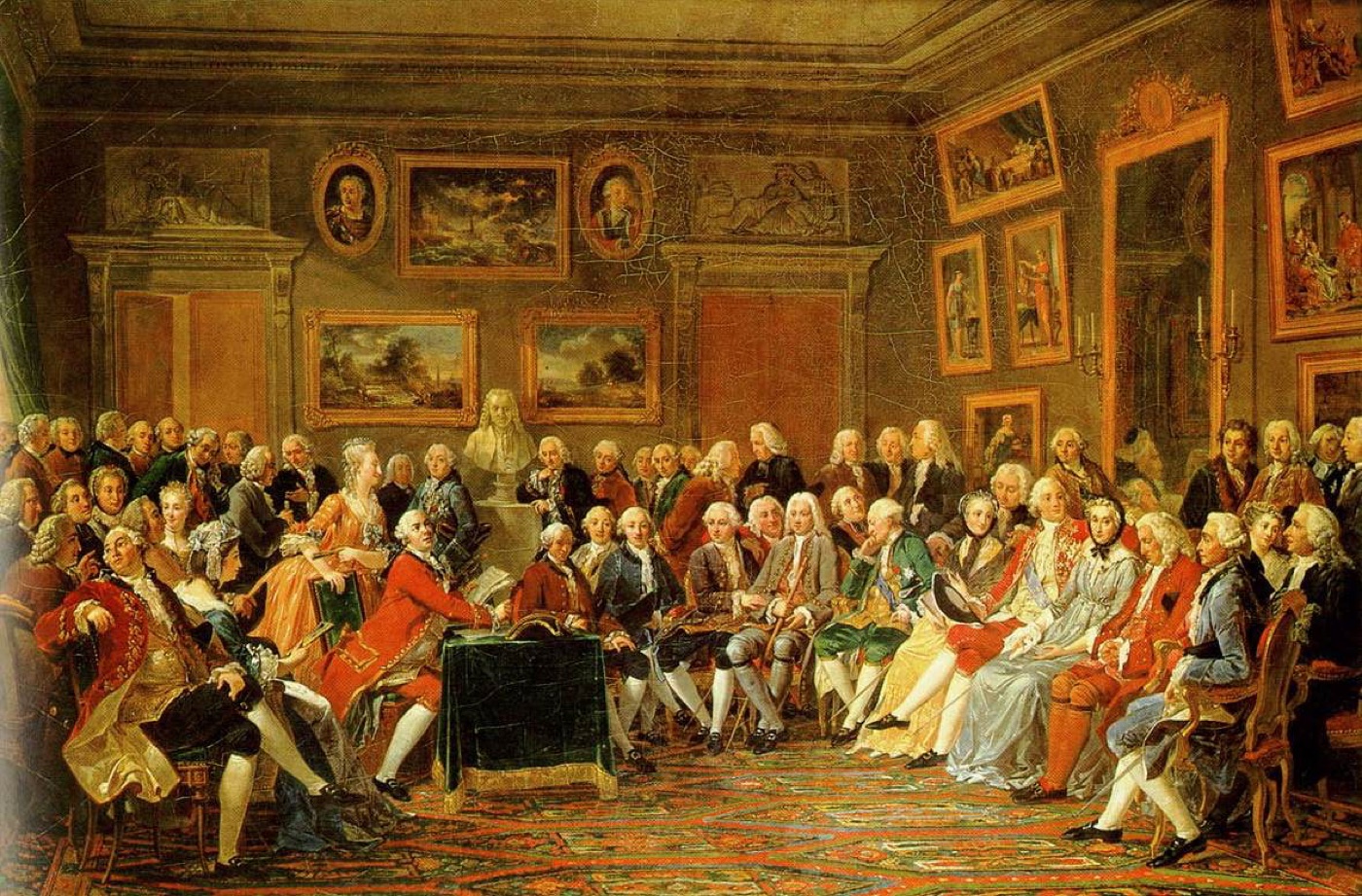
(Anicet-Charles-Gabriel Lemonnier, painted 1812, Château de Malmaison. Public domain.)
Voltaire 03 · Where “progress” spreads from
One court, and everyone else catching up
“This happy influence has not been confined to France; it has communicated itself to England… it has introduced taste into Germany, and the sciences into Russia; it has even re-animated Italy, which was languishing; and Europe is indebted for its politeness and spirit of society to the court of Louis XIV.” Voltaire, Age of Louis XIV, Introduction, pp. 7–8
Where the verbs point
France doesn’t receive influence in this sentence — it exports it. England is stirred, Germany gets taste “introduced” into it, Italy is “re-animated” from outside. One court is the source; every other nation is a destination the source reaches.
The shape this gives to “progress”
Progress here isn’t just something that happened once, in four places. It radiates outward, from a center, to everyone still catching up. One standard, everyone else measured against it. Compare Week 9 (Said, Trouillot).
Take home
Ask of any progress story: who is the source, and who is cast as still arriving?
Discussion · part two
What would it take to add a fifth age to Voltaire’s list?
He names four: Greece under “Philip and Alexander,” Rome under Caesar and Augustus, Medici Florence, and the age of Louis XIV (pp. 5–7). The test for entry is that “the arts were carried to perfection,” and the judges are “whosoever has taste” (p. 5).
- Who, on his terms, is qualified to decide?
- Could a society outside Europe meet the test as he states it?
Answer · part two
The test is not a measurement. It is a membership.
Why the list can’t be argued with
Nothing in “the arts were carried to perfection” can be picked up by someone else and applied to produce a different list. The qualifier does the work: only “whosoever has taste” sees four ages, and that is a category Voltaire places himself and his reader inside. A criterion only its author can apply will return its author’s answer. Nor does the test leave a door open: all four ages sit in one line of descent, and the judge is the heir of that line.
Take home
He is not setting out to rank nations; he is setting out to say what a great age looks like. But once the measure is taste, “Europe is indebted… to the court of Louis XIV” (pp. 7–8) can be written as though it were a description. The sorting was settled by the choice of test, several pages before any evidence arrived.
The next claim · thirty-three years later
Voltaire described it. Kant tries to explain why it has to happen.
Thirty-three years later, a philosopher in a Prussian university town asks a harder question — not which ages showed the most taste, but why history as a whole should be going anywhere at all.
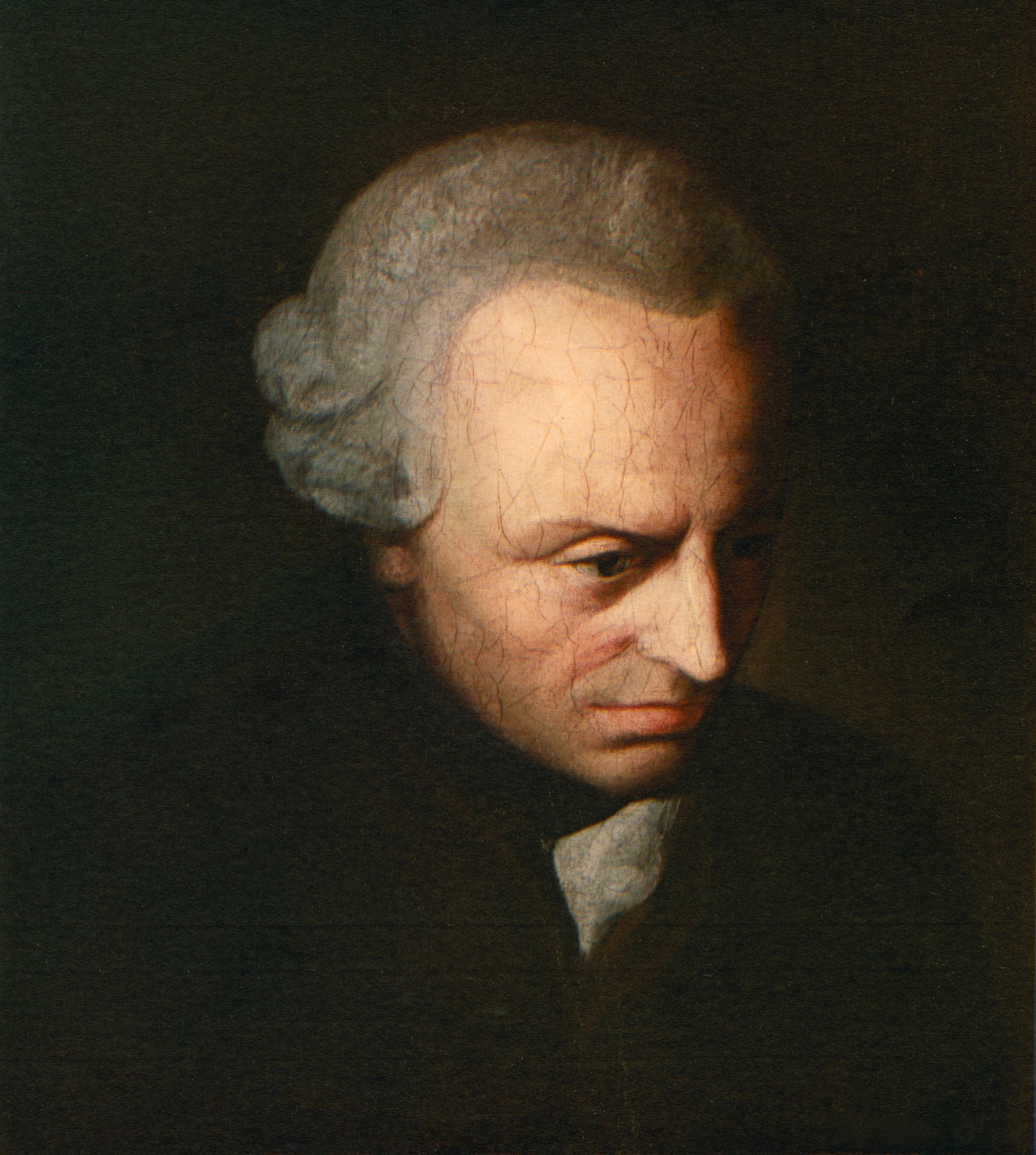
Why he matters: Voltaire argued from travel, having seen the courts of Europe. Kant argues from one desk, by reasoning alone.
(Unknown artist, c. 1790; Kant about 66. Public domain.)
The text · why this essay exists at all
An essay written to correct a rumor about a dinner conversation
“A favorite idea of Professor Kant’s is that the ultimate purpose of the human race is to achieve the most perfect civic constitution… he wishes that a philosophical historian might undertake to give us a history of humanity from this point of view.” notice in the Gothaische Gelehrte Zeitung, 1784, quoted in Kant’s own footnote
The source of that sentence
Those aren’t Kant’s words. They’re a magazine’s secondhand paraphrase of something he apparently said to “a scholar who was traveling through” Königsberg — gossip about a dinner conversation, printed in a scholarly gazette before Kant had written a word of it down himself.
What he does about it
Kant’s own footnote says the notice “occasions this essay, without which that statement could not be understood.” He publishes the full argument in the Berlinische Monatsschrift, November 1784 — the same journal that, one month later, runs his other famous short piece from that year, “An Answer to the Question: What Is Enlightenment?”
Take home
One of the most influential essays on the direction of history exists because a philosopher had to correct his own dinner conversation in print.
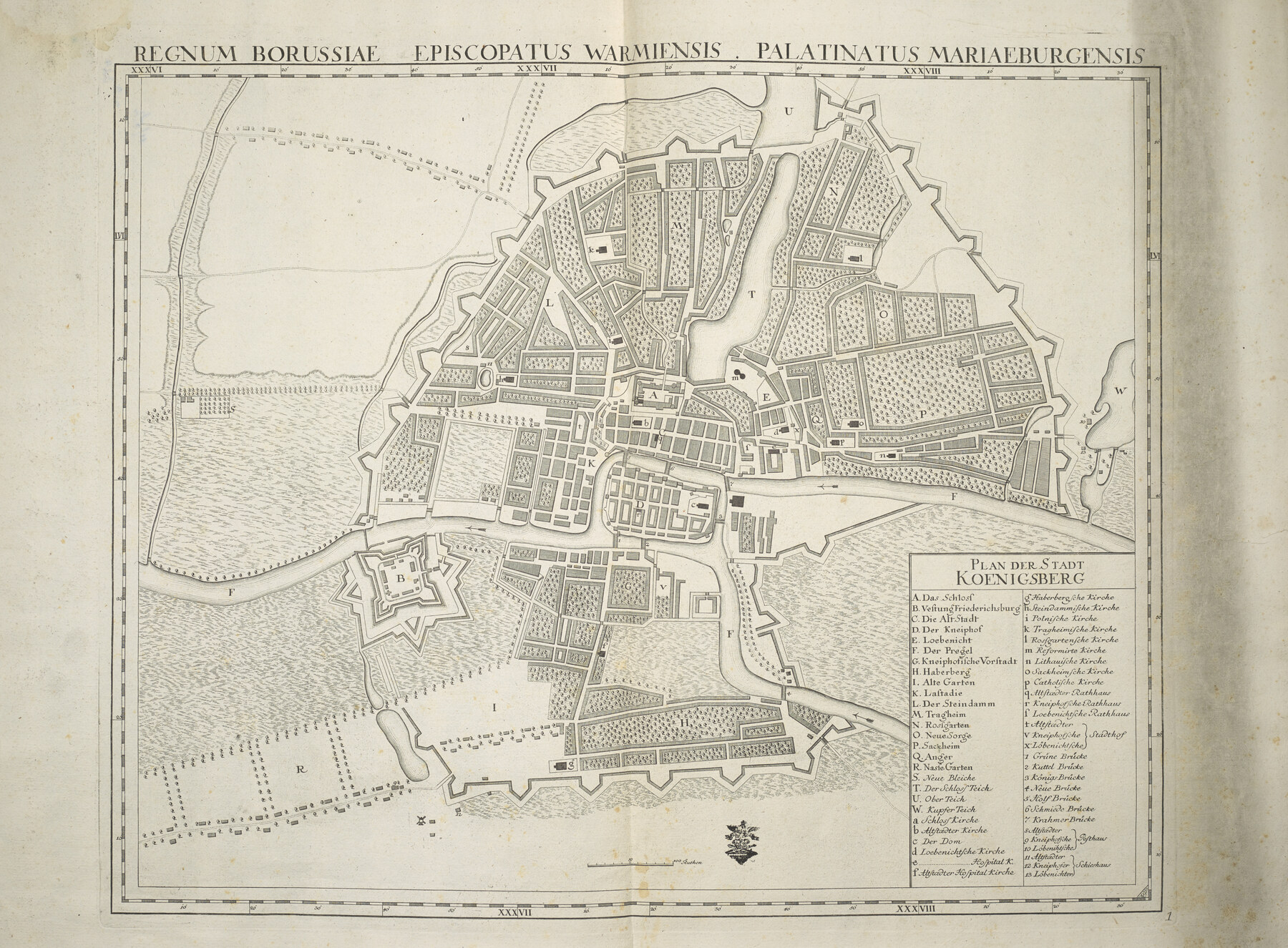
(Leibniz-Institut für Länderkunde, Leipzig. CC0.)
Kant 01 · The Eighth Thesis
History as the working-out of a plan nobody can see
“The history of mankind can be seen, in the large, as the realization of Nature’s secret plan to bring forth a perfectly constituted state as the only condition in which the capacities of mankind can be fully developed.” Kant, Eighth Thesis
Whose plan, exactly
Not any person’s plan — nobody alive is executing it on purpose. Kant’s claim is that Nature has one, working itself out through people who have no idea they’re part of it. History has a direction even though none of its participants agreed to one.
Kant’s own hedge
He doesn’t claim to have proven this. Later in the same thesis: “Does Nature reveal anything of a path to this end? And I say: She reveals something, but very little.” The philosopher making the strongest claim about history’s direction admits the evidence for it is thin.
Take home
This is a much bigger claim than Voltaire’s. Voltaire ranks four periods that already happened. Kant argues the whole species has to be going somewhere — as a matter of theory, not observation.
Kant 02 · The Fourth and Fifth Theses
The engine is vanity, not virtue
“By ‘antagonism’ I mean the unsocial sociability of men, i.e., their propensity to enter into society, bound together with a mutual opposition which constantly threatens to break up the society.” Kant, Fourth Thesis
What actually does the work
People need each other and can’t stand each other, both at once. Later in the same thesis he names what runs on that friction: “Thanks be to Nature, then, for the incompatibility, for heartless competitive vanity, for the insatiable desire to possess and to rule! Without them, all the excellent natural capacities of humanity would forever sleep, undeveloped.”
His own image for it
The Fifth Thesis gives the picture: trees in a forest “each needs the others” and grow “a beautiful, straight stature” by competing for light, while a tree left alone “put[s] out branches at random and grow[s] stunted, crooked, and twisted.” Isolation doesn’t produce virtue. Competition does.
Take home
For Voltaire, progress is made by admirable people — Pericles, the Medici. For Kant, it is produced by vanity and greed that nobody involved would call admirable.
Kant 03 · The Sixth Thesis
Even Kant doesn’t think this ends cleanly
“This task is therefore the hardest of all; indeed, its complete solution is impossible, for from such crooked wood as man is made of, nothing perfectly straight can be built.” Kant, Sixth Thesis
The problem he can’t solve
Humanity needs a “master” to enforce the laws that keep everyone’s freedom from destroying everyone else’s. But: “the master is himself an animal, and needs a master.” Whoever holds power needs to be checked, and whoever checks them needs checking too. Kant sees the infinite regress and doesn’t pretend to close it.
What this does to the Eighth Thesis
The “perfectly constituted state” from two theses ago turns out to require solving a problem Kant has just called impossible. Nature’s plan, on his own account, aims at a target it can’t fully reach. He calls the whole “Idea” a “guiding thread” rather than a proven law, and grants it looks “apparently silly” if read as anything more (Ninth Thesis).
Take home
Kant is not selling a utopia. He is describing a direction with no clean arrival — closer to an asymptote than a finish line.
Discussion · part three
Why would you build an argument for progress out of vanity and greed?
Kant thanks Nature for “heartless competitive vanity” and “the insatiable desire to possess and to rule” (Fourth Thesis) — then concedes that the goal cannot be fully reached, because “from such crooked wood as man is made of, nothing perfectly straight can be built” (Sixth Thesis).
- What does he gain by not requiring anyone to be good?
- What does he give up by putting the plan beyond anyone’s intention?
Answer · part three
A machine that runs on people as they actually are
The gain
Vanity and greed are reliable in a way virtue is not. A progress that waited for people to improve morally would be a hope; a progress driven by competition is a mechanism, and it keeps working whether or not anyone involved intends the outcome. That is what lets Kant claim history as a whole is going somewhere without claiming anyone in it is admirable.
The bill
If the destination belongs to Nature and not to us, no one can be credited or blamed for arriving — and no evidence can count against the plan, since setbacks are just the crooked wood. Kant half-concedes it: the whole essay is a “guiding thread,” not a proven law.
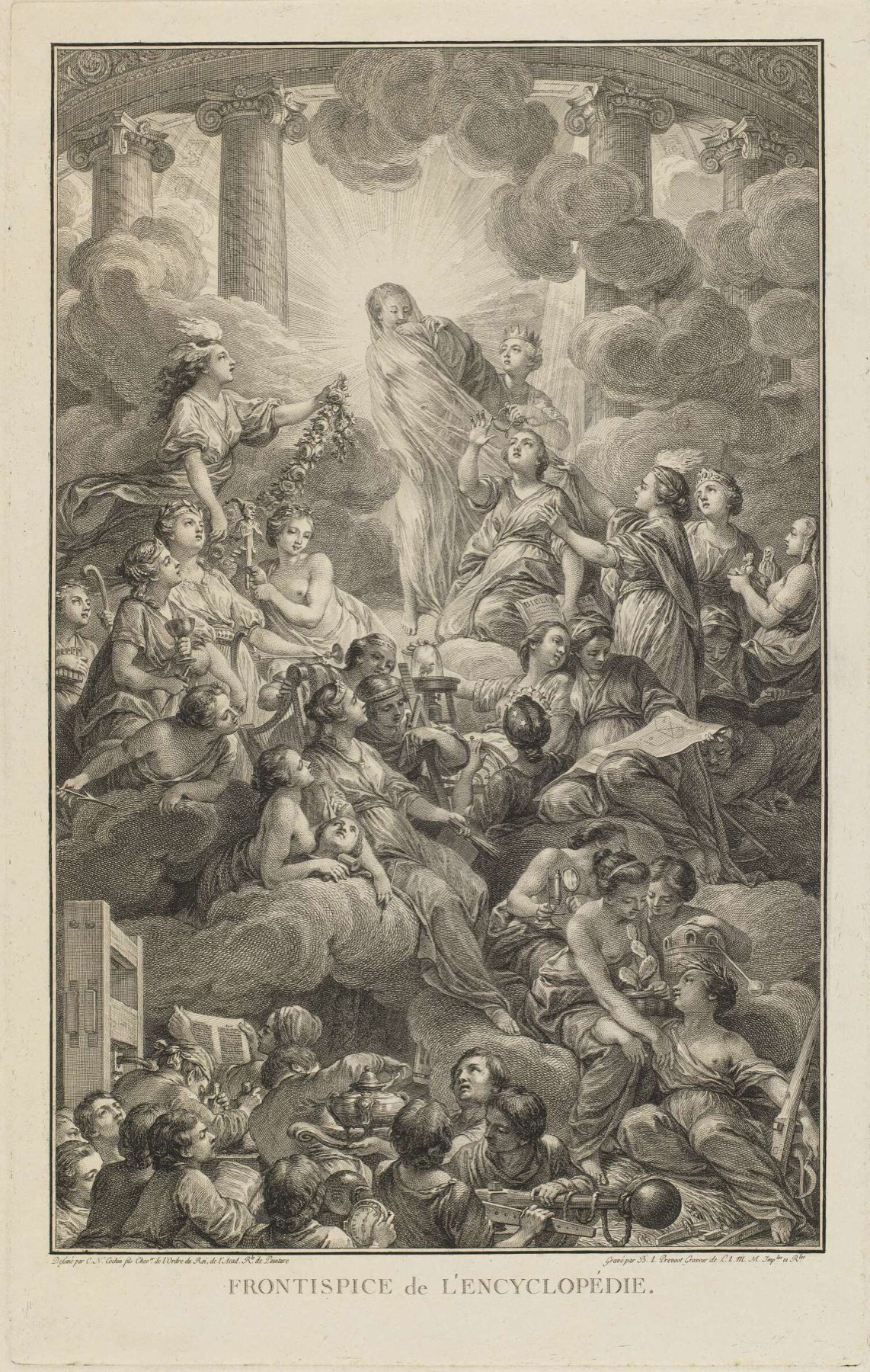
(Charles-Nicolas Cochin, design; Benoît-Louis Prévost, engraving. Public domain.)
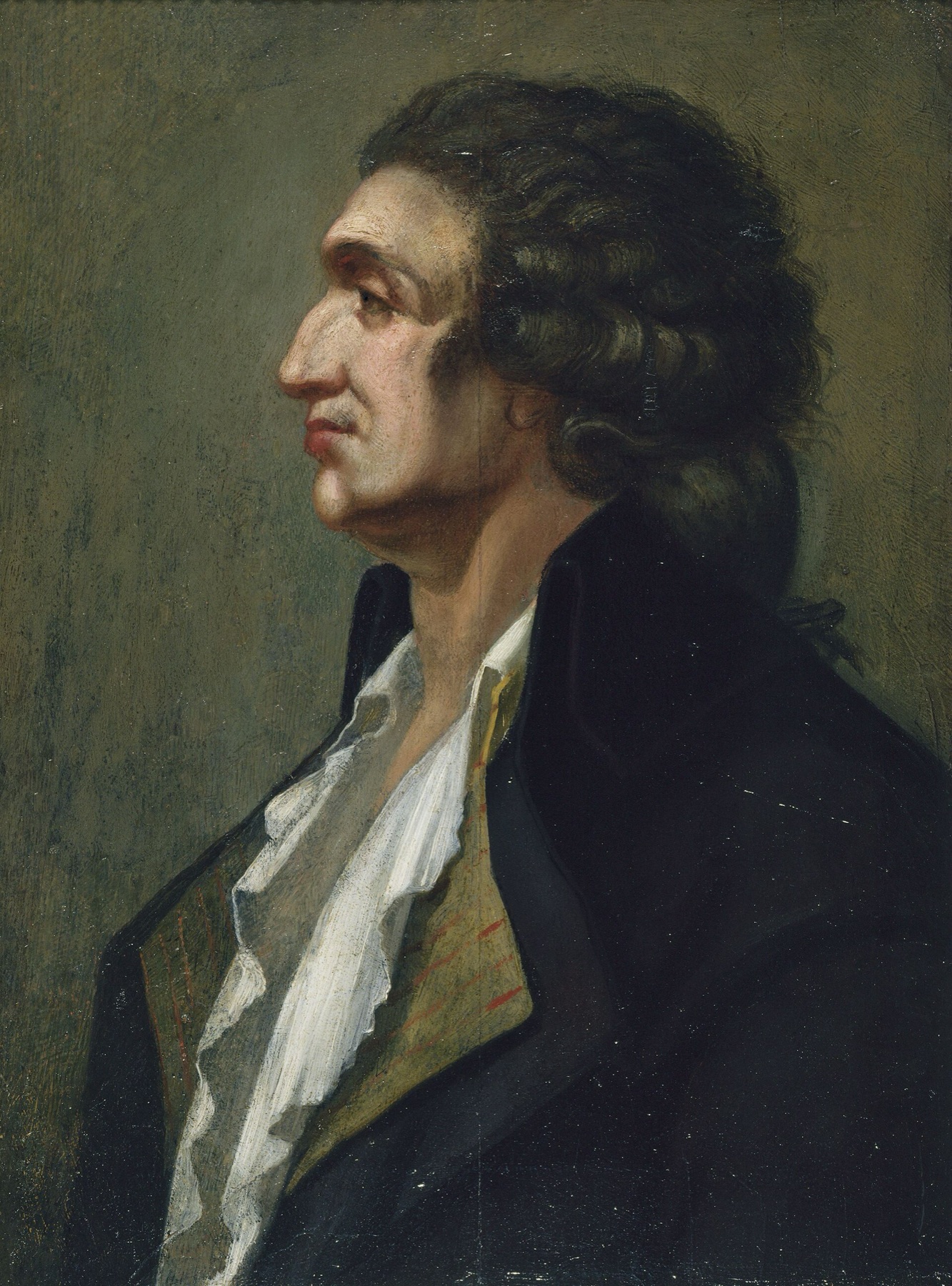
Why he matters here: he takes progress to its limit — no ceiling at all — and turns it into an argument for emancipation. The same idea, aimed the other way.
(Anonymous, Musée Carnavalet P1668, Paris Musées. Public domain.)
What became of the idea · the ladder
From a claim about the past to a scale you can measure people on
“nature has set no term to the perfection of human faculties” Condorcet, Sketch for a Historical Picture of the Progress of the Human Mind (1794), quoted in Popkin, p. 67
Where he wrote it
Condorcet wrote the Sketch “in the midst of the upheavals of the French Revolution” (p. 67) — in hiding, under warrant from the Revolution he had helped make. He was arrested on 27 March 1794 and found dead in his cell two days later. The most confident statement of unlimited human progress was written by a man being hunted.
And now it has numbered stages
In Scotland, Adam Ferguson’s Essay on the History of Civil Society set out a “conjectural history” in which all societies “inevitably moved through a series of economic and cultural stages” — herding, then agriculture, then trade and manufacturing (p. 67). Once progress has stages, any society you encounter can be assigned one.
Take home
Voltaire ranked four ages that were over. Kant argued for a direction. Here the sorting stops being a side effect and becomes the instrument: Ferguson’s stages exist to be held up against a society and read off. Condorcet, meanwhile, is using the same idea to argue for abolition and for women’s votes.
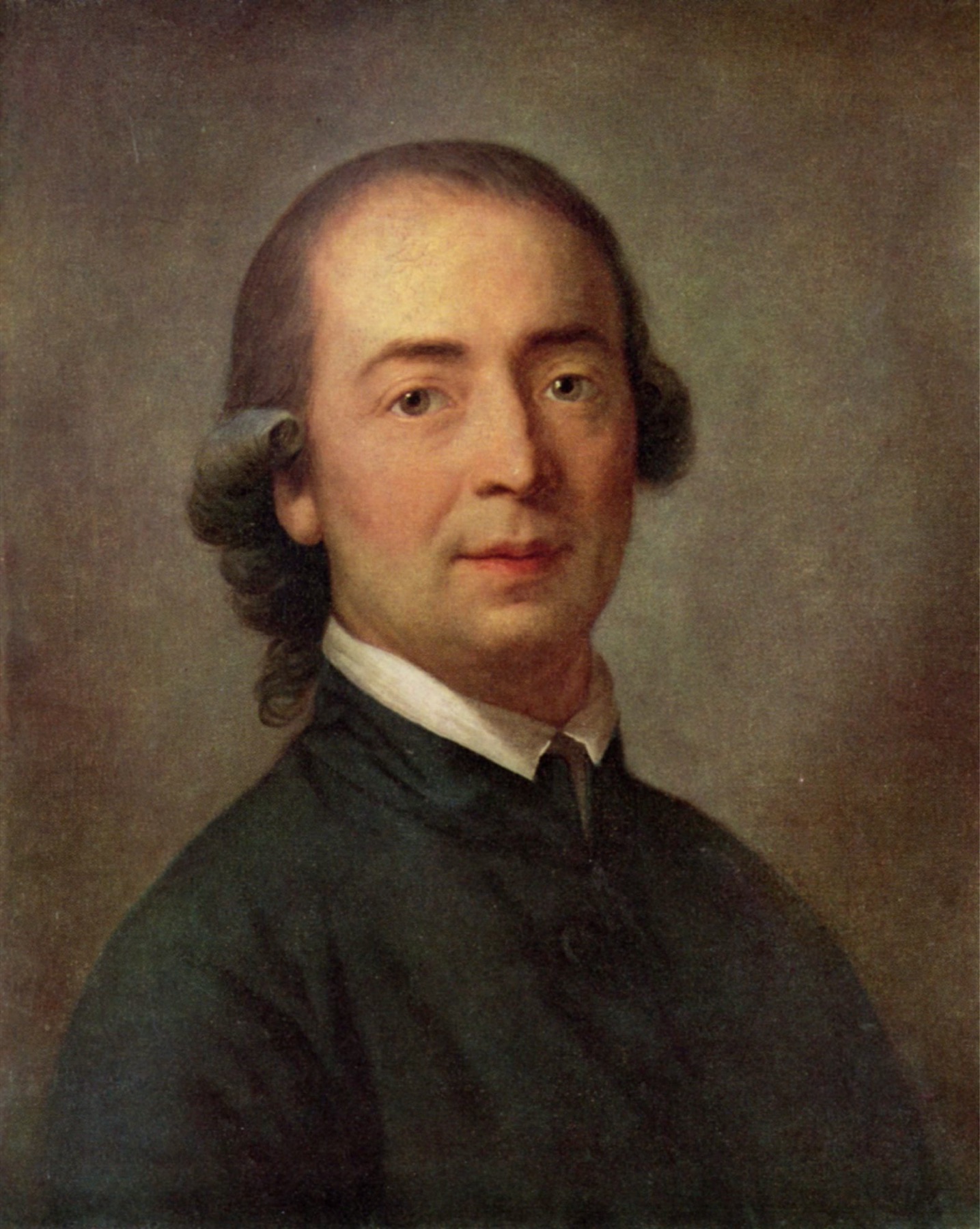
Why he matters here: he refuses the single universal standard while Kant is still building on it — and his alternative, each people judged on its own terms, becomes nineteenth-century nationalism.
(Anton Graff, 1785. Public domain.)
The objection · Johann Gottfried von Herder, 1744–1803
The critic was Kant’s own student
“[Herder] objected to the idea of measuring the distinctive cultures of different nations according to a universal standard of civilization derived from the experience of Western Europe.” Popkin, From Herodotus to H-Net, p. 68
Who he was, and what he proposed instead
Herder studied under Kant at Königsberg in the early 1760s — same university, same city, twenty years before the two of them published opposing accounts in the same year; by the 1780s he was court preacher at Weimar. His alternative, per Popkin: “every nation had its own unique characteristics,” best seen in “the folk culture of its ordinary people rather than by its educated elites,” so that “each nation’s past was considered only on its own terms” (p. 68). No universal plan. No ranking by taste.
What this targets
“A universal standard of civilization derived from the experience of Western Europe” is precisely what “Europe is indebted… to the court of Louis XIV” builds, and precisely what a single “perfectly constituted state” assumes has one correct shape. Herder’s objection lands on both of today’s texts, and on Ferguson’s stages.
His version has a bill too
By making the nation, “defined primarily in terms of a shared language, the fundamental unit of human society, Herder also anticipated the strongly nationalist character of most European history-writing in the nineteenth century” (p. 68). Refusing one universal standard is not the same as refusing to rank people.
Take home
The objection did not have to wait for a later century. It came from Kant’s own former student, and it carried a cost of its own.
Comparison · Two writers, one word
Description, and theory bolted onto it
Voltaire · 1751
Names four peaks already reached, and ranks them by taste. Progress is something you can already see, made by particular gifted people at particular courts — and it radiates outward from the best one.
Kant · 1784
Names no peaks at all. Argues the whole species must be moving toward one endpoint, produced by vanity and competition nobody intends — and admits the evidence for it is thin.
The real difference
Not optimism versus pessimism — both call it progress. It’s the kind of claim. Voltaire is doing connoisseurship: which ages showed the most taste. Kant is doing metaphysics: why history as a whole has to have a direction at all. One can be argued about with examples; the other can’t be checked against anything.
What they share
A single standard, and one place at the top of it — French taste for Voltaire, one “perfectly constituted state” for Kant. Neither of them had to argue for that part. It came with the idea.
Take home
“Progress” is not one idea in this period. It’s a description, with a theory bolted on a generation later — and the theory is the more dangerous half.
Discussion · part four
Can you argue that things got better without also sorting people?
Ferguson’s stages assign any society a rung (p. 67). Herder refuses the universal standard — and his alternative “anticipated the strongly nationalist character of most European history-writing in the nineteenth century” (p. 68).
- Is the problem the measure itself, or a measure that doesn’t admit it is one?
- Condorcet used this idea to argue for abolition. Does that change your answer?
The take home · paid off
Nobody discovered progress. It was argued for — and the measures did the sorting.
How it got built
A literary quarrel about whether living poets could match Virgil. A celebrity writer ranking four ages by taste from a foreign court. A professor arguing from one city that Nature must have a plan, then admitting he can barely see it. A mathematician in hiding insisting there is no limit at all. Four jobs, one word.
And what the measures did
Taste put France above the rest of Europe. One “perfectly constituted state” put every other arrangement below it. Ferguson’s stages put anyone still tending flocks near the bottom. Not one of these is offered as a ranking — each arrives inside a claim about direction. That is exactly why it took a contemporary to see it: Herder, in 1784.
The question
When you next meet a claim that something is progress, “Is it true?” is the wrong question. Ask what is being counted as better, who chose that measure, and where it leaves the people who did not.
Recap
Six things
01 · Popkin, p. 62
The flip
Decline, a fixed ending, a standard not yet matched — three shapes, none of them progress. A literary quarrel turned time around.
02 · Popkin, pp. 62, 69
History’s new job
If the past was benighted, why study it? Because it explains how the improvement happened.
03 · Voltaire, pp. 5, 11; Popkin, p. 63
Ranked by taste, not battles
Four peaks in all history, picked by “whosoever has taste” — then manners, mostly elite.
04 · Voltaire, pp. 7–8
One court, everyone catching up
“Europe is indebted… to the court of Louis XIV.” One source; every other nation a destination.
05 · Kant, Fourth–Ninth Theses
A plan, run by vanity
Nature aims at a “perfectly constituted state” through greed, and builds nothing straight.
06 · Popkin, pp. 67–68
A ladder, and the objection
Condorcet: no limit, and abolition. Ferguson: stages you can hold up against people. Herder: no universal standard — and a nationalism of its own.
Discussion · 4.1
Is progress a historical fact, or a story we tell?
Four versions of it are now on the table: a quarrel about whether living poets could match Virgil, a ranking of four ages by taste, a plan of Nature nobody can observe, and a ladder with numbered rungs. The question is worth asking with all four in view rather than one.