Critical Thinking with AI • Hist 300
The Printing Press: Fixity, Piracy, and the Manufacture of Credit
After Adrian Johns, The Nature of the Book. If print looks "fixed" today, it's because we inherited centuries of social labor that made it seem that way.
Slide 01 · Against the "Printing Revolution"
Fixity is a social achievement, not a technological byproduct.
Johns pushes back on Elizabeth Eisenstein's thesis that the press automatically produced uniform knowledge. If print feels "fixed" to us, it is only because we have inherited the social labor that made it seem so.
For early modern readers, a printed book was a source of uncertainty. They had to investigate "where it had come from, who had made it, and whether its author acknowledged it" before they could trust the text.
Slide 02 · Epistemic Indeterminacy
Early print was trial and error — the identity of print wasn't settled.
Readers of the 16th and 17th centuries lived in a state of indeterminacy. Because piracy and unauthorized editing were rampant, the appearance of a printed page did not guarantee its truth.
Piracy was an epistemic threat. A pirate who swapped a diagram in a scientific book to save on woodcuts wasn't just stealing profit — they were "unauthorizing" the scientist's expertise by circulating false data under their name.
Slide 03 · Tycho Brahe & the Palatial Observatory
Expertise must be situated and controlled to be believed.
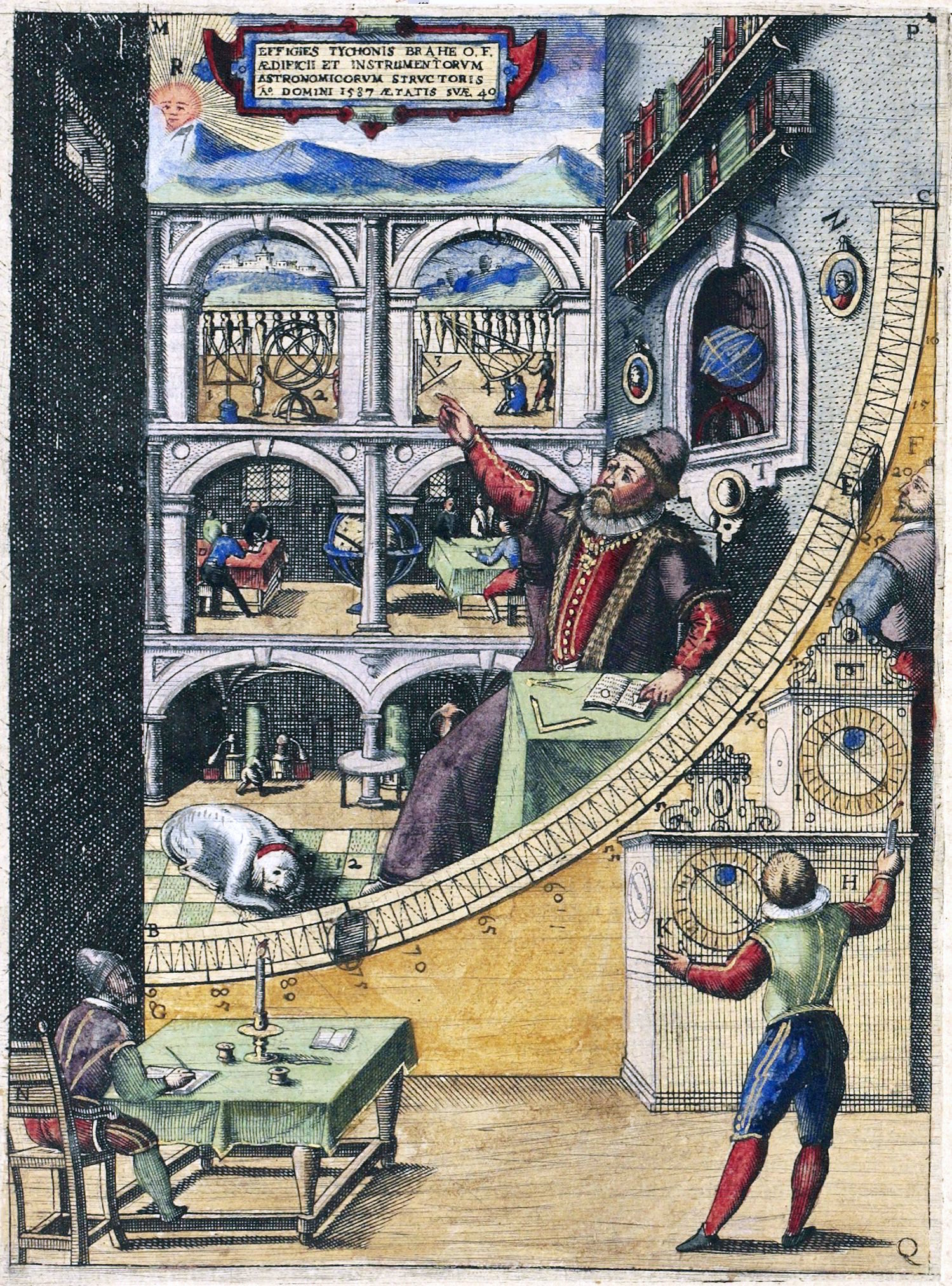
To protect his reputation from "mechanick" commercial printers, Tycho Brahe built a closed system of knowledge production.
Tycho installed his own printing press inside his observatory, Uraniborg, on the island of Hven. By controlling the full cycle — observing stars, manufacturing paper and ink — he ensured no unauthorized errors could creep into his data. His expertise was physically tied to his island.
Slide 03a · Four Faces of Tycho
Different representations for different readers.
Tycho's image was not one image. Every audience — patrons, peers, pirates, popular readers — met a different Tycho, shaped by who made the portrait and who was meant to see it.
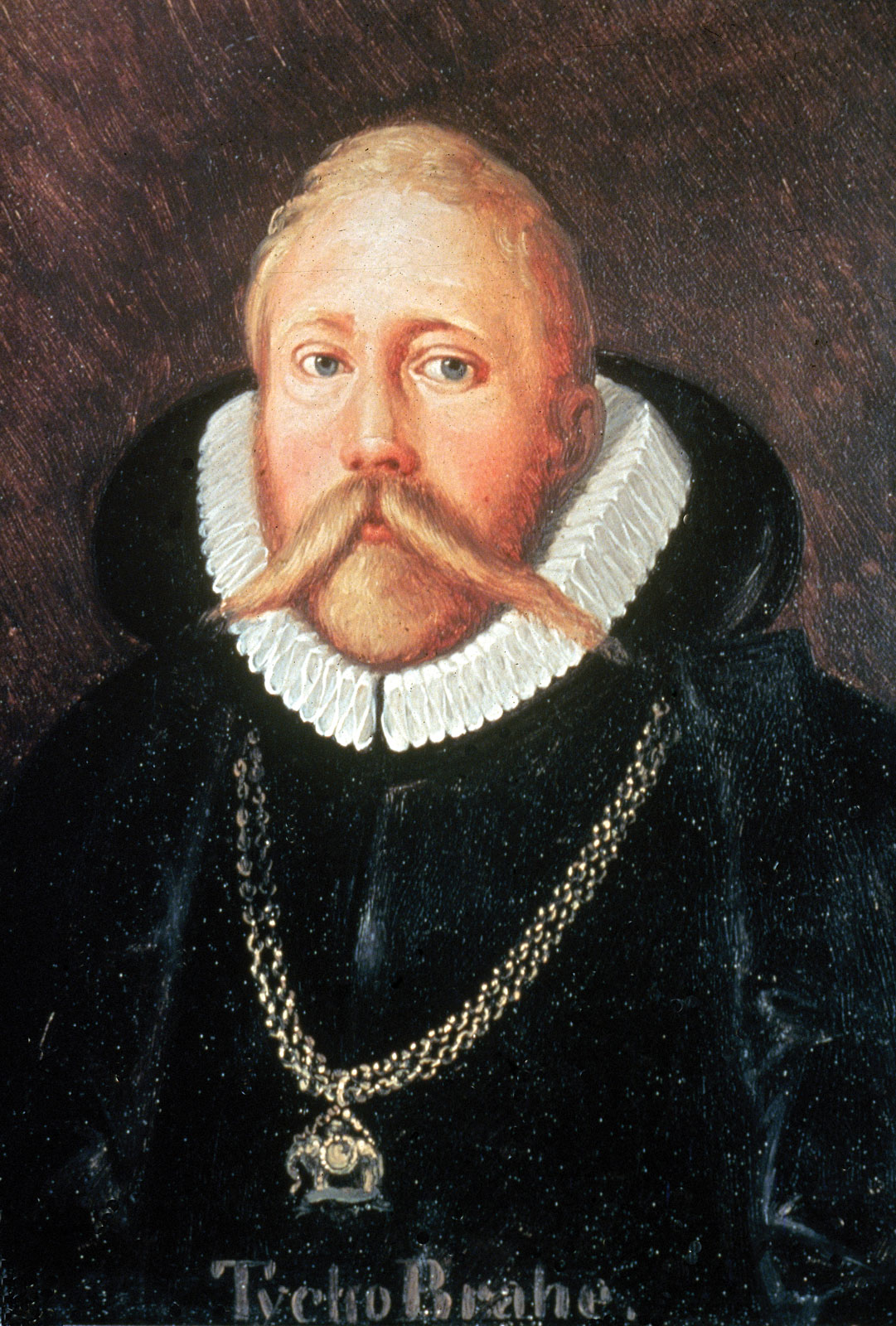
(By permission of the Syndics of Cambridge University Library.)
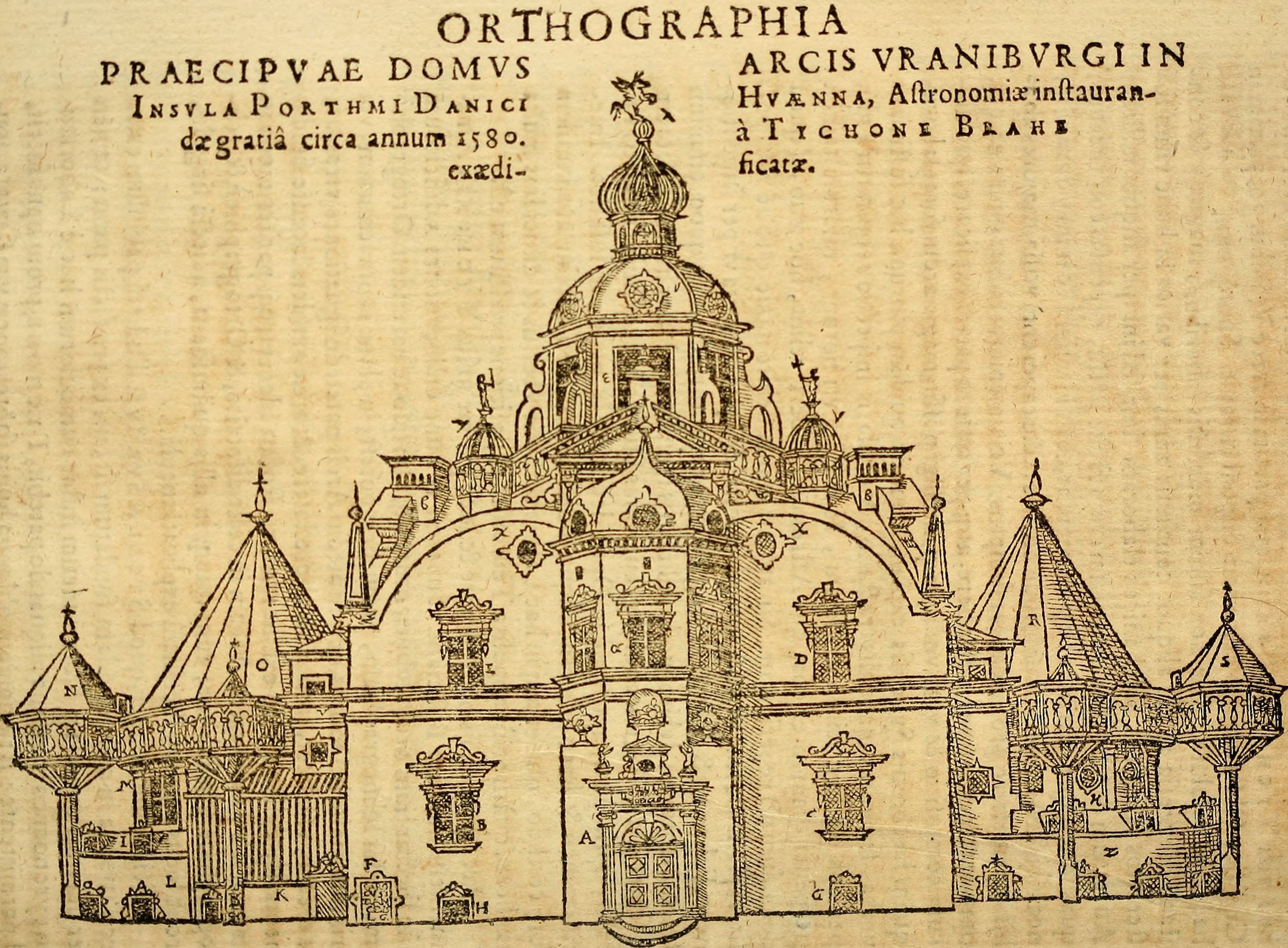
(By permission of the Syndics of Cambridge University Library.)
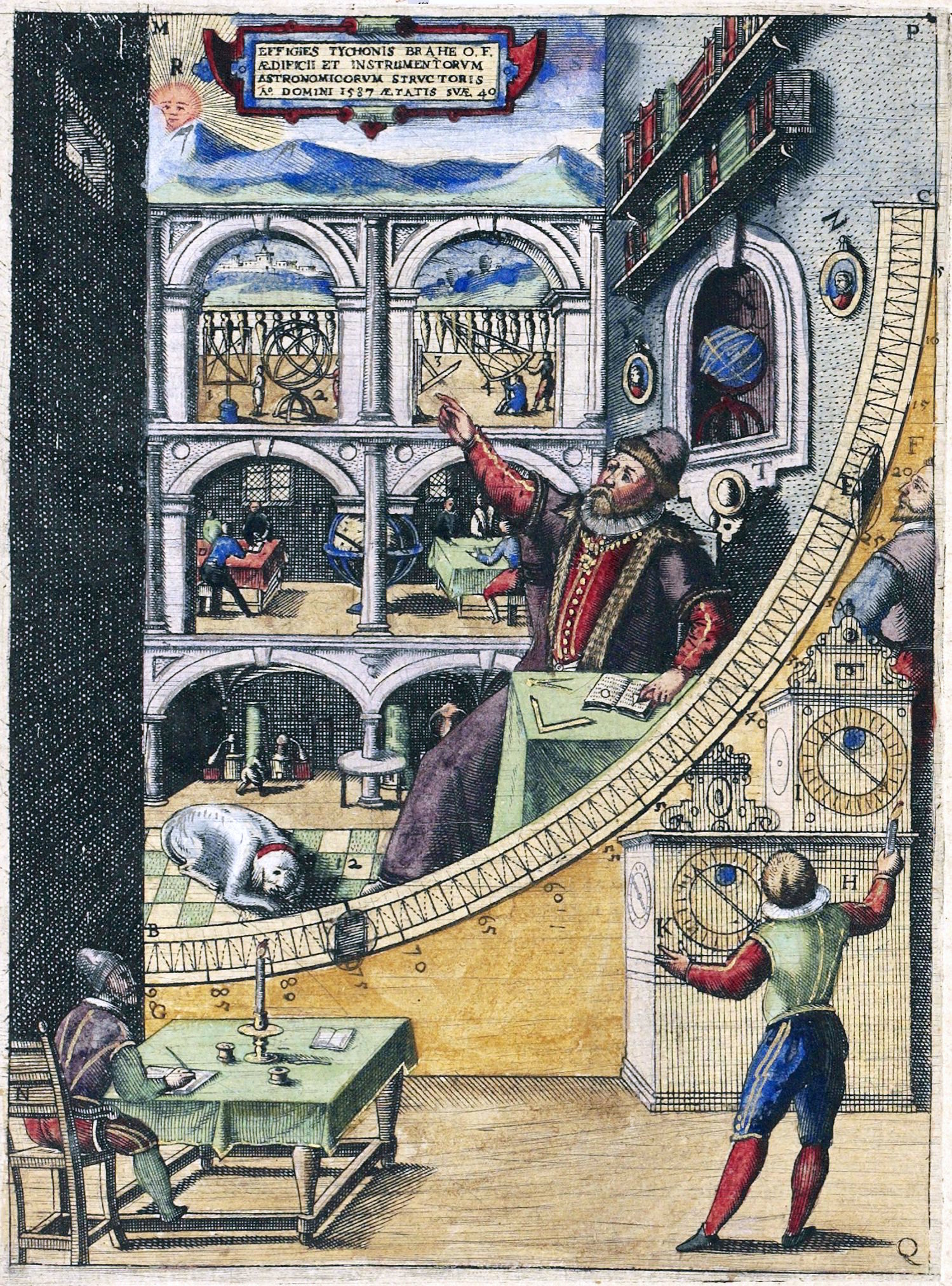
(By permission of the British Library, C45.h.3.)
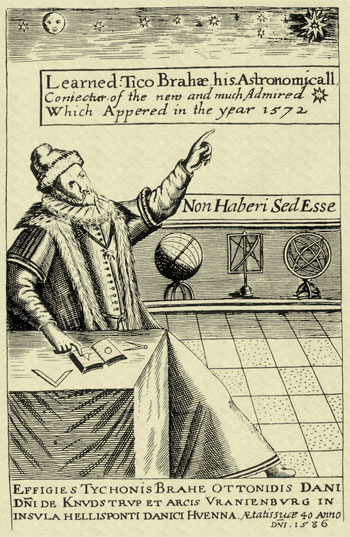
(By permission of the Syndics of Cambridge University Library.)
Slide 04 · Galileo, the Agile Courtier
The book is a physical pawn in social and political negotiations.
Galileo didn't just publish his findings; he deployed them as diplomatic gifts to secure patronage. The "truth" of his text was subject to the whims of the court.
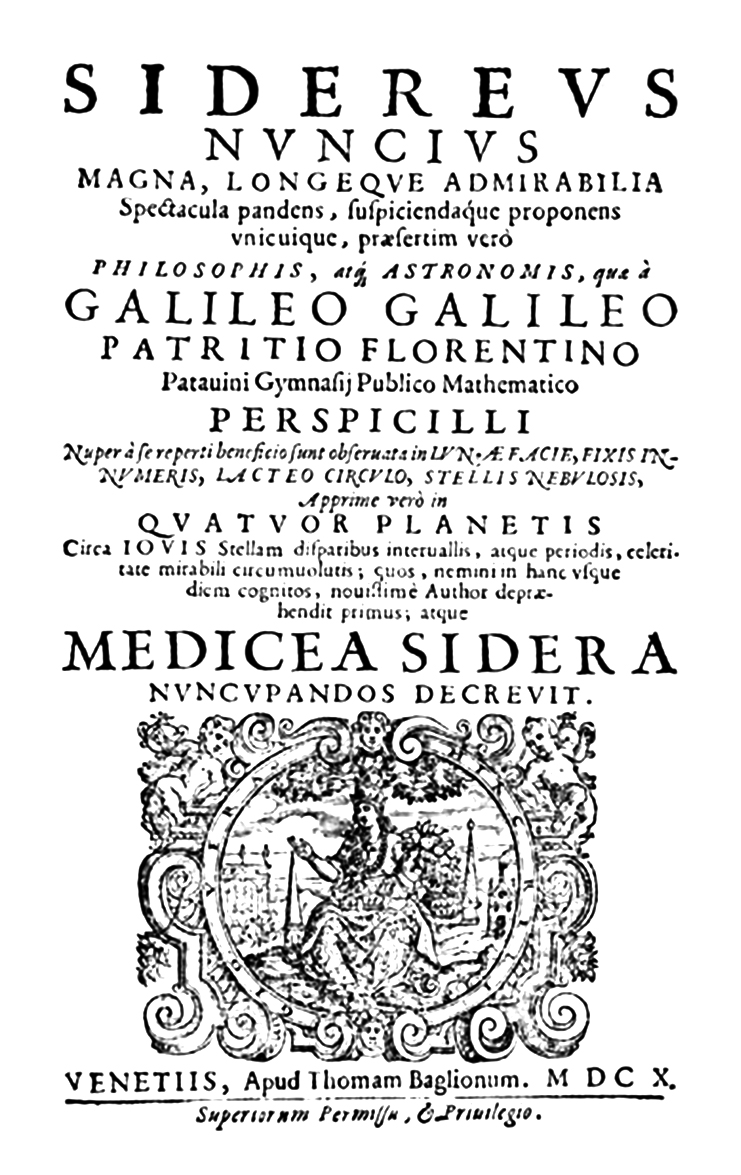
While printing Sidereus Nuncius, Galileo first called Jupiter's moons the "Cosmian stars" to flatter Cosimo de' Medici. After feedback he changed them to the "Medicean stars" — and since some pages were already printed, he had to paste the new name over the old. A literal patching of expertise mid-production.
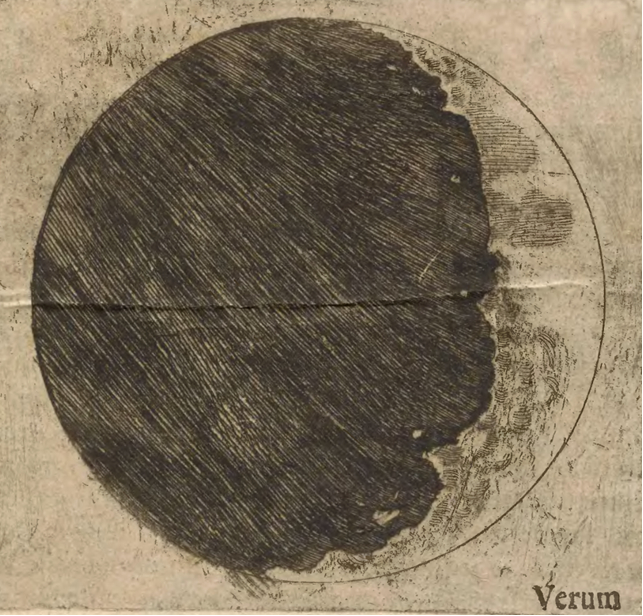
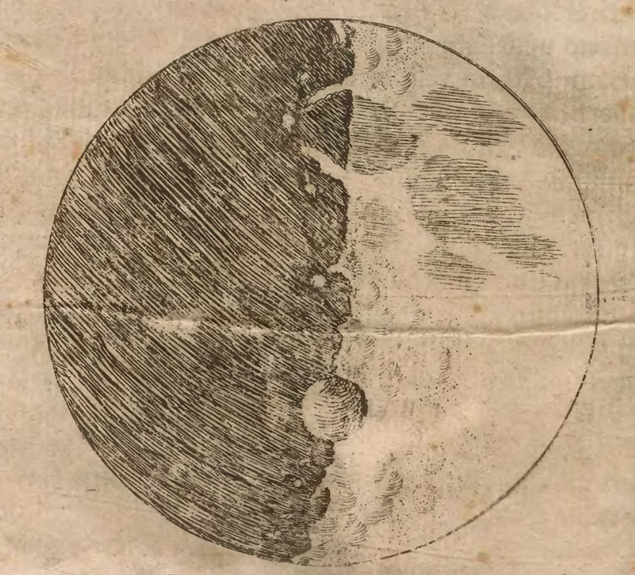
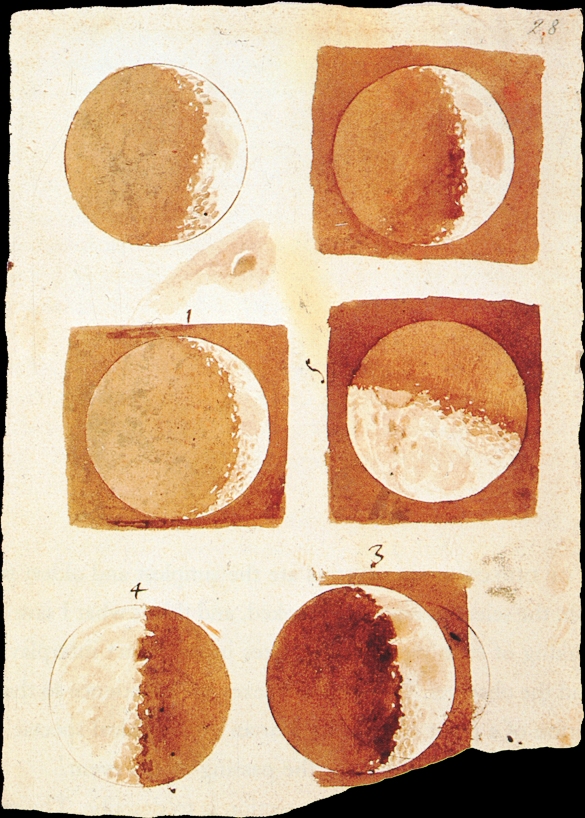
Unauthorized reprints (Frankfurt 1610, London 1653, 1683) reused and degraded these blocks until Galileo's careful verisimilitude was eroded.
Slide 05 · The Wicked Bible
We only notice the hard work of printing when the system fails.
When a system works perfectly, the human labor behind it becomes invisible. Calamities reveal the hidden negotiations of expertise.
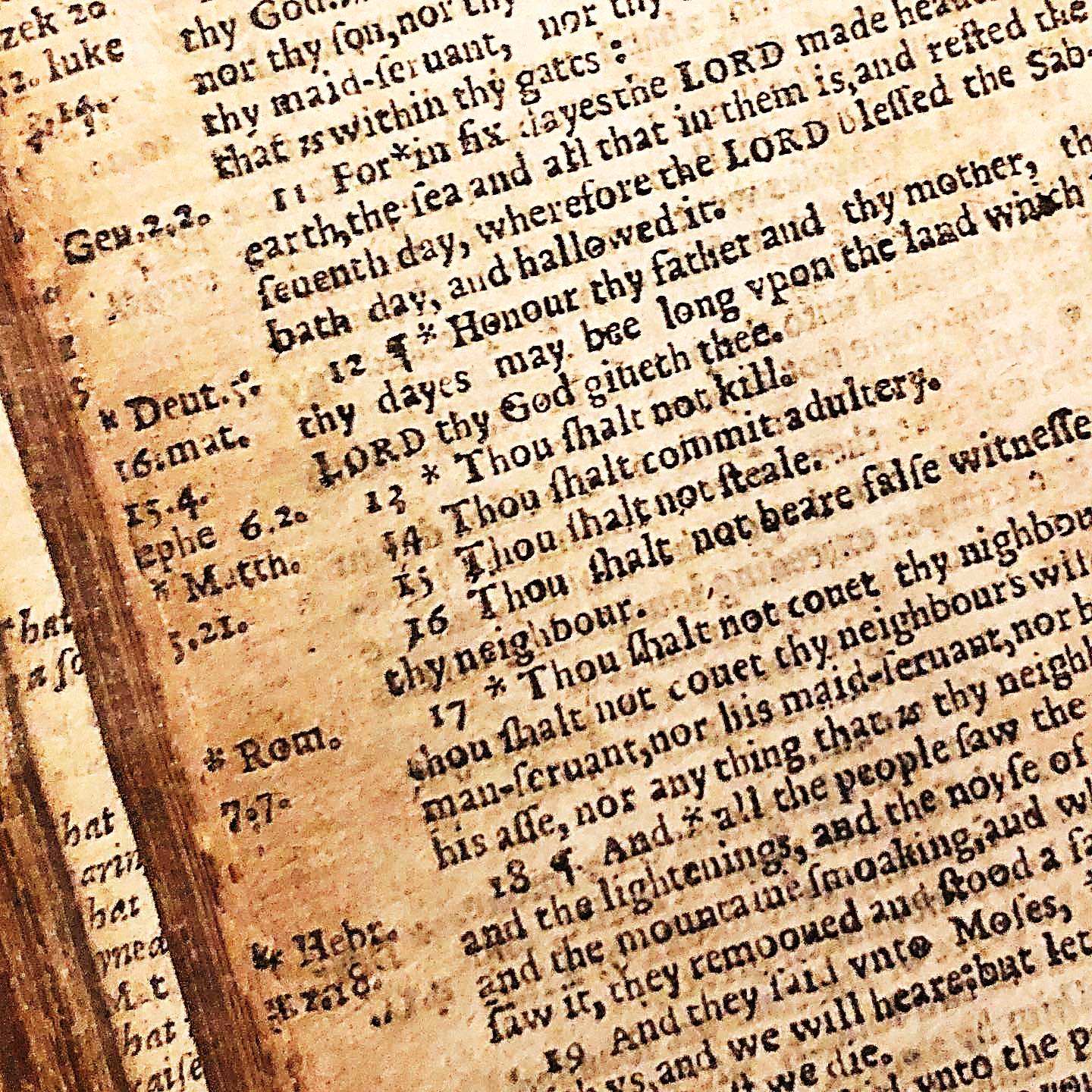
In the 1631 Wicked Bible, the Royal Printers accidentally omitted the word "not" from "Thou shalt not commit adultery." The catastrophe cost them their license and huge fines — proving that authority was not a feature of the press, but a fragile result of constant human vigilance.
Slide 06 · The Stationers' Company
Trust is built through social networks, not just technical standards.
In London, the Stationers' Company managed the credit of its members. Expertise became a collective responsibility of the guild.
A printer with bad credit made suspicious books. Authority migrated from the Author to the Stationer: a book was trusted because of the social standing of the person who sold it.
Slide 07 · Testing in the Coffeehouse
Reading is an active process of adjudication.
Authority wasn't settled at the moment of printing — it was settled in reception, in public spaces.
In 17th-century London coffeehouses, readers compared multiple versions of news and pamphlets side-by-side to "try all things" (Milton, Areopagitica). Expertise was a public conversation.
Take Home
Four big points — and their AI parallels.
Johns's early moderns and our late-moderns share a problem: how do we learn to trust the artifacts of a new information machine?
Take Home 01 · The Myth of Fixity
Fixity is a social achievement, not a technological fact.
Today we safely assume two copies of a University of Chicago Press book are identical. In 1650, you couldn't. Fixity arrived only when the Stationers' Company enforced strict rules about how many copies could be made and how they were checked.
AI Parallel
We treat AI output as objective data, forgetting the hidden labor — RLHF, data labeling, red-teaming — that tries to "fix" the model's behavior.
Question to Sit With
Whose invisible labor makes today's "reliable" AI feel reliable?
Take Home 02 · Manufacturers of Credit
In abundant information, we verify intermediaries, not facts.
Archbishop William Laud (1630s) worried that "mechanick" printers cared more about profit than accuracy. He tried to move printing into Oxford so the credit of the institution would protect the text. The printer, he knew, was a manufacturer of credit.
AI Parallel
Authority shifts from individual experts to platforms and models ("I trust GPT-4") — not to the specific source the data came from.
Question to Sit With
When you trust an AI answer, which Stationer are you really trusting?
Take Home 03 · Epistemic Indeterminacy
Piracy and error make truth indistinguishable from noise.
The Wicked Bible (1631) wasn't just a typo — it was an epistemic disaster. With no easy way to verify which Bible was correct at a distance, the error called into question the reliability of all printed scripture.
AI Parallel
Hallucinations are modern Wicked Bibles. A fake legal citation or a false historical event creates indeterminacy — we can't know when the "expert" is telling the truth.
Question to Sit With
What would it take for a single hallucination to discredit an entire model's output?
Take Home 04 · Situated Knowledge
Universal knowledge is first made in very specific, local places.
Tycho Brahe refused to let his data be printed by city shops. He built his own press inside Uraniborg — because for his observations to be true, he had to control the nature of the book at the exact site where the stars were observed.
AI Parallel
AI knowledge feels placeless, but it is situated — produced in specific server farms, trained on specific and often opaque datasets. The "black box" has an address.
Question to Sit With
Where is your model's Uraniborg? Who controls it?
Summary
Four historical lessons for living with AI.
A social labor
We trust AI by ignoring the human training that shaped it.
Trust the intermediary
Authority shifts from experts to LLM providers.
Noise vs. truth
Hallucinations undermine the credit of all AI knowledge.
Knowledge has a place
AI "truth" is manufactured in data centers, not in the field.
If you remember only one thing: the press didn't make books trustworthy — people did. The same is true of the model.